
10-Year R&D Excellence
Founded in 2010, Kinkuo has a decade-long track record of innovative connector and cable design for industrial automation and high-end applications.
Wide-Ranging Expertise
Core portfolio spans double-shielded signal cables, 10-million-cycle drag-chain cables, industrial camera & network harnesses, oil-resistant assemblies, and complete SCSI/VHDCI/D-SUB/USB 3.0 connector lines.
Global Brand Trust
Long-term preferred supplier to renowned customers across Japan, Taiwan, Europe, the Americas, and Mainland China, attesting to consistent quality and reliability.
Tier-1 Supply Chain Access
Authorized distributor of Amphenol’s latest high-speed interconnect portfolio (SFP, QSFP-DD, OSFP, SlimSAS, Gen-Z, etc.), enabling turnkey, future-proof solutions.
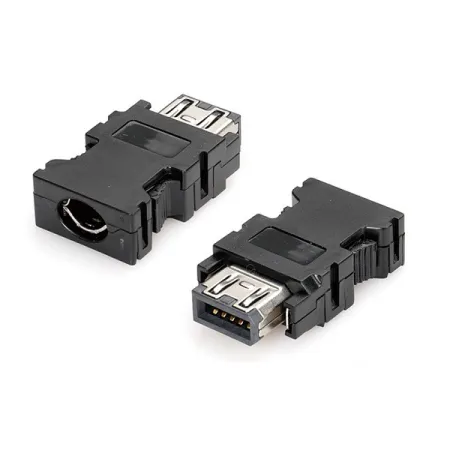
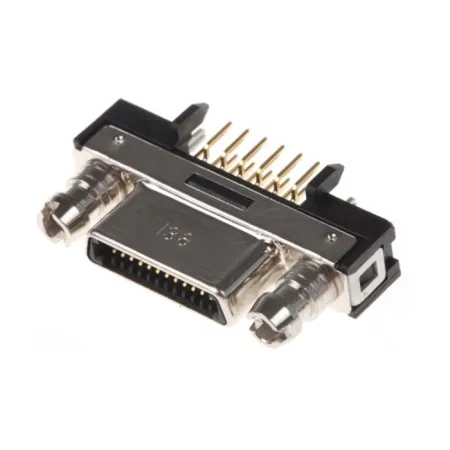

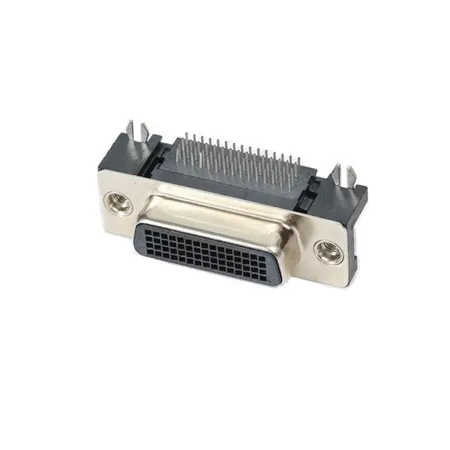
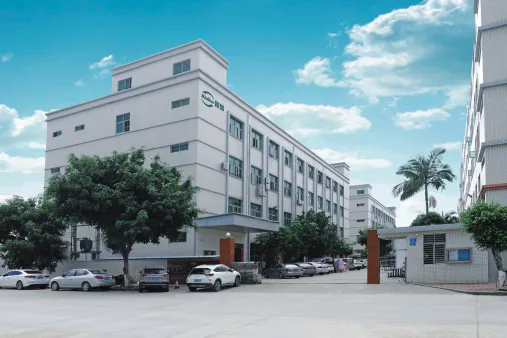
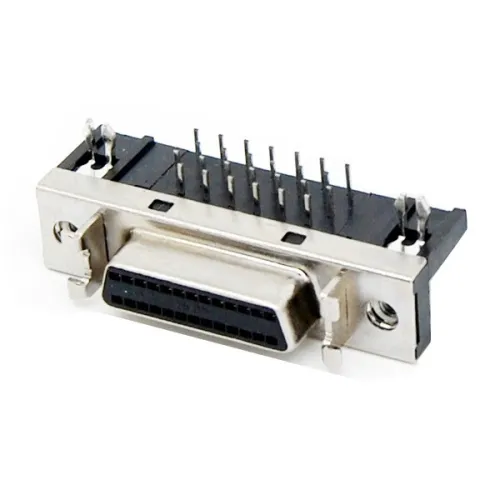
We Have The Best Solutions for Your Business
1. Cable Ass'y products: double shielded signal control Cables (SCSI, VHDCI, D-SUB, USB, LFH, SDR), Ten million times drag chain line, industrial camera wiring harness, industrial network cable, mechanical equipment oil resistant wiring harness, customized various specifications Cable research and development, assembly.
2. Connector products: SCSI, VHDCI, D-SUB, LFH, USB 3.0, servo motor peripheral series connectors.
3. Brand agent: Amphenol (SFP, SFP28, QSFP, QSFP28, QSFP-DD, OSFP, CFP2, CFP4, MiniSAS HD, SlimSAS, PCIeSAS, Oculink, MCIO, Gen-Z)
Attentive service, perfect quality!
What does 'termination' mean for a SCSI connector and why is it important?
Termination is a critical concept in SCSI technology. Because the SCSI bus is a high-speed parallel bus, the signals can "reflect" back from the ends of the cable, which causes interference and data errors. To prevent this, the devices at both physical ends of the SCSI chain must have a "terminator," which is a set of resistors that absorbs the signals and stops the reflections. This termination can be built into the device itself, or it can be a separate block that you plug into the last device's open SCSI connector port. Proper termination is absolutely essential for a stable SCSI bus, and using a high-quality SCSI connector ensures that the terminator can make a clean, reliable connection.
My data is getting corrupted when I use my external SCSI drive. Why?
Data corruption on an external SCSI bus is almost always caused by electromagnetic interference (EMI), and the culprit is usually a poor-quality, inadequately shielded cable and connector system. An external SCSI connector must have a full metal shell that, when mated with a properly shielded cable, creates a 360-degree shield around the entire connection. If the connector has a cheap, plastic shell, or if the cable shield is not properly terminated to the connector shell, it creates a gap in the armor, allowing external electrical noise to get in and corrupt the data. The solution is to use a high-quality, fully shielded external cable assembly with a robust metal SCSI connector from a manufacturer like KinKuo who understands the critical importance of proper shielding.
Can I get a SCSI connector with right-angle pins for my PCB design?
Yes, absolutely. For many PCB layouts, especially in compact chassis, a standard "straight" exit connector is not ideal as the cable would have to make a sharp, stressful bend. To solve this, you need a right-angle SCSI connector. KinKuo can manufacture a wide variety of right-angle PCB-mount connectors. These connectors have pins that are bent at a 90-degree angle, allowing them to be mounted on the board so that the mating cable exits parallel to the board's surface. This creates a much cleaner, lower-profile installation that is better for cable management and airflow. Whether you need a 68-pin, 50-pin, or other type of SCSI connector for your PCB, we can provide a high-quality right-angle version to meet your specific mechanical design needs.
How can I be sure the SCSI connector I am buying is a high-quality, industrial part?
To ensure you are buying a true industrial-grade SCSI connector, you need to look for key indicators of quality manufacturing. First, examine the supplier's credentials. A reputable factory like KinKuo will have an ISO 9001 certification and a long history of serving industrial clients. Second, examine the physical connector itself. A high-quality part will have a sturdy, thick-gauge metal shell, a robust locking mechanism that feels secure, and visibly consistent gold plating on the contacts. A cheap connector will feel flimsy and have pale, thin plating. Finally, ask about the materials. A quality supplier will be able to confidently tell you that they use high-temperature plastics and high-performance copper alloys for the contacts. By vetting your supplier and the component on these points, you can be sure you are getting a genuine, high-quality SCSI connector from KinKuo.
User Reviews
What users say about KinKuo
Frequently Asked Question
Do you have any question?
A shielded SCSI connector, which has a full metal shell, is a critical part of protecting your data from EMI (Electromagnetic Interference). When used with a shielded cable, the metal shell provides a 360-degree, continuous path to ground for any electrical noise that hits the connection, preventing that noise from corrupting the sensitive parallel data signals passing through the pins inside.
The difference is the termination method. An IDC (Insulation-Displacement Contact) SCSI connector is used with flat ribbon cables, where sharp prongs pierce the cable to make contact, which is common for internal connections. A solder-cup SCSI connector has small cups on the back of each pin where individual wires are soldered in place, which is typical for building rugged, external round cables.
Yes. A specialized factory like KinKuo can create a custom SCSI connector to meet unique requirements. This can include non-standard mounting flanges for a specific chassis, custom pin-loading, or creating a hybrid connector that fits within a SCSI shell, providing a bespoke solution for unique engineering challenges.
A high-quality SCSI connector is still in high demand to support the vast and valuable installed base of legacy equipment. Multi-million-dollar industrial machines, medical scanners, and professional equipment were built to last for decades, and they rely on this interface. A new, high-quality replacement connector is often the key to keeping this vital equipment operational.
These represent different generations and widths of the SCSI standard. The 50-pin SCSI connector is for older, 8-bit "Narrow" SCSI. The 68-pin SCSI connector is for 16-bit "Wide" SCSI, offering faster speeds. The VHDCI (Very High-Density Cable Interconnect) is a much more compact 68-pin connector, allowing multiple ports to fit in a small space while still providing Wide SCSI performance.
The reliability of a SCSI connector is a direct result of its robust mechanical design. Unlike many modern connectors, it features a strong metal D-shaped shell for protection and polarization, and a mandatory locking system—either spring clips or thumbscrews—that creates a secure, vibration-proof connection essential for industrial and server environments.
Our updates and blog posts
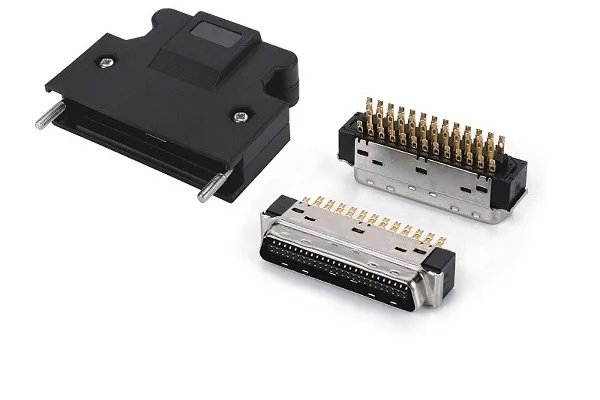
Servo Connector Mastery: How KinKuo’s Servo Connector Range Eliminates Downtime and Future-Proofs Motion Systems
Explore KinKuo Servo Connector solutions—IP67, 10 M flex, same-day ship. Cut downtime and future-proof motion systems today.
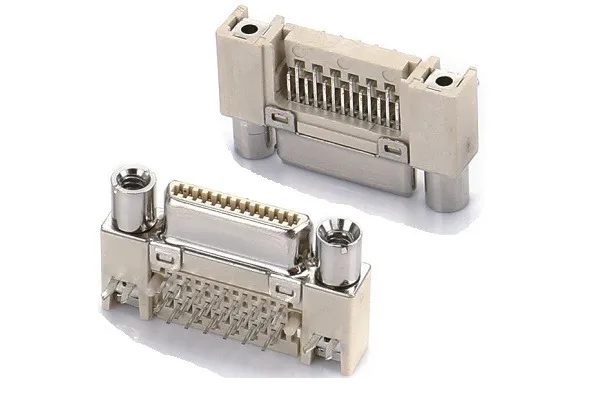
VHDCI Connector Deep Dive: How KinKuo’s VHDCI Connector Range Delivers 68-Pin Density with Zero Signal Loss
Explore KinKuo VHDCI Connector solutions—0.8 mm pitch, 500 V, RoHS. Cut space and boost speed with proven VHDCI Connector today.
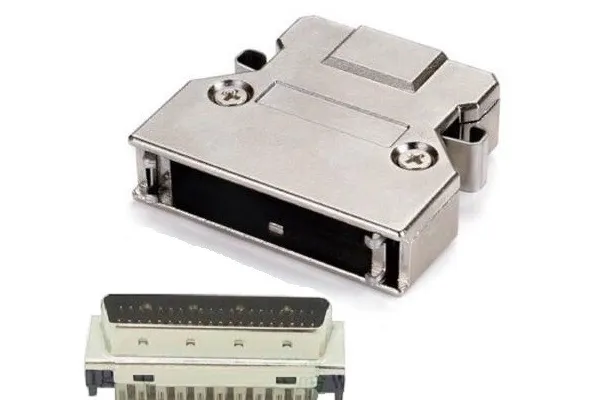
SCSl Connector Deep-Dive: How KinKuo’s SCSl Connector Portfolio Delivers 68-Pin Density with Industrial-Grade Reliability
Explore KinKuo VHDCI Connector solutions—0.8 mm pitch, 500 V, RoHS. Cut space and boost speed with proven VHDCI Connector today.
Our updates and blog posts
Servo Connector Mastery: How KinKuo’s Servo Connector Range Eliminates Downtime and Future-Proofs Motion Systems
Explore KinKuo Servo Connector solutions—IP67, 10 M flex, same-day ship. Cut downtime and future-proof motion systems today.
VHDCI Connector Deep Dive: How KinKuo’s VHDCI Connector Range Delivers 68-Pin Density with Zero Signal Loss
Explore KinKuo VHDCI Connector solutions—0.8 mm pitch, 500 V, RoHS. Cut space and boost speed with proven VHDCI Connector today.
SCSl Connector Deep-Dive: How KinKuo’s SCSl Connector Portfolio Delivers 68-Pin Density with Industrial-Grade Reliability
Explore KinKuo VHDCI Connector solutions—0.8 mm pitch, 500 V, RoHS. Cut space and boost speed with proven VHDCI Connector today.