

10-Year R&D Excellence
Founded in 2010, Kinkuo has a decade-long track record of innovative connector and cable design for industrial automation and high-end applications.
Wide-Ranging Expertise
Core portfolio spans double-shielded signal cables, 10-million-cycle drag-chain cables, industrial camera & network harnesses, oil-resistant assemblies, and complete SCSI/VHDCI/D-SUB/USB 3.0 connector lines.
Global Brand Trust
Long-term preferred supplier to renowned customers across Japan, Taiwan, Europe, the Americas, and Mainland China, attesting to consistent quality and reliability.
Tier-1 Supply Chain Access
Authorized distributor of Amphenol’s latest high-speed interconnect portfolio (SFP, QSFP-DD, OSFP, SlimSAS, Gen-Z, etc.), enabling turnkey, future-proof solutions.
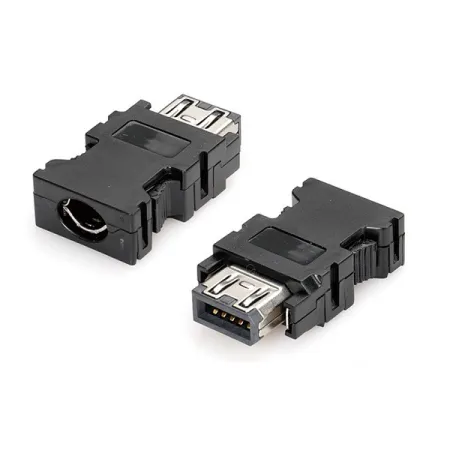



We Have The Best Solutions for Your Business
1. Cable Ass'y products: double shielded signal control Cables (SCSI, VHDCI, D-SUB, USB, LFH, SDR), Ten million times drag chain line, industrial camera wiring harness, industrial network cable, mechanical equipment oil resistant wiring harness, customized various specifications Cable research and development, assembly.
2. Connector products: SCSI, VHDCI, D-SUB, LFH, USB 3.0, servo motor peripheral series connectors.
3. Brand agent: Amphenol (SFP, SFP28, QSFP, QSFP28, QSFP-DD, OSFP, CFP2, CFP4, MiniSAS HD, SlimSAS, PCIeSAS, Oculink, MCIO, Gen-Z)
Attentive service, perfect quality!
How do I get the official PCB footprint and design guidelines for an MCIO connector?
Using the correct, manufacturer-specified PCB footprint is absolutely essential for a MCIO connector. An incorrect land pattern will lead to a failed board spin and poor signal integrity. You must not use generic or reverse-engineered footprints. The only reliable way to get this information is through an authorized agent who has direct access to the manufacturer's official technical documentation. As an authorized agent for Amphenol, KinKuo can provide you with the official datasheets, detailed mechanical drawings, and the comprehensive PCB design guideline documents for any MCIO connector we sell. These documents provide the exact pad and via layouts, as well as crucial recommendations for trace routing in the breakout region, ensuring your design is correct and will perform as expected.
What is the difference between a cable-end MCIO connector and a board-mounted one?
The MCIO connector is a two-part system. The "board-mounted connector," or receptacle, is the part that is soldered directly onto a printed circuit board, such as a motherboard or an add-in card. This receptacle is what the cable plugs into. The "cable-end connector," or plug, is the part that is terminated onto the end of the high-speed twinaxial cable. These two parts are designed as a matched pair to ensure a perfect mechanical fit and a continuous, impedance-controlled electrical path. KinKuo can provide both parts of this system. We are an authorized agent for the Amphenol board-mounted receptacles and an expert manufacturer of the cable assemblies that use the mating cable-end plug, allowing us to be your single source for the complete MCIO connector solution.
My server design is very low-profile. Which MCIO connector should I use?
In a slim, 1U server chassis, managing component height and airflow is a primary challenge. A standard vertical connector can often be too tall or can obstruct the path of cooling air. For these low-profile designs, the right-angle MCIO connector is the ideal solution. A right-angle receptacle is mounted on the motherboard parallel to the board's surface, allowing the mating cable to plug in horizontally. This creates an extremely low-profile connection that can be routed cleanly underneath other components or along the chassis edge. KinKuo can supply a variety of right-angle MCIO connector options to help you solve your most challenging packaging and thermal management problems, enabling you to build powerful systems in even the tightest of spaces.
I'm seeing a lot of discussion about 'crosstalk.' How does the MCIO connector help?
Crosstalk is the unwanted "bleeding" of signal energy from one data channel to its neighbors, and it is the single biggest enemy of signal integrity in a high-speed system. The MCIO connector was meticulously designed to combat this problem. A high-quality Amphenol MCIO connector, supplied by KinKuo, features a sophisticated internal design where the differential pairs are individually shielded from each other by the ground pins and the structure of the connector body itself. This internal shielding acts as a barrier, containing the electromagnetic fields of each signal and preventing them from interfering with each other. This superior isolation is a key reason why the MCIO connector can support the sensitive PAM4 signaling of future standards and is a critical feature for any stable high-speed design.
User Reviews
What users say about KinKuo
Frequently Asked Question
Do you have any question?
The MCIO connector plays a foundational role for Compute Express Link™ (CXL™) because CXL runs over the PCIe physical layer. As servers adopt CXL for memory expansion and disaggregated architectures, the MCIO connector will provide the essential high-bandwidth, low-latency physical connection needed to link processors to CXL memory modules and other CXL-enabled devices, making it a key enabler of next-generation server architecture.
Using a genuine Amphenol MCIO connector is critical because Amphenol is a world leader who has invested heavily in the R&D to perfect the connector's performance. A counterfeit or "clone" connector will not have the same precision, materials, or signal integrity and will cause high data error rates and system instability. Sourcing a genuine part from an authorized agent like KinKuo is the only way to guarantee performance.
The board-mounted receptacle of an MCIO connector typically comes in two main orientations: vertical (perpendicular to the PCB) and right-angle (parallel to the PCB). This gives system architects the flexibility to route cables in the most efficient way possible within a server chassis, either coming straight up off the board or running low across its surface to avoid impeding airflow.
The MCIO connector is superior to OCuLink for new designs because it is a next-generation solution built for a higher performance tier. It offers a clearer roadmap to future speeds like PCIe 6.0, provides better signal integrity performance, and has a more robust and dense mechanical design. While OCuLink was suitable for earlier PCIe generations, MCIO is the forward-looking standard.
The MCIO connector is the standard for PCIe 5.0 because its electrical and mechanical design is optimized for the 32 GT/s signal speeds. It features superior signal integrity with extremely low crosstalk, a controlled impedance profile, and a density that allows for many high-speed lanes in a small space, all of which are mandatory requirements for a stable PCIe Gen 5 channel.
MCIO stands for Mini Cool Edge IO. An MCIO connector is a high-density, high-performance internal interconnect system designed to handle the extreme data rates of next-generation protocols like PCI Express® (PCIe) 5.0 and 6.0. It is used to link a server's mainboard to peripherals like NVMe drives and accelerator cards.
Our updates and blog posts
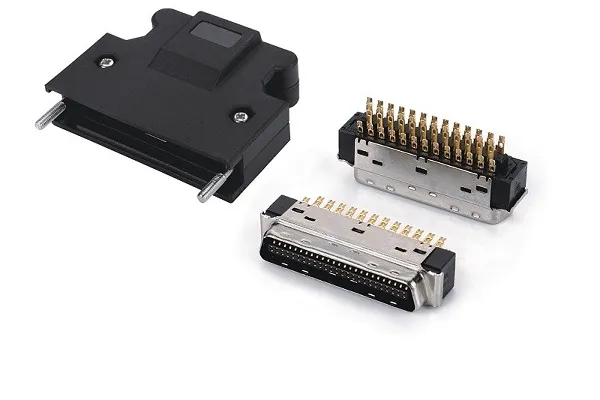
Servo Connector Mastery: How KinKuo’s Servo Connector Range Eliminates Downtime and Future-Proofs Motion Systems
Explore KinKuo Servo Connector solutions—IP67, 10 M flex, same-day ship. Cut downtime and future-proof motion systems today.
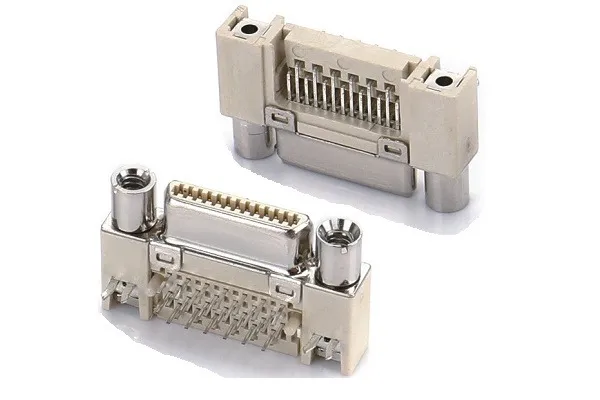
VHDCI Connector Deep Dive: How KinKuo’s VHDCI Connector Range Delivers 68-Pin Density with Zero Signal Loss
Explore KinKuo VHDCI Connector solutions—0.8 mm pitch, 500 V, RoHS. Cut space and boost speed with proven VHDCI Connector today.
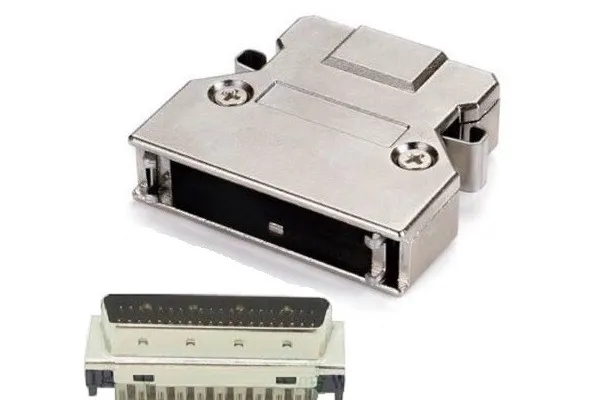
SCSl Connector Deep-Dive: How KinKuo’s SCSl Connector Portfolio Delivers 68-Pin Density with Industrial-Grade Reliability
Explore KinKuo VHDCI Connector solutions—0.8 mm pitch, 500 V, RoHS. Cut space and boost speed with proven VHDCI Connector today.
Our updates and blog posts
Servo Connector Mastery: How KinKuo’s Servo Connector Range Eliminates Downtime and Future-Proofs Motion Systems
Explore KinKuo Servo Connector solutions—IP67, 10 M flex, same-day ship. Cut downtime and future-proof motion systems today.
VHDCI Connector Deep Dive: How KinKuo’s VHDCI Connector Range Delivers 68-Pin Density with Zero Signal Loss
Explore KinKuo VHDCI Connector solutions—0.8 mm pitch, 500 V, RoHS. Cut space and boost speed with proven VHDCI Connector today.
SCSl Connector Deep-Dive: How KinKuo’s SCSl Connector Portfolio Delivers 68-Pin Density with Industrial-Grade Reliability
Explore KinKuo VHDCI Connector solutions—0.8 mm pitch, 500 V, RoHS. Cut space and boost speed with proven VHDCI Connector today.