
10-Year R&D Excellence
Founded in 2010, Kinkuo has a decade-long track record of innovative connector and cable design for industrial automation and high-end applications.
Wide-Ranging Expertise
Core portfolio spans double-shielded signal cables, 10-million-cycle drag-chain cables, industrial camera & network harnesses, oil-resistant assemblies, and complete SCSI/VHDCI/D-SUB/USB 3.0 connector lines.
Global Brand Trust
Long-term preferred supplier to renowned customers across Japan, Taiwan, Europe, the Americas, and Mainland China, attesting to consistent quality and reliability.
Tier-1 Supply Chain Access
Authorized distributor of Amphenol’s latest high-speed interconnect portfolio (SFP, QSFP-DD, OSFP, SlimSAS, Gen-Z, etc.), enabling turnkey, future-proof solutions.
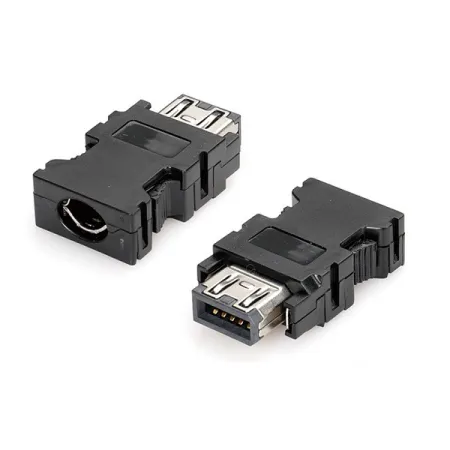
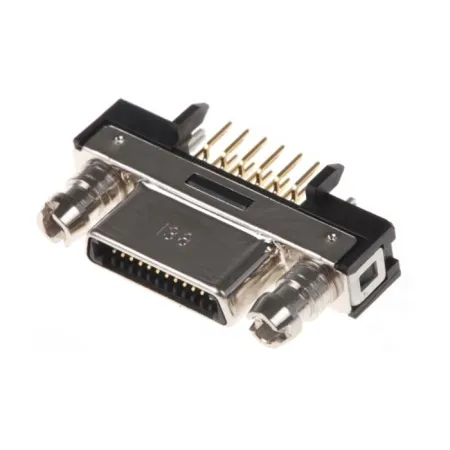

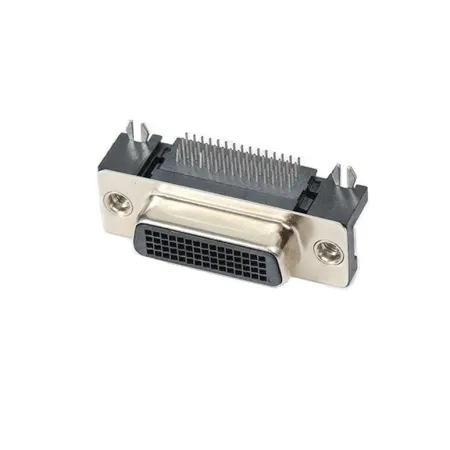
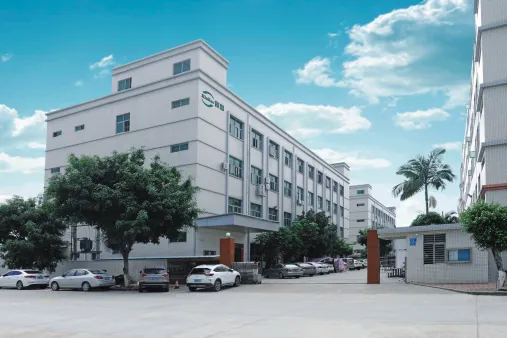
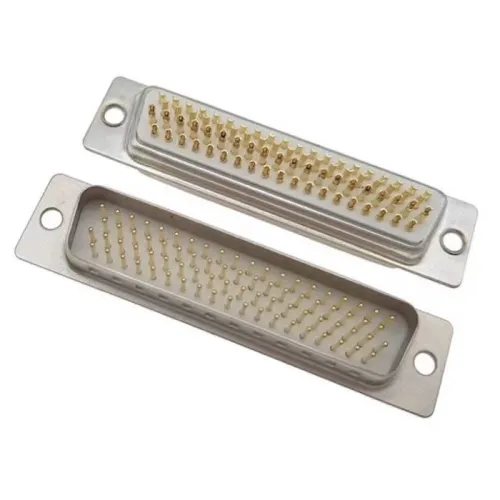
We Have The Best Solutions for Your Business
1. Cable Ass'y products: double shielded signal control Cables (SCSI, VHDCI, D-SUB, USB, LFH, SDR), Ten million times drag chain line, industrial camera wiring harness, industrial network cable, mechanical equipment oil resistant wiring harness, customized various specifications Cable research and development, assembly.
2. Connector products: SCSI, VHDCI, D-SUB, LFH, USB 3.0, servo motor peripheral series connectors.
3. Brand agent: Amphenol (SFP, SFP28, QSFP, QSFP28, QSFP-DD, OSFP, CFP2, CFP4, MiniSAS HD, SlimSAS, PCIeSAS, Oculink, MCIO, Gen-Z)
Attentive service, perfect quality!
What is the difference between an MCIO cable and a SlimSAS cable?
This can be confusing, as both are used for high-speed internal connections. "SlimSAS" is a broad family of connectors, and some newer versions are indeed used for PCIe applications. However, MCIO cable (Mini Cool Edge IO) represents a newer, more mechanically and electrically robust standard specifically optimized and widely adopted for the extreme demands of PCIe 5.0 and beyond. It generally offers better signal integrity performance and a clearer roadmap for future speed increases. For any new design targeting PCIe 5.0 or 6.0, the MCIO cable is the recommended and more future-proof choice. As an expert in both technologies and an authorized agent for Amphenol, a leader in both standards, KinKuo can provide you with the detailed specifications to help you select the optimal cable for your specific application's cost and performance goals.
I'm seeing a lot of CRC errors on my PCIe links. Can a bad cable cause this?
Yes, CRC (Cyclic Redundancy Check) errors on a PCIe link are a classic symptom of a signal integrity problem, and a bad internal cable is a very common cause. The PCIe protocol has built-in error checking, and when it detects that data has been corrupted during transmission (often due to a noisy, low-quality cable), it logs a CRC error and forces a retransmission. While the system may still function, these constant retransmissions severely degrade the performance of your devices. The solution is to replace the suspect cable with a high-quality MCIO cable from KinKuo. Our cables are designed and tested to provide a clean, error-free channel, eliminating the root cause of these CRC errors and restoring your PCIe links to their full, stable performance.
Where can I get a reliable supply of MCIO cables for my manufacturing line?
When you are manufacturing servers or storage systems at scale, you need a supply chain partner who can deliver consistent quality, on time, every time. Finding a reliable source for a high-tech component like an MCIO cable is critical. You need to work directly with a knowledgeable and experienced factory or an authorized agent. KinKuo is both. We manufacture high-quality MCIO cable assemblies in our own factory and are also an authorized agent for Amphenol's premier solutions. This gives us a unique ability to provide a stable, high-volume supply chain. Our ISO 9001 certified processes and 100% testing guarantee quality and consistency, while our direct relationships give us the ability to manage lead times and inventory effectively. For a reliable, long-term supply of the MCIO cable, KinKuo is the proven and trusted partner.
What is the future of server cabling after MCIO?
The future of server cabling will be driven by the demands of upcoming standards like PCIe 6.0 and the continued growth of CXL. The good news is that the MCIO cable connector system was designed with this future in mind. The robust signal integrity performance and density of the MCIO standard provide a clear roadmap to supporting these next-generation speeds. There will likely be new, even higher-performance versions of the raw cable used, but the MCIO connector itself is expected to be the dominant standard for internal PCIe connectivity for the foreseeable future. By designing your systems with a high-quality MCIO cable from KinKuo today, you are not only meeting the needs of PCIe 5.0 but also building on a platform that is aligned with the future of the industry.
User Reviews
What users say about KinKuo
Frequently Asked Question
Do you have any question?
Yes. A specialized manufacturer like KinKuo can produce a custom-length MCIO cable to fit your specific server chassis layout. This is crucial for optimizing airflow, ensuring a clean and professional build, and preventing the signal degradation that can occur from coiling up excessively long standard cables inside an enclosure.
The quality of an MCIO cable is absolutely critical for NVMe storage arrays because these drives rely on the ultra-low latency and high bandwidth of the PCIe bus. A low-quality cable with poor signal integrity will cause data errors and retransmissions, creating a bottleneck that throttles the performance of the expensive NVMe SSDs and prevents the system from reaching its full I/O potential.
An MCIO cable uses a compact, high-density card-edge style connector system. It typically features a vertical or right-angle receptacle on the motherboard or add-in card, and the cable plug has a slim, robust design that securely mates with it, often with a latching mechanism for vibration resistance.
While both are internal high-speed cables, an MCIO cable is a more modern and higher-performance standard designed for PCIe 5.0 and beyond. OCuLink was designed for earlier PCIe generations. MCIO offers higher density, better signal integrity, and a more robust mechanical design prepared for future speed increases, making it the superior choice for new server designs.
The MCIO cable is the standard for PCIe 5.0 because its connector and cable technology are specifically engineered to maintain excellent signal integrity at the extremely high data rate of 32 GT/s. Its design minimizes crosstalk and insertion loss, which is essential for sending these sensitive, high-frequency signals over a cable without data corruption.
An MCIO cable, which stands for Mini Cool Edge IO, is a next-generation high-speed internal cable assembly. It is primarily used inside servers, storage systems, and data center hardware to connect the main system board to various peripherals, such as NVMe SSD backplanes, accelerator cards, or other PCIe devices, and is the standard for PCIe Gen 5.
Our updates and blog posts
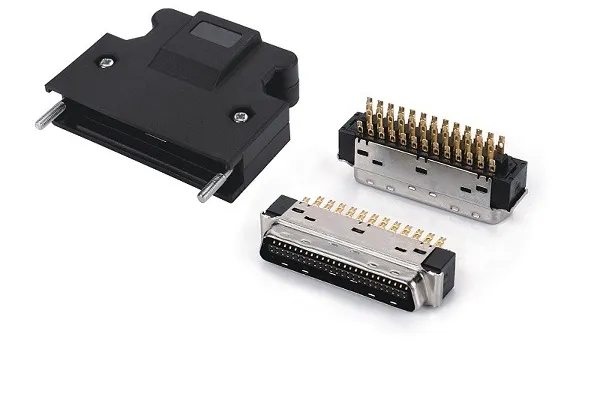
Servo Connector Mastery: How KinKuo’s Servo Connector Range Eliminates Downtime and Future-Proofs Motion Systems
Explore KinKuo Servo Connector solutions—IP67, 10 M flex, same-day ship. Cut downtime and future-proof motion systems today.

VHDCI Connector Deep Dive: How KinKuo’s VHDCI Connector Range Delivers 68-Pin Density with Zero Signal Loss
Explore KinKuo VHDCI Connector solutions—0.8 mm pitch, 500 V, RoHS. Cut space and boost speed with proven VHDCI Connector today.
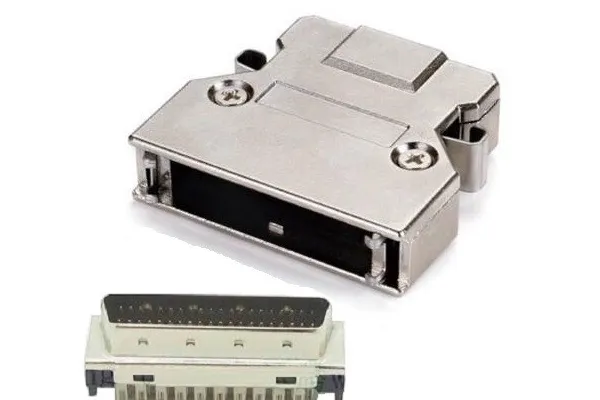
SCSl Connector Deep-Dive: How KinKuo’s SCSl Connector Portfolio Delivers 68-Pin Density with Industrial-Grade Reliability
Explore KinKuo VHDCI Connector solutions—0.8 mm pitch, 500 V, RoHS. Cut space and boost speed with proven VHDCI Connector today.
Our updates and blog posts
Servo Connector Mastery: How KinKuo’s Servo Connector Range Eliminates Downtime and Future-Proofs Motion Systems
Explore KinKuo Servo Connector solutions—IP67, 10 M flex, same-day ship. Cut downtime and future-proof motion systems today.
VHDCI Connector Deep Dive: How KinKuo’s VHDCI Connector Range Delivers 68-Pin Density with Zero Signal Loss
Explore KinKuo VHDCI Connector solutions—0.8 mm pitch, 500 V, RoHS. Cut space and boost speed with proven VHDCI Connector today.
SCSl Connector Deep-Dive: How KinKuo’s SCSl Connector Portfolio Delivers 68-Pin Density with Industrial-Grade Reliability
Explore KinKuo VHDCI Connector solutions—0.8 mm pitch, 500 V, RoHS. Cut space and boost speed with proven VHDCI Connector today.