
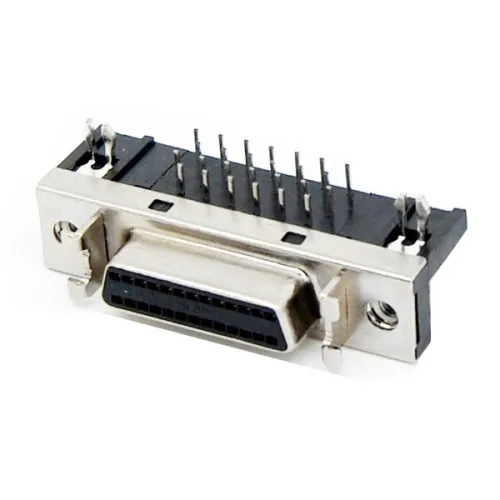
Features
Why Choose KinKuo?
10-Year R&D Excellence
Founded in 2010, Kinkuo has a decade-long track record of innovative connector and cable design for industrial automation and high-end applications.
Wide-Ranging Expertise
Core portfolio spans double-shielded signal cables, 10-million-cycle drag-chain cables, industrial camera & network harnesses, oil-resistant assemblies, and complete SCSI/VHDCI/D-SUB/USB 3.0 connector lines.
Global Brand Trust
Long-term preferred supplier to renowned customers across Japan, Taiwan, Europe, the Americas, and Mainland China, attesting to consistent quality and reliability.
Tier-1 Supply Chain Access
Authorized distributor of Amphenol’s latest high-speed interconnect portfolio (SFP, QSFP-DD, OSFP, SlimSAS, Gen-Z, etc.), enabling turnkey, future-proof solutions.

We Have The Best Solutions for Your Business
1. Cable Ass'y products: double shielded signal control Cables (SCSI, VHDCI, D-SUB, USB, LFH, SDR), Ten million times drag chain line, industrial camera wiring harness, industrial network cable, mechanical equipment oil resistant wiring harness, customized various specifications Cable research and development, assembly.
2. Connector products: SCSI, VHDCI, D-SUB, LFH, USB 3.0, servo motor peripheral series connectors.
3. Brand agent: Amphenol (SFP, SFP28, QSFP, QSFP28, QSFP-DD, OSFP, CFP2, CFP4, MiniSAS HD, SlimSAS, PCIeSAS, Oculink, MCIO, Gen-Z)
Attentive service, perfect quality!
In my 15 years walking factory floors and collaborating with R&D teams, I've seen firsthand that the difference between a good product and a truly great one often comes down to the details that are hidden from view. No detail is more critical, yet more frequently compromised, than the point of connection. Since 2010, our work has been driven by a core belief: true innovation should never be constrained by what’s available in a catalog. This is the entire philosophy behind customized connectors. It’s about refusing to accept a "close enough" solution and instead, crafting the perfect component for a specific, mission-critical task.
The journey of creating customized connectors is a masterclass in material science and mechanical engineering. It's about understanding that a connector destined for a downhole drilling operation has fundamentally different material requirements than one used in a sterile surgical environment. It’s the knowledge of which specific polymer will maintain its dielectric properties under high temperatures, and which copper alloy will retain its spring force after a thousand mating cycles. This isn't just about changing a color or a shape; it's about building a component from its very atoms to survive and thrive in its intended environment. It’s this deep, granular expertise that transforms a simple component into a pillar of system reliability.
Furthermore, the design process for customized connectors is where elegant solutions are born. I’ve seen teams shave critical millimeters off a product's profile by designing a unique, low-profile connector housing. I’ve watched complex wiring harnesses be simplified into a single, clean connection by creating a hybrid connector with a custom layout of power, signal, and even coaxial contacts. This is where a connector stops being a passive component and becomes an active part of the product's core design ethos—improving not just reliability, but also serviceability, aesthetics, and ease of assembly.
Ultimately, the commitment to using customized connectors is a reflection of a company's commitment to quality. It’s an acknowledgment that every single component matters. It requires a manufacturing partner who is more than just a vendor—they must be a collaborator, an engineering resource, and a guardian of your quality standards. The greatest satisfaction comes from delivering a custom solution that perfectly solves a client's unique problem, knowing that this small, bespoke component will be the reliable heart of their groundbreaking technology for years to come.
Featured Products
Collection about KinKuo
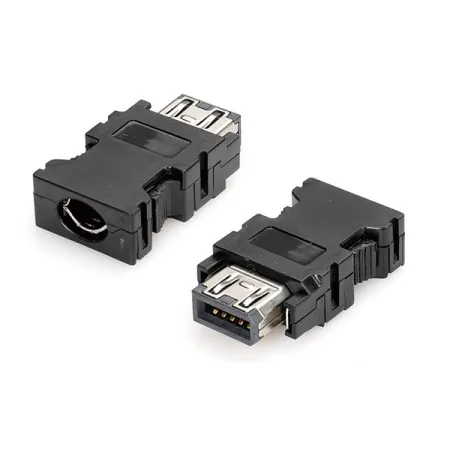
KinKuo Servo Connector – Mini D Ribbon MDR 1.27 mm Pitch
KinKuo Servo Connector MDR series offers 14–100 contacts, 500V, RoHS2.0 compliance—perfect for Servo Connector cable assemblies.

KinKuo VHDCI Connector SDR 0.8 mm 26-pin High-Speed Solution
KinKuo VHDCI Connector SDR offers 0.8 mm pitch, 26 contacts, 350 V isolation—ideal for VHDCI Connector cable assemblies in tight spaces.

KinKuo SCSI Connector MDR 1.27 mm 14-100 Pin High-Density
KinKuo SCSI Connector MDR series delivers 1 A, 500 V, 500 MΩ, –55 °C~+105 °C—perfect SCSI Connector for high-density cable assemblies.

KinKuo LFH Connector 1.27 mm 59–200 Pin Low-Force Helix
KinKuo LFH Connector delivers 1 A, 500 V, <10 mΩ, low 60 g mating force—ideal LFH Connector for medical & industrial boards.
User Reviews
What users say about KinKuo
Frequently Asked Question
Do you have any question?
Yes, a key service offered by a skilled manufacturer of customized connectors is the ability to reverse-engineer and replicate obsolete or hard-to-find legacy parts. Using precision measurement tools and material analysis, engineers can create new production drawings and tooling to manufacture a replacement that is functionally identical to the original, often improving upon it with modern, more durable materials.
A wide range of materials can be used for customized connectors based on the application. Housings can be machined from metals like brass or stainless steel for durability and shielding, or molded from high-performance polymers like LCP, PBT, or Nylon for insulation and weight savings. Contacts are typically made from copper alloys like phosphor bronze or beryllium copper, with specific plating options like gold, tin, or nickel to ensure low resistance and high durability.
Customized connectors improve reliability by being perfectly matched to the application's stresses. A standard connector might have contacts rated for 50 mating cycles, while a custom solution can be designed with more robust materials for 1,000+ cycles. A custom connector can also be built with specific IP-rated sealing and materials that won't degrade when exposed to the unique chemicals or fluids in your system, thus eliminating known environmental failure points.
While high-volume production is common, a flexible manufacturer can also produce customized connectors for lower-volume needs. Prototyping, NPI (New Product Introduction) runs, and specialized equipment often require smaller quantities. The key is to find a manufacturing partner who is agile and willing to support your project from the initial low-volume stages through to potential high-volume scaling.
You would need customized connectors when standard, off-the-shelf parts cannot meet your specific requirements. Common reasons include needing a unique shape or size to fit a compact enclosure, requiring a hybrid layout with both power and signal contacts in one shell, needing a connector made from special materials to withstand extreme temperatures or chemicals, or for creating a proprietary, non-standard interface for your product.
The process of creating customized connectors is a collaborative partnership. It begins with a deep dive into your technical requirements, including electrical, mechanical, and environmental needs. This is followed by a design and engineering phase, often with Design for Manufacturability (DFM) feedback, the creation of 3D models, and then the production of prototypes for validation. Once the design is approved, full-scale production begins, all governed by a stringent quality control system.
Our updates and blog posts
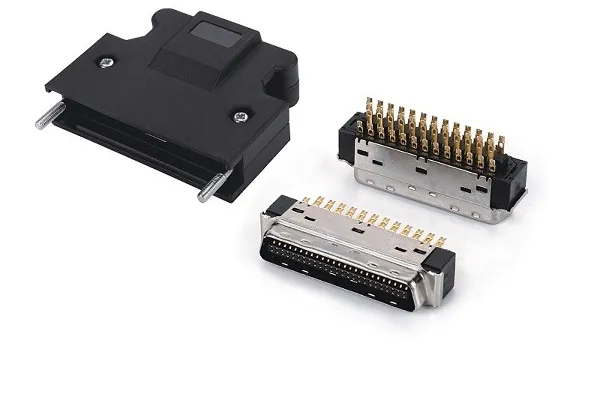
Servo Connector Mastery: How KinKuo’s Servo Connector Range Eliminates Downtime and Future-Proofs Motion Systems
Explore KinKuo Servo Connector solutions—IP67, 10 M flex, same-day ship. Cut downtime and future-proof motion systems today.
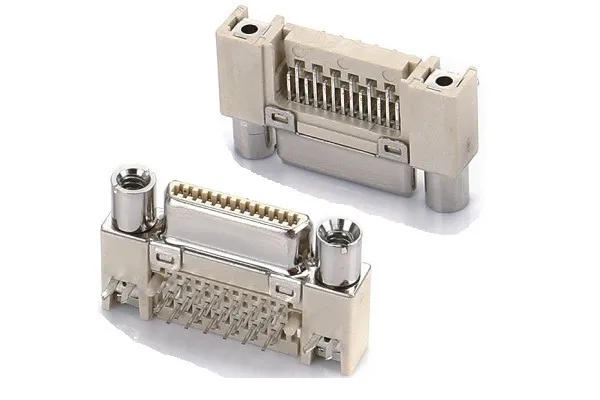
VHDCI Connector Deep Dive: How KinKuo’s VHDCI Connector Range Delivers 68-Pin Density with Zero Signal Loss
Explore KinKuo VHDCI Connector solutions—0.8 mm pitch, 500 V, RoHS. Cut space and boost speed with proven VHDCI Connector today.
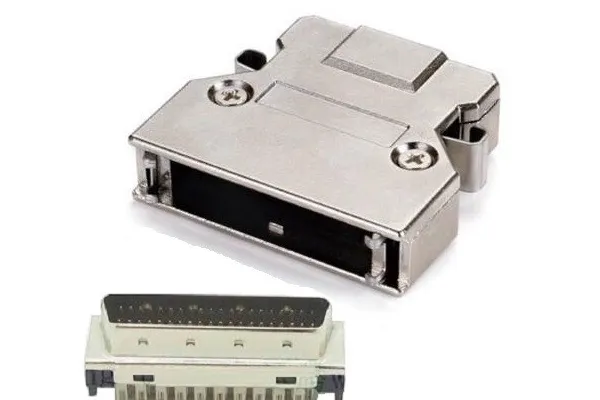
SCSl Connector Deep-Dive: How KinKuo’s SCSl Connector Portfolio Delivers 68-Pin Density with Industrial-Grade Reliability
Explore KinKuo VHDCI Connector solutions—0.8 mm pitch, 500 V, RoHS. Cut space and boost speed with proven VHDCI Connector today.