
Features
Why Choose KinKuo?
10-Year R&D Excellence
Founded in 2010, Kinkuo has a decade-long track record of innovative connector and cable design for industrial automation and high-end applications.
Wide-Ranging Expertise
Core portfolio spans double-shielded signal cables, 10-million-cycle drag-chain cables, industrial camera & network harnesses, oil-resistant assemblies, and complete SCSI/VHDCI/D-SUB/USB 3.0 connector lines.
Global Brand Trust
Long-term preferred supplier to renowned customers across Japan, Taiwan, Europe, the Americas, and Mainland China, attesting to consistent quality and reliability.
Tier-1 Supply Chain Access
Authorized distributor of Amphenol’s latest high-speed interconnect portfolio (SFP, QSFP-DD, OSFP, SlimSAS, Gen-Z, etc.), enabling turnkey, future-proof solutions.
We Have The Best Solutions for Your Business
1. Cable Ass'y products: double shielded signal control Cables (SCSI, VHDCI, D-SUB, USB, LFH, SDR), Ten million times drag chain line, industrial camera wiring harness, industrial network cable, mechanical equipment oil resistant wiring harness, customized various specifications Cable research and development, assembly.
2. Connector products: SCSI, VHDCI, D-SUB, LFH, USB 3.0, servo motor peripheral series connectors.
3. Brand agent: Amphenol (SFP, SFP28, QSFP, QSFP28, QSFP-DD, OSFP, CFP2, CFP4, MiniSAS HD, SlimSAS, PCIeSAS, Oculink, MCIO, Gen-Z)
Attentive service, perfect quality!
In my 15 years in this industry, I have seen the same story play out countless times. A brilliant team of engineers develops a groundbreaking piece of equipment, only to have its performance undermined by the most mundane of components: the cable. They treat it as an afterthought, grabbing a standard, off-the-shelf part, and then spend weeks chasing intermittent failures and data errors. The lesson I’ve learned, and the principle we've built our company on since 2010, is that connectivity is not a commodity. For any high-performance system, a purpose-built, engineered solution in the form of customized cables is the only path to true reliability.
The need for this level of specialization has grown exponentially. In the past, a simple shielded cable might have been sufficient. Today, we build customized cables for robotic arms that must endure ten million flex cycles without a single conductor failing. We design assemblies for medical imaging systems where the slightest EMI could compromise a critical diagnosis, requiring complex, multi-layered shielding architectures. The generic, one-size-fits-all cable simply cannot meet these specialized demands. Customization is no longer a luxury for niche applications; it has become a core requirement for innovation and performance in nearly every advanced industry.
What we do here is more than just assembly. It's a craft. True customization is a holistic process. It begins with a deep dive into the client's application to understand every stressor the cable will face. From there, we become material scientists, selecting the perfect conductor stranding for flexibility, the ideal dielectric for signal integrity, and the most resilient jacketing compound for the environment. This deep engineering work is what separates true customized cables from simply "cables cut to length." It’s an approach that considers the entire cable assembly as a single, integrated system designed for a specific purpose.
Ultimately, choosing customized cables is an investment in certainty. It's the certainty that your connection won't be the weak link in your system. It’s the certainty that your product will perform in the real world just as well as it did in the lab. It's the peace of mind that comes from having a partner who has obsessed over every detail of your connectivity solution, ensuring it is as robust, reliable, and well-engineered as the technology it serves. That is the promise we deliver in every single assembly we build.
Featured Products
Collection about KinKuo
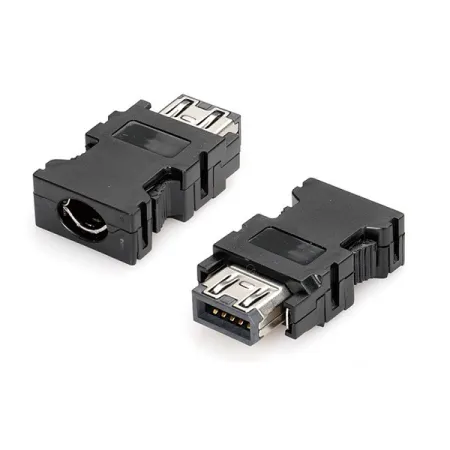
KinKuo Servo Connector – Mini D Ribbon MDR 1.27 mm Pitch
KinKuo Servo Connector MDR series offers 14–100 contacts, 500V, RoHS2.0 compliance—perfect for Servo Connector cable assemblies.
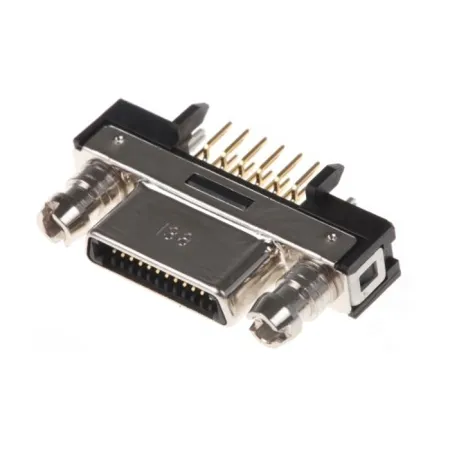
KinKuo VHDCI Connector SDR 0.8 mm 26-pin High-Speed Solution
KinKuo VHDCI Connector SDR offers 0.8 mm pitch, 26 contacts, 350 V isolation—ideal for VHDCI Connector cable assemblies in tight spaces.
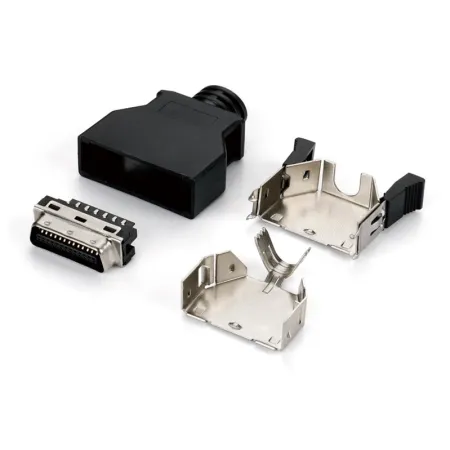
KinKuo SCSI Connector MDR 1.27 mm 14-100 Pin High-Density
KinKuo SCSI Connector MDR series delivers 1 A, 500 V, 500 MΩ, –55 °C~+105 °C—perfect SCSI Connector for high-density cable assemblies.
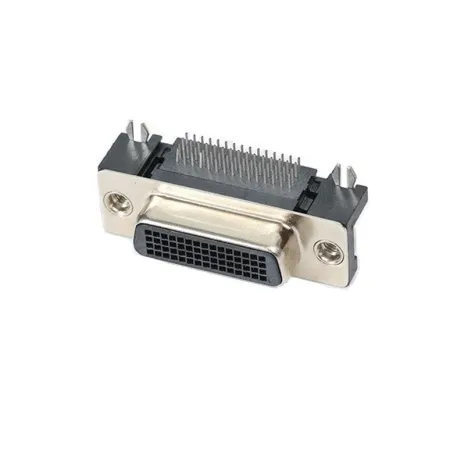
KinKuo LFH Connector 1.27 mm 59–200 Pin Low-Force Helix
KinKuo LFH Connector delivers 1 A, 500 V, <10 mΩ, low 60 g mating force—ideal LFH Connector for medical & industrial boards.
User Reviews
What users say about KinKuo
Frequently Asked Question
Do you have any question?
The first step in ordering customized cables is to gather all your technical requirements. This includes electrical specifications (voltage, current, data rate), mechanical needs (flexibility, length), environmental conditions (temperature, chemical exposure), and the specific connectors you need to interface with. The next step is to engage a manufacturer like KinKuo for a design consultation, where their engineers can review your needs and begin the collaborative design process.
While the initial unit price of customized cables can sometimes be higher than a mass-produced standard cable, they almost always result in a lower total cost of ownership. This is because they prevent costly downtime, field failures, and service calls caused by using an inappropriate, less reliable standard cable. The investment in a purpose-built cable pays for itself through enhanced product reliability and longevity.
The lead time for customized cables depends on several factors, including the availability of raw materials, the complexity of the assembly, and the tooling required. A simple assembly using standard components might take only a few weeks, while a completely new design requiring custom-molded connectors could take longer. A responsive manufacturer will provide a clear and realistic timeline upfront.
Minimum order quantities (MOQs) for customized cables vary depending on the complexity of the design and the materials required. While very small runs (like single prototypes) are possible, they can be more expensive per unit due to setup and engineering costs. A good manufacturing partner will work with you to find a cost-effective solution for your required volume, from low-volume NPI builds to high-volume production.
Customized cables are more reliable because they are purpose-built for a specific application. A standard cable might have a PVC jacket that becomes brittle in a cold environment, whereas a custom cable would use a PUR or TPE jacket. A standard cable might not have adequate shielding for a factory floor, while a custom solution would be engineered with the precise foil and braid needed to ensure signal integrity in that noisy environment. This application-specific design eliminates known failure points.
Virtually every aspect can be tailored when you work with a manufacturer of customized cables. This includes the conductor type and stranding for flexibility, the insulation and jacket materials for chemical or abrasion resistance, the type and coverage of the shielding for EMI protection, the overall diameter, the exact length down to the millimeter, and the specific connectors, including their orientation (straight, right-angle) and any custom overmolding.
Our updates and blog posts
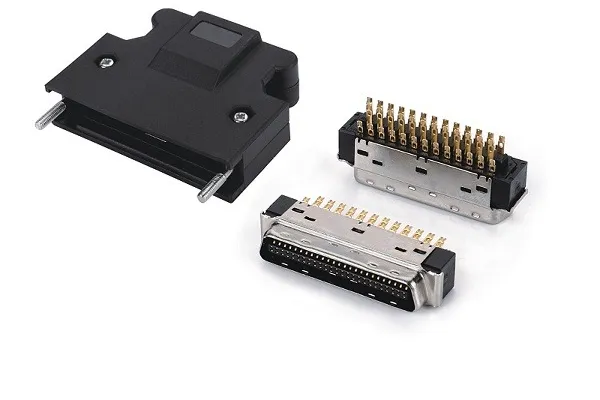
Servo Connector Mastery: How KinKuo’s Servo Connector Range Eliminates Downtime and Future-Proofs Motion Systems
Explore KinKuo Servo Connector solutions—IP67, 10 M flex, same-day ship. Cut downtime and future-proof motion systems today.
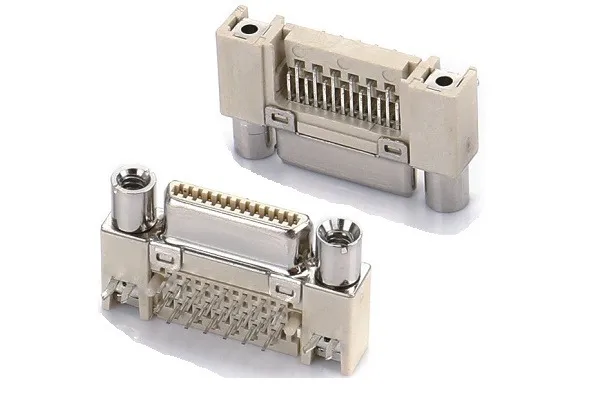
VHDCI Connector Deep Dive: How KinKuo’s VHDCI Connector Range Delivers 68-Pin Density with Zero Signal Loss
Explore KinKuo VHDCI Connector solutions—0.8 mm pitch, 500 V, RoHS. Cut space and boost speed with proven VHDCI Connector today.
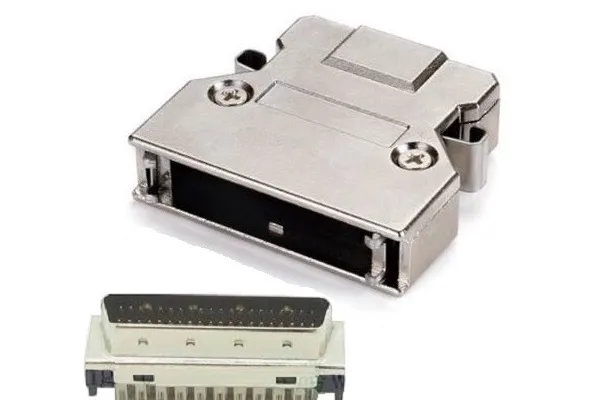
SCSl Connector Deep-Dive: How KinKuo’s SCSl Connector Portfolio Delivers 68-Pin Density with Industrial-Grade Reliability
Explore KinKuo VHDCI Connector solutions—0.8 mm pitch, 500 V, RoHS. Cut space and boost speed with proven VHDCI Connector today.