
10-Year R&D Excellence
Founded in 2010, Kinkuo has a decade-long track record of innovative connector and cable design for industrial automation and high-end applications.
Wide-Ranging Expertise
Core portfolio spans double-shielded signal cables, 10-million-cycle drag-chain cables, industrial camera & network harnesses, oil-resistant assemblies, and complete SCSI/VHDCI/D-SUB/USB 3.0 connector lines.
Global Brand Trust
Long-term preferred supplier to renowned customers across Japan, Taiwan, Europe, the Americas, and Mainland China, attesting to consistent quality and reliability.
Tier-1 Supply Chain Access
Authorized distributor of Amphenol’s latest high-speed interconnect portfolio (SFP, QSFP-DD, OSFP, SlimSAS, Gen-Z, etc.), enabling turnkey, future-proof solutions.
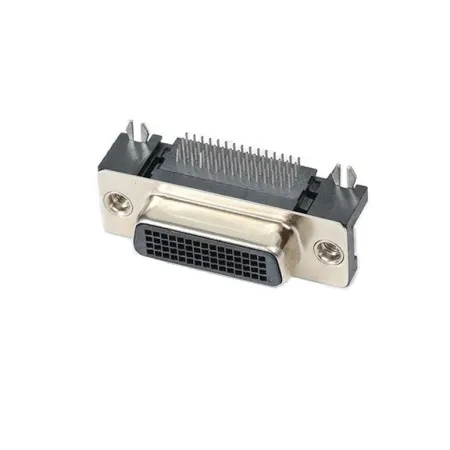
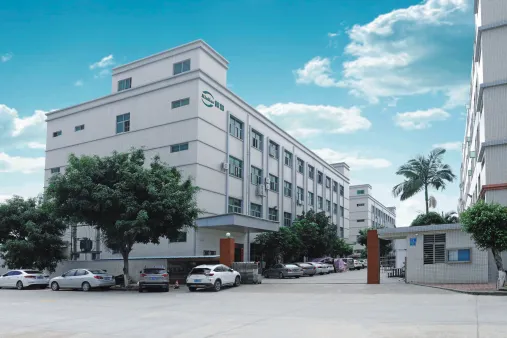
We Have The Best Solutions for Your Business
1. Cable Ass'y products: double shielded signal control Cables (SCSI, VHDCI, D-SUB, USB, LFH, SDR), Ten million times drag chain line, industrial camera wiring harness, industrial network cable, mechanical equipment oil resistant wiring harness, customized various specifications Cable research and development, assembly.
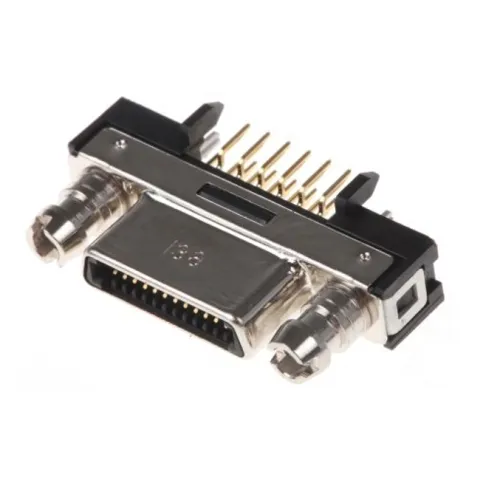
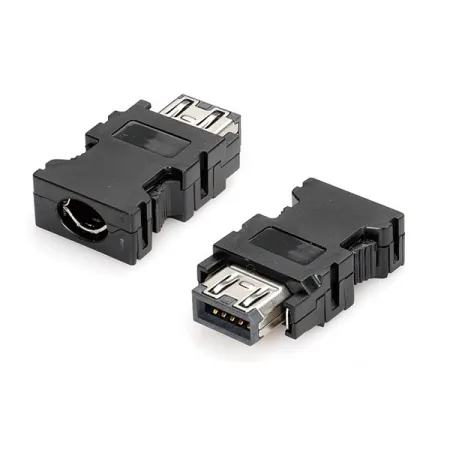
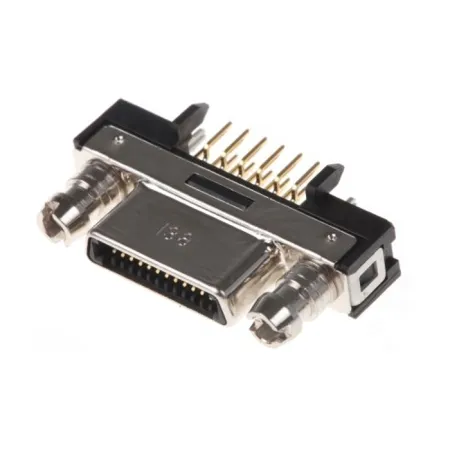
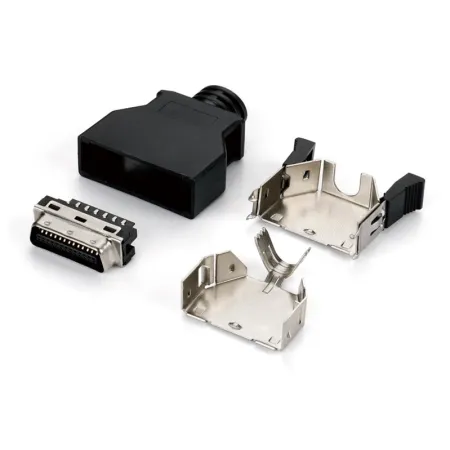
2. Connector products: SCSI, VHDCI, D-SUB, LFH, USB 3.0, servo motor peripheral series connectors.
3. Brand agent: Amphenol (SFP, SFP28, QSFP, QSFP28, QSFP-DD, OSFP, CFP2, CFP4, MiniSAS HD, SlimSAS, PCIeSAS, Oculink, MCIO, Gen-Z)
Attentive service, perfect quality!
What does the '28' in QSFP28 actually mean?
This is a great technical question. The "QSFP" part of the name refers to the Quad Small Form-factor Pluggable standard. The "28" in QSFP28 refers to the nominal maximum data rate of each of the four lanes in the QSFP connector. Each lane is specified to run at up to 28 gigabits per second (Gbps). The common application is 100G Ethernet, which uses a signaling rate of 25.78125 Gbps per lane. The connector is specified for up to 28 Gbps to provide enough performance margin to handle this encoding and ensure signal integrity. As an expert supplier, KinKuo can help you and your team understand these technical nuances, ensuring you choose the right components for your application.
My switch is overheating around the I/O ports. Could the QSFP connector be part of the problem?
While the QSFP connector itself doesn't generate heat, the cage that surrounds it plays a vital role in removing heat from the optical transceivers, which can get extremely hot. If you are using a low-quality or poorly designed cage, it may not be making proper thermal contact with the transceiver module, trapping the heat and causing the port area to overheat. This can lead to transceiver failures and network instability. The solution is to use a high-quality, precision-engineered QSFP connector and cage system from a top-tier manufacturer like Amphenol, supplied by KinKuo. These cages are designed and tested for optimal thermal performance, ensuring they effectively draw heat away from the optics and protect your valuable equipment.
Where can I buy a genuine Amphenol QSFP connector and cage?
To be 100% certain you are buying a genuine Amphenol QSFP connector and cage assembly, you must purchase it from a fully authorized agent. The market is filled with unauthorized brokers selling grey-market or counterfeit parts that will not perform to specification and will cause network failures. KinKuo is a factory-authorized agent for Amphenol's high-speed I/O products. Our authorized status is your absolute guarantee of authenticity. We provide a direct, secure, and traceable supply chain from the original factory. When you buy from KinKuo, you are getting a genuine, fully warranted, world-class QSFP connector system, and the peace of mind that comes with a secure and reliable supply chain.
My 100G QSFP28 link is flapping or has high errors. What's the problem?
An unstable 100G link (often called "link flapping") or a high Bit Error Rate (BER) is a classic signal integrity problem, and a low-quality QSFP connector or cage on your device is a very likely cause. At 25Gbps per lane, the signals are extremely sensitive. A counterfeit or poorly manufactured connector will not have the precise impedance control or EMI shielding required, causing signal reflections and noise that corrupt the data. The only reliable solution is to ensure your systems are built with genuine, high-performance components. By sourcing a genuine Amphenol QSFP connector and cage system through an authorized agent like KinKuo, you are using a component that is tested and guaranteed to meet the stringent requirements of the 100G Ethernet standard, eliminating the physical layer as the source of your network instability.
User Reviews
What users say about KinKuo
Frequently Asked Question
Do you have any question?
Using a genuine Amphenol QSFP connector is critical because Amphenol is a world leader who has perfected the signal integrity and mechanical reliability of the design. A counterfeit connector will not meet the tight tolerances required for 100G signals, leading to high data error rates and network instability. Sourcing from an authorized agent like KinKuo guarantees you get an authentic, high-performance part.
Yes, in most cases. A QSFP28 port on a switch is generally backward compatible with a QSFP+ module or cable. When you plug a 40G QSFP+ transceiver into a 100G QSFP28 port, the port will typically auto-negotiate and operate at the lower 40G speed. This backward compatibility is a major advantage for phased network upgrades.
The QSFP connector became the industry workhorse because it offered the perfect balance of density, power, and performance. Its compact size allowed switch manufacturers to put a large number of 40G and 100G ports on a single 1U faceplate, enabling the massive scale-out architectures that modern cloud data centers require.
The cage assembly is the metal housing that is mounted to the host device's circuit board. A QSFP connector cage serves three critical functions: it provides a secure mechanical guide and latch for the pluggable module, its metal construction and EMI gaskets contain electromagnetic interference, and it helps dissipate heat from the transceiver into the chassis.
While they share the same physical form factor, the key difference is speed. The QSFP+ connector is designed for 40G applications (4 lanes x 10 Gbps). The QSFP28 connector is the next generation, engineered for 100G applications (4 lanes x 25 Gbps). The "28" refers to the maximum signal speed per lane of approximately 28 Gbps to account for encoding overhead.
QSFP stands for Quad Small Form-factor Pluggable. A QSFP connector is a high-density, 4-channel I/O interface used in networking equipment like switches and routers to connect them to fiber optic or copper cables. It is "hot-pluggable," meaning you can insert or remove a transceiver or cable without shutting down the system.
Our updates and blog posts
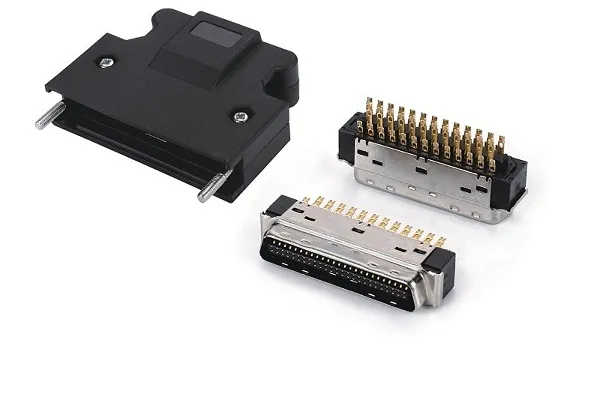
Servo Connector Mastery: How KinKuo’s Servo Connector Range Eliminates Downtime and Future-Proofs Motion Systems
Explore KinKuo Servo Connector solutions—IP67, 10 M flex, same-day ship. Cut downtime and future-proof motion systems today.
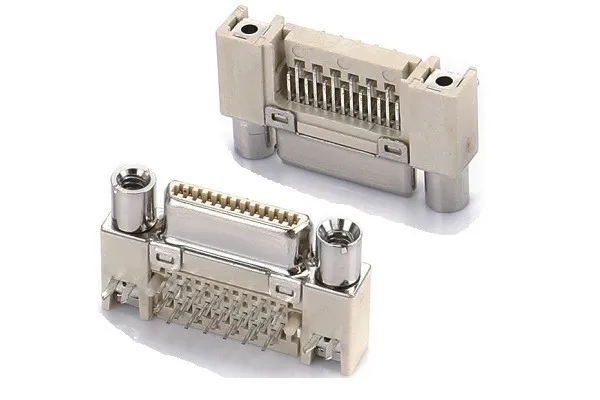
VHDCI Connector Deep Dive: How KinKuo’s VHDCI Connector Range Delivers 68-Pin Density with Zero Signal Loss
Explore KinKuo VHDCI Connector solutions—0.8 mm pitch, 500 V, RoHS. Cut space and boost speed with proven VHDCI Connector today.
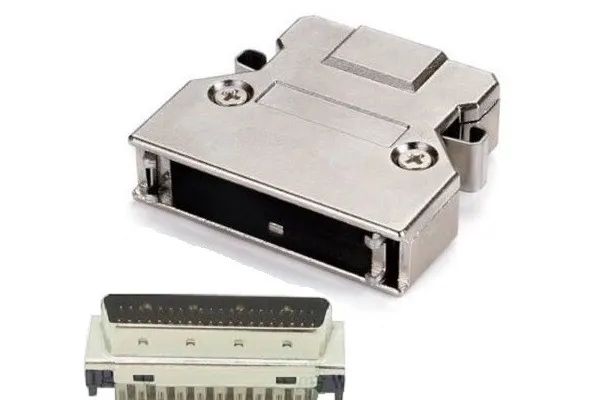
SCSl Connector Deep-Dive: How KinKuo’s SCSl Connector Portfolio Delivers 68-Pin Density with Industrial-Grade Reliability
Explore KinKuo VHDCI Connector solutions—0.8 mm pitch, 500 V, RoHS. Cut space and boost speed with proven VHDCI Connector today.
Our updates and blog posts
Servo Connector Mastery: How KinKuo’s Servo Connector Range Eliminates Downtime and Future-Proofs Motion Systems
Explore KinKuo Servo Connector solutions—IP67, 10 M flex, same-day ship. Cut downtime and future-proof motion systems today.
VHDCI Connector Deep Dive: How KinKuo’s VHDCI Connector Range Delivers 68-Pin Density with Zero Signal Loss
Explore KinKuo VHDCI Connector solutions—0.8 mm pitch, 500 V, RoHS. Cut space and boost speed with proven VHDCI Connector today.
SCSl Connector Deep-Dive: How KinKuo’s SCSl Connector Portfolio Delivers 68-Pin Density with Industrial-Grade Reliability
Explore KinKuo VHDCI Connector solutions—0.8 mm pitch, 500 V, RoHS. Cut space and boost speed with proven VHDCI Connector today.