
10-Year R&D Excellence
Founded in 2010, Kinkuo has a decade-long track record of innovative connector and cable design for industrial automation and high-end applications.
Wide-Ranging Expertise
Core portfolio spans double-shielded signal cables, 10-million-cycle drag-chain cables, industrial camera & network harnesses, oil-resistant assemblies, and complete SCSI/VHDCI/D-SUB/USB 3.0 connector lines.
Global Brand Trust
Long-term preferred supplier to renowned customers across Japan, Taiwan, Europe, the Americas, and Mainland China, attesting to consistent quality and reliability.
Tier-1 Supply Chain Access
Authorized distributor of Amphenol’s latest high-speed interconnect portfolio (SFP, QSFP-DD, OSFP, SlimSAS, Gen-Z, etc.), enabling turnkey, future-proof solutions.
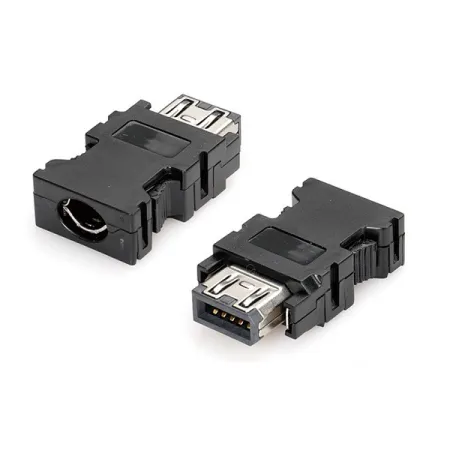
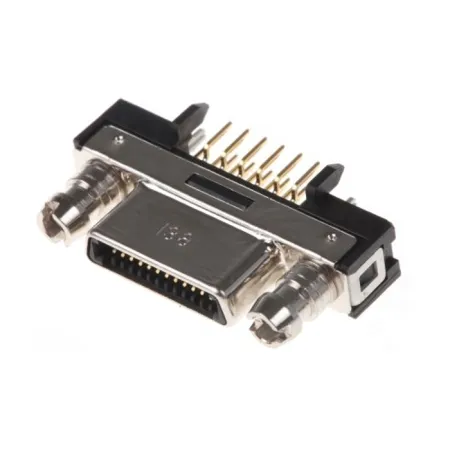
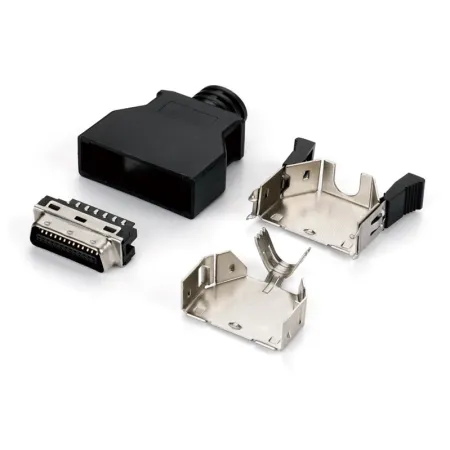
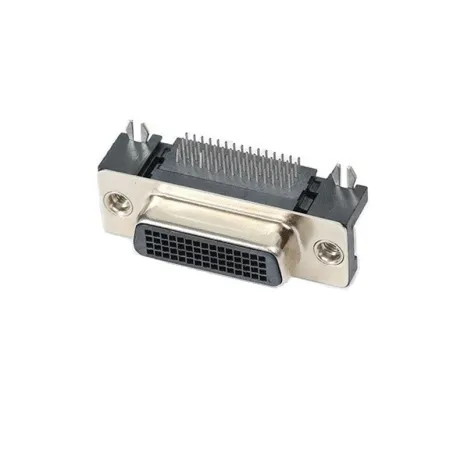
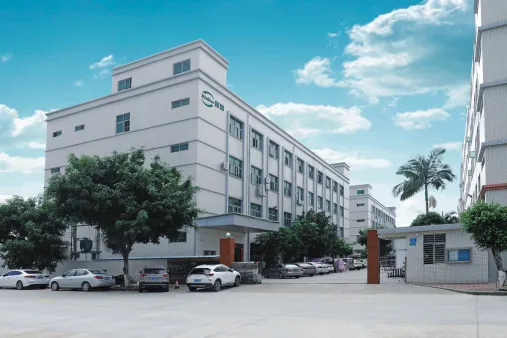
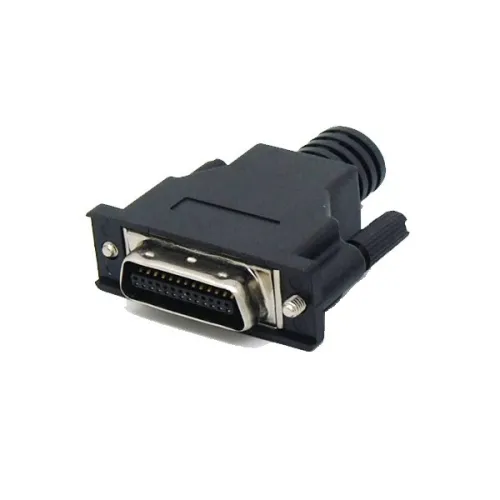
We Have The Best Solutions for Your Business
1. Cable Ass'y products: double shielded signal control Cables (SCSI, VHDCI, D-SUB, USB, LFH, SDR), Ten million times drag chain line, industrial camera wiring harness, industrial network cable, mechanical equipment oil resistant wiring harness, customized various specifications Cable research and development, assembly.
2. Connector products: SCSI, VHDCI, D-SUB, LFH, USB 3.0, servo motor peripheral series connectors.
3. Brand agent: Amphenol (SFP, SFP28, QSFP, QSFP28, QSFP-DD, OSFP, CFP2, CFP4, MiniSAS HD, SlimSAS, PCIeSAS, Oculink, MCIO, Gen-Z)
Attentive service, perfect quality!
Right-Angle vs. Straight Connectors: Which Camera Link Cable is Best?
The choice between a right-angle and a straight connector on your Camera Link cable is a critical decision for mechanical integration. A straight connector is standard, but in applications with limited clearance behind the camera or frame grabber, it can cause the cable to bend too sharply, stressing the connection point and eventually leading to failure. A right-angle connector, an option offered by KinKuo, allows the cable to exit up, down, left, or right, enabling a much cleaner and lower-profile installation. This is essential for cameras mounted in tight enclosures or on robotic arms. By choosing the correct connector orientation from KinKuo, you can prevent cable strain, improve system reliability, and create a more professional and serviceable machine design. Let us help you build the perfect Camera Link cable for your space constraints.
Understanding Camera Link Cable Standards: Base, Medium, Full, and Deca.
The Camera Link standard has several configurations that determine the cable's data rate: Base, Medium, Full, and Deca. A "Base" configuration requires one Camera Link cable. "Medium," "Full," and "Deca" configurations offer higher bandwidth but require two cables to connect the camera to the frame grabber. It is absolutely critical that you use the correct cable configuration for your hardware. Using a single cable on a system that requires two will result in a partial or non-functional image. At KinKuo, we understand these standards inside and out. We can provide single cables for Base configurations or matched pairs for Medium and Full configurations. When placing your order, ensure you specify which configuration your system uses, and KinKuo will deliver the correct, high-performance Camera Link cable solution.
Need a Custom Length Camera Link Cable Fast? Here’s Your Solution.
You've finalized your machine's design, and you realize an off-the-shelf 2-meter or 5-meter Camera Link cable won't work. You need a specific length to ensure a clean installation and optimal signal performance, and you need it quickly to keep your project on schedule. This is a common challenge that a specialized manufacturer is built to solve. KinKuo offers a rapid prototyping and manufacturing service for custom length cables. Because we control the entire production process in-house, we can build and ship your custom Camera Link cable far faster than a standard distributor. You get the precise length you need, with the connectors you specify, built to our exacting quality standards. Stop compromising with cables that are too long or too short. Contact KinKuo to get the perfect custom Camera Link cable delivered on your timeline.
Your Machine Vision System Is Dropping Frames? Check Your Camera Link Cable.
If you're troubleshooting a machine vision system that is inexplicably dropping frames or showing pixelated artifacts, the problem may not be your expensive camera or frame grabber. It could be your Camera Link cable. A cable with inadequate shielding, poor construction, or one that has been damaged by excessive flexing can corrupt the data stream, leading to exactly these kinds of frustrating, intermittent issues. Before you spend hours recalibrating software or questioning your hardware, inspect your cable. Better yet, replace it with a high-quality, fully shielded assembly from a trusted manufacturer like KinKuo. Our cables are 100% tested to ensure they meet the stringent requirements of the Camera Link standard, providing a clean, error-free data path. Eliminate the cable as a variable and solve your data issues by trusting a reliable Camera Link cable from KinKuo.
User Reviews
What users say about KinKuo
Frequently Asked Question
Do you have any question?
A high-quality Camera Link cable will have features like robust, overmolded connectors with thumbscrews for secure locking, comprehensive shielding (often labeled as "double shielded"), and a UL rating. Most importantly, it should come from a reputable manufacturer that performs 100% electrical testing on every assembly to guarantee it meets or exceeds the Camera Link standard's stringent performance specifications.
SDR (Shrunk Delta Ribbon) and MDR (Mini D Ribbon) are the two common connector types for a Camera Link cable. The MDR is the original, larger 26-pin connector. The SDR is a more compact, modern version that also features 26 pins but in a smaller form factor, making it ideal for high-density applications. Both are available, and the choice depends entirely on the mating connectors on your camera and frame grabber.
Yes, a key service offered by a specialized manufacturer is the ability to provide a custom length Camera Link cable. This is crucial for optimizing cable routing, minimizing signal loss associated with excess length, and ensuring a clean, professional installation. Ordering the exact length you need prevents the performance issues that can arise from coiling long, off-the-shelf cables in a machine's control cabinet.
Proper shielding is critical to the performance of a Camera Link cable, especially in electrically noisy industrial environments. A well-constructed cable features multiple layers of shielding, typically aluminum foil and a braided copper shield, to protect the high-speed data signals from electromagnetic interference (EMI). This robust shielding prevents data corruption and ensures the error-free transmission required for high-resolution imaging and inspection.
A high-flex Camera Link cable is essential for robotics and other constant-motion applications because it is specifically designed to endure millions of bending and twisting cycles without internal conductor breakage or degradation of signal integrity. Standard cables would quickly fail under such mechanical stress, leading to system failure. High-flex versions use special fine-stranded conductors and highly durable jacketing materials to ensure a long operational life in dynamic environments.
The primary advantage of a Power over Camera Link (PoCL) cable is its ability to simplify system design and reduce clutter by transmitting power, data, and control signals through a single assembly. This eliminates the need for a separate power supply for the camera, which is especially beneficial in space-constrained applications or on moving robotic arms where minimizing the number of cables is crucial for reliability.
Our updates and blog posts
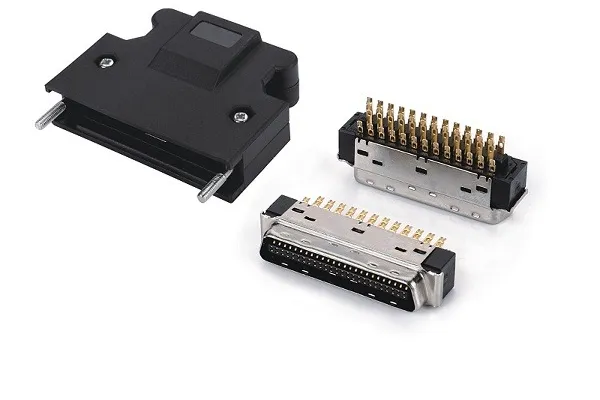
Servo Connector Mastery: How KinKuo’s Servo Connector Range Eliminates Downtime and Future-Proofs Motion Systems
Explore KinKuo Servo Connector solutions—IP67, 10 M flex, same-day ship. Cut downtime and future-proof motion systems today.
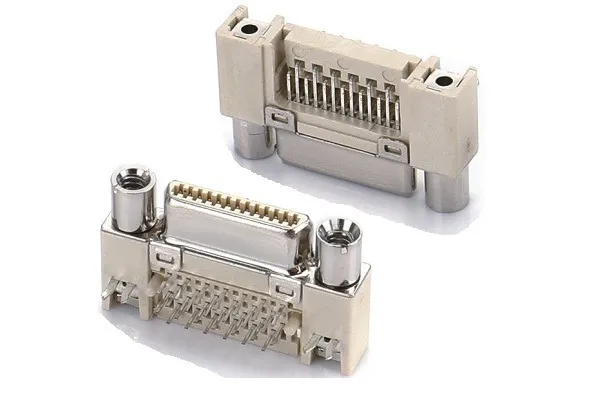
VHDCI Connector Deep Dive: How KinKuo’s VHDCI Connector Range Delivers 68-Pin Density with Zero Signal Loss
Explore KinKuo VHDCI Connector solutions—0.8 mm pitch, 500 V, RoHS. Cut space and boost speed with proven VHDCI Connector today.
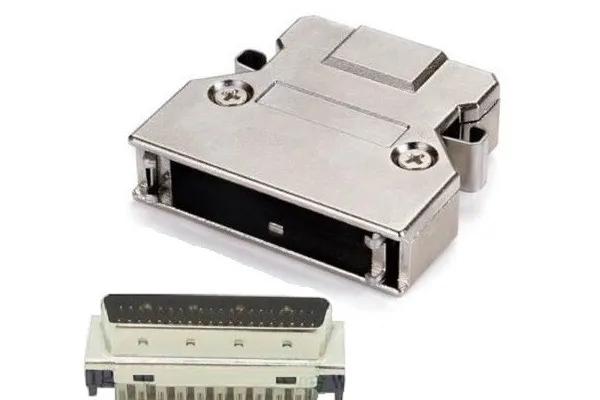
SCSl Connector Deep-Dive: How KinKuo’s SCSl Connector Portfolio Delivers 68-Pin Density with Industrial-Grade Reliability
Explore KinKuo VHDCI Connector solutions—0.8 mm pitch, 500 V, RoHS. Cut space and boost speed with proven VHDCI Connector today.
Our updates and blog posts
Servo Connector Mastery: How KinKuo’s Servo Connector Range Eliminates Downtime and Future-Proofs Motion Systems
Explore KinKuo Servo Connector solutions—IP67, 10 M flex, same-day ship. Cut downtime and future-proof motion systems today.
VHDCI Connector Deep Dive: How KinKuo’s VHDCI Connector Range Delivers 68-Pin Density with Zero Signal Loss
Explore KinKuo VHDCI Connector solutions—0.8 mm pitch, 500 V, RoHS. Cut space and boost speed with proven VHDCI Connector today.
SCSl Connector Deep-Dive: How KinKuo’s SCSl Connector Portfolio Delivers 68-Pin Density with Industrial-Grade Reliability
Explore KinKuo VHDCI Connector solutions—0.8 mm pitch, 500 V, RoHS. Cut space and boost speed with proven VHDCI Connector today.