
10-Year R&D Excellence
Founded in 2010, Kinkuo has a decade-long track record of innovative connector and cable design for industrial automation and high-end applications.
Wide-Ranging Expertise
Core portfolio spans double-shielded signal cables, 10-million-cycle drag-chain cables, industrial camera & network harnesses, oil-resistant assemblies, and complete SCSI/VHDCI/D-SUB/USB 3.0 connector lines.
Global Brand Trust
Long-term preferred supplier to renowned customers across Japan, Taiwan, Europe, the Americas, and Mainland China, attesting to consistent quality and reliability.
Tier-1 Supply Chain Access
Authorized distributor of Amphenol’s latest high-speed interconnect portfolio (SFP, QSFP-DD, OSFP, SlimSAS, Gen-Z, etc.), enabling turnkey, future-proof solutions.
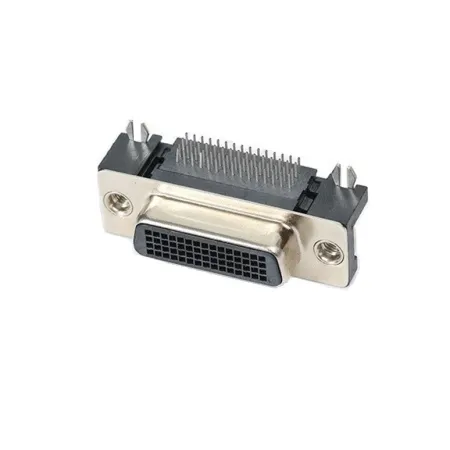

We Have The Best Solutions for Your Business
1. Cable Ass'y products: double shielded signal control Cables (SCSI, VHDCI, D-SUB, USB, LFH, SDR), Ten million times drag chain line, industrial camera wiring harness, industrial network cable, mechanical equipment oil resistant wiring harness, customized various specifications Cable research and development, assembly.
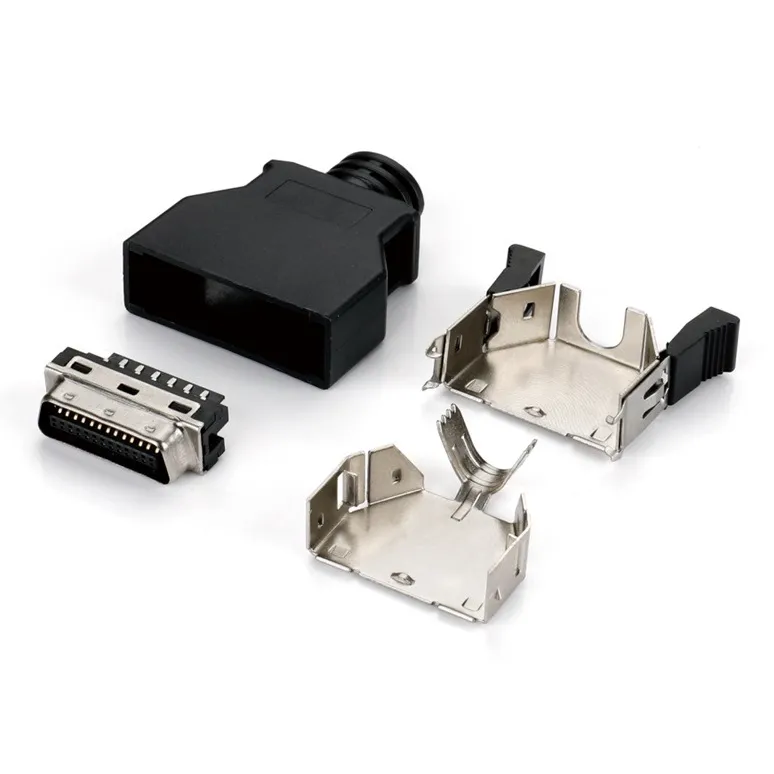
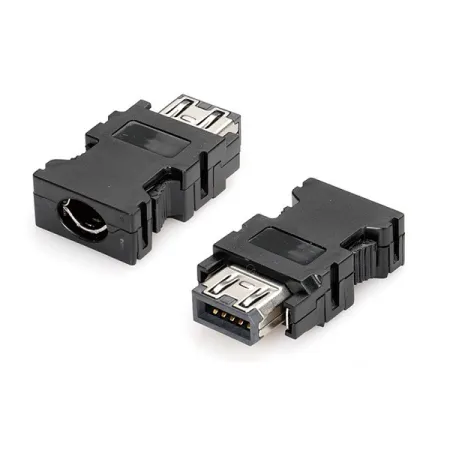
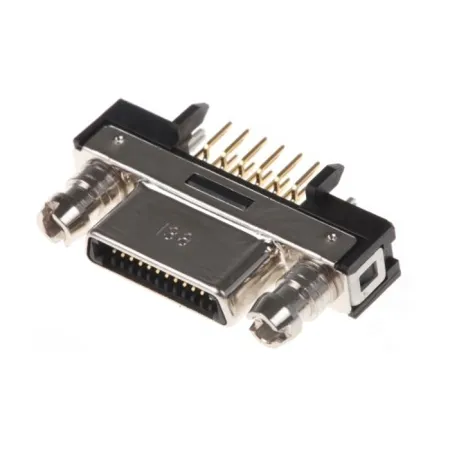
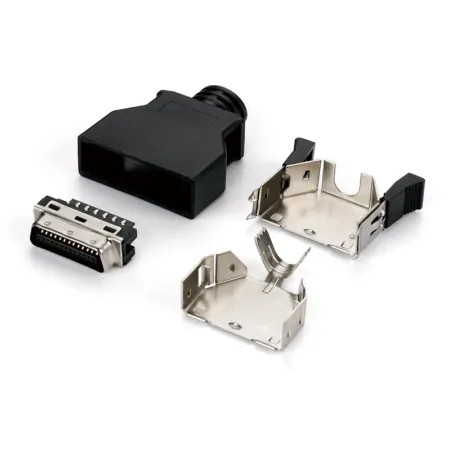
2. Connector products: SCSI, VHDCI, D-SUB, LFH, USB 3.0, servo motor peripheral series connectors.
3. Brand agent: Amphenol (SFP, SFP28, QSFP, QSFP28, QSFP-DD, OSFP, CFP2, CFP4, MiniSAS HD, SlimSAS, PCIeSAS, Oculink, MCIO, Gen-Z)
Attentive service, perfect quality!
How do I get the official PCB footprint and design guidelines for an MCIO connector?
Using the correct, manufacturer-specified PCB footprint is absolutely essential for a MCIO connector. An incorrect land pattern will lead to a failed board spin and poor signal integrity. You must not use generic or reverse-engineered footprints. The only reliable way to get this information is through an authorized agent who has direct access to the manufacturer's official technical documentation. As an authorized agent for Amphenol, KinKuo can provide you with the official datasheets, detailed mechanical drawings, and the comprehensive PCB design guideline documents for any MCIO connector we sell. These documents provide the exact pad and via layouts, as well as crucial recommendations for trace routing in the breakout region, ensuring your design is correct and will perform as expected.
My application is cost-sensitive. Is there a more affordable alternative to the MCIO connector?
For a new design targeting the performance of PCIe 5.0, the MCIO connector is the industry-standard and most technically appropriate choice. While older standards like OCuLink might appear cheaper on a per-part basis, they are not engineered to handle the signal integrity demands of 32 GT/s. Attempting to use an older, less capable connector in a Gen 5 application will lead to high error rates and system instability, which is far more costly in the long run. The most cost-effective solution is always to use the correct component for the job. As a high-volume supplier, KinKuo can offer very competitive, factory-direct pricing on the MCIO connector. We can work with you to find the most cost-effective configuration that still meets all of your essential performance requirements, ensuring you get the best possible value without sacrificing reliability.
Where can I find a genuine Amphenol MCIO connector to avoid counterfeits?
The only way to be 100% certain that you are buying a genuine Amphenol MCIO connector and not a low-quality counterfeit is to purchase it through a fully authorized agent. Counterfeit components are a massive risk to your project and can cause intermittent failures that are nearly impossible to diagnose. KinKuo is a factory-authorized agent for Amphenol's high-speed interconnect products. This means we have a direct, secure, and traceable supply chain right back to the original Amphenol factory. There is zero risk of counterfeit parts. By sourcing through KinKuo, you get the absolute guarantee of authenticity, along with the full backing of the manufacturer's warranty and technical support. Don't risk your valuable design; protect it by working with a trusted, authorized partner.
My PCIe 5.0 link is unstable and has high error rates. What's the cause?
An unstable PCIe 5.0 link with a high error rate is a classic signal integrity problem, and the most likely culprit is a low-quality or non-compliant internal interconnect. At 32 GT/s, the signals are extremely sensitive, and a poorly designed connector or cable will introduce too much loss and crosstalk, corrupting the data. You must use a MCIO connector system that is specifically engineered and validated for PCIe Gen 5. By switching to a genuine, high-performance MCIO connector and cable assembly from a trusted supplier like KinKuo, you are using a component that is proven to meet the stringent signal integrity requirements of the standard. This will provide a clean, stable channel, eliminate the root cause of the data errors, and restore the reliability of your PCIe link.
User Reviews
What users say about KinKuo
Frequently Asked Question
Do you have any question?
The MCIO connector plays a foundational role for Compute Express Link™ (CXL™) because CXL runs over the PCIe physical layer. As servers adopt CXL for memory expansion and disaggregated architectures, the MCIO connector will provide the essential high-bandwidth, low-latency physical connection needed to link processors to CXL memory modules and other CXL-enabled devices, making it a key enabler of next-generation server architecture.
Using a genuine Amphenol MCIO connector is critical because Amphenol is a world leader who has invested heavily in the R&D to perfect the connector's performance. A counterfeit or "clone" connector will not have the same precision, materials, or signal integrity and will cause high data error rates and system instability. Sourcing a genuine part from an authorized agent like KinKuo is the only way to guarantee performance.
The board-mounted receptacle of an MCIO connector typically comes in two main orientations: vertical (perpendicular to the PCB) and right-angle (parallel to the PCB). This gives system architects the flexibility to route cables in the most efficient way possible within a server chassis, either coming straight up off the board or running low across its surface to avoid impeding airflow.
The MCIO connector is superior to OCuLink for new designs because it is a next-generation solution built for a higher performance tier. It offers a clearer roadmap to future speeds like PCIe 6.0, provides better signal integrity performance, and has a more robust and dense mechanical design. While OCuLink was suitable for earlier PCIe generations, MCIO is the forward-looking standard.
The MCIO connector is the standard for PCIe 5.0 because its electrical and mechanical design is optimized for the 32 GT/s signal speeds. It features superior signal integrity with extremely low crosstalk, a controlled impedance profile, and a density that allows for many high-speed lanes in a small space, all of which are mandatory requirements for a stable PCIe Gen 5 channel.
MCIO stands for Mini Cool Edge IO. An MCIO connector is a high-density, high-performance internal interconnect system designed to handle the extreme data rates of next-generation protocols like PCI Express® (PCIe) 5.0 and 6.0. It is used to link a server's mainboard to peripherals like NVMe drives and accelerator cards.
Our updates and blog posts
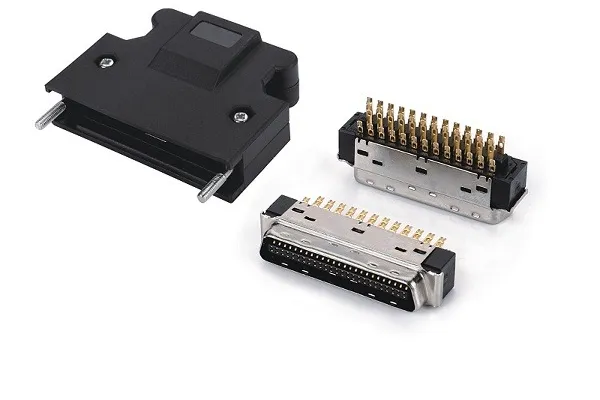
Servo Connector Mastery: How KinKuo’s Servo Connector Range Eliminates Downtime and Future-Proofs Motion Systems
Explore KinKuo Servo Connector solutions—IP67, 10 M flex, same-day ship. Cut downtime and future-proof motion systems today.
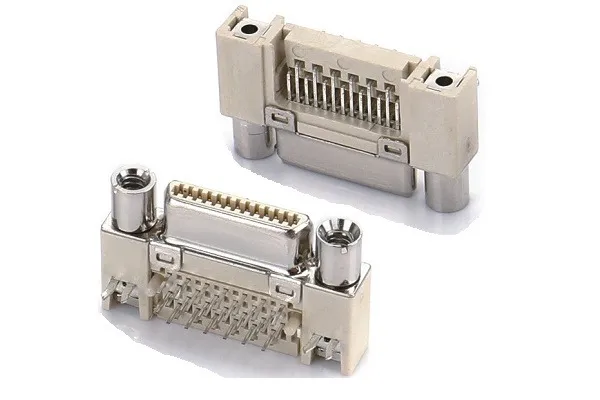
VHDCI Connector Deep Dive: How KinKuo’s VHDCI Connector Range Delivers 68-Pin Density with Zero Signal Loss
Explore KinKuo VHDCI Connector solutions—0.8 mm pitch, 500 V, RoHS. Cut space and boost speed with proven VHDCI Connector today.
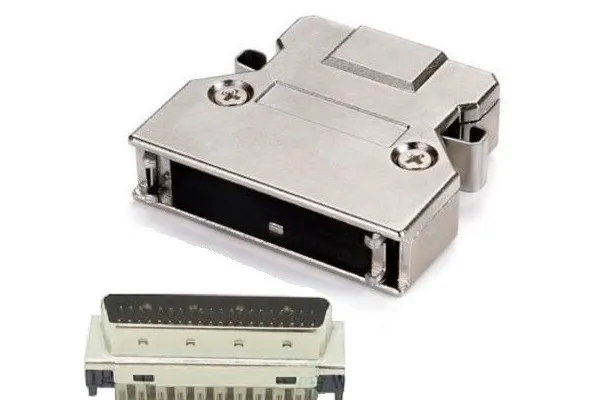
SCSl Connector Deep-Dive: How KinKuo’s SCSl Connector Portfolio Delivers 68-Pin Density with Industrial-Grade Reliability
Explore KinKuo VHDCI Connector solutions—0.8 mm pitch, 500 V, RoHS. Cut space and boost speed with proven VHDCI Connector today.
Our updates and blog posts
Servo Connector Mastery: How KinKuo’s Servo Connector Range Eliminates Downtime and Future-Proofs Motion Systems
Explore KinKuo Servo Connector solutions—IP67, 10 M flex, same-day ship. Cut downtime and future-proof motion systems today.
VHDCI Connector Deep Dive: How KinKuo’s VHDCI Connector Range Delivers 68-Pin Density with Zero Signal Loss
Explore KinKuo VHDCI Connector solutions—0.8 mm pitch, 500 V, RoHS. Cut space and boost speed with proven VHDCI Connector today.
SCSl Connector Deep-Dive: How KinKuo’s SCSl Connector Portfolio Delivers 68-Pin Density with Industrial-Grade Reliability
Explore KinKuo VHDCI Connector solutions—0.8 mm pitch, 500 V, RoHS. Cut space and boost speed with proven VHDCI Connector today.