
10-Year R&D Excellence
Founded in 2010, Kinkuo has a decade-long track record of innovative connector and cable design for industrial automation and high-end applications.
Wide-Ranging Expertise
Core portfolio spans double-shielded signal cables, 10-million-cycle drag-chain cables, industrial camera & network harnesses, oil-resistant assemblies, and complete SCSI/VHDCI/D-SUB/USB 3.0 connector lines.
Global Brand Trust
Long-term preferred supplier to renowned customers across Japan, Taiwan, Europe, the Americas, and Mainland China, attesting to consistent quality and reliability.
Tier-1 Supply Chain Access
Authorized distributor of Amphenol’s latest high-speed interconnect portfolio (SFP, QSFP-DD, OSFP, SlimSAS, Gen-Z, etc.), enabling turnkey, future-proof solutions.


We Have The Best Solutions for Your Business
1. Cable Ass'y products: double shielded signal control Cables (SCSI, VHDCI, D-SUB, USB, LFH, SDR), Ten million times drag chain line, industrial camera wiring harness, industrial network cable, mechanical equipment oil resistant wiring harness, customized various specifications Cable research and development, assembly.
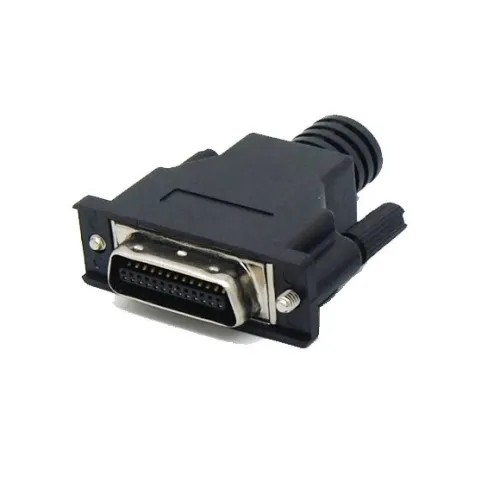
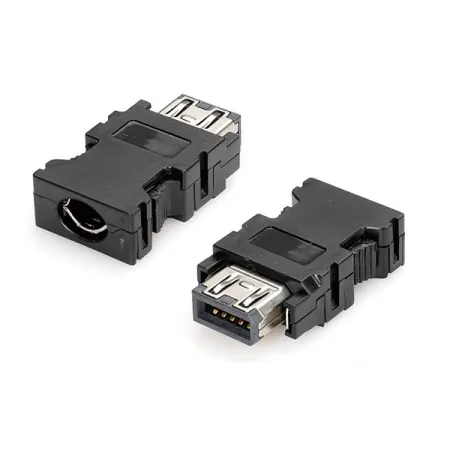
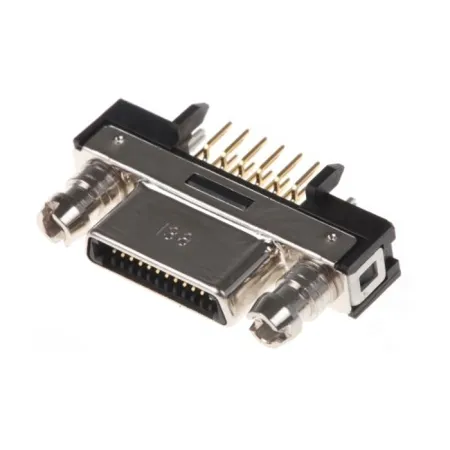
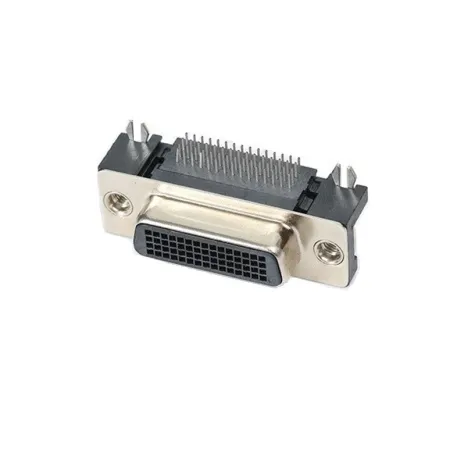
2. Connector products: SCSI, VHDCI, D-SUB, LFH, USB 3.0, servo motor peripheral series connectors.
3. Brand agent: Amphenol (SFP, SFP28, QSFP, QSFP28, QSFP-DD, OSFP, CFP2, CFP4, MiniSAS HD, SlimSAS, PCIeSAS, Oculink, MCIO, Gen-Z)
Attentive service, perfect quality!
When should I use an Active Optical Cable (AOC) instead of a Direct Attach Copper (DAC)?
The decision between an AOC and DAC high speed cable comes down to three factors: distance, environment, and budget. For short distances (typically 5 meters or less) within a single rack, a DAC is the superior choice. It offers lower cost, lower power consumption, and the lowest possible latency. However, if your connection needs to span a longer distance, such as from one end of a data center row to another, you must use an AOC. The fiber optic technology in an AOC allows for runs up to 100 meters with no signal degradation. Additionally, if the cable must pass through an area with high electromagnetic interference (EMI), an AOC is the better choice as its optical signal is completely immune to EMI. KinKuo can supply both types, and our experts can help you choose the optimal high speed cable for each specific link in your network.
I need to connect a new PCIe Gen 5 SSD. What kind of cable do I use?
The launch of PCIe Gen 5 has doubled the bandwidth requirements for internal server connections, making the cabling a critical performance component. To connect a new PCIe Gen 5 device like an NVMe SSD or an accelerator card, you need a next-generation internal high speed cable that uses either the MCIO (Multi-Channel I/O) or SlimSAS connector standard. These new standards are specifically designed to handle the incredible 32 GT/s signal rates of PCIe 5.0 with excellent signal integrity. KinKuo is a specialist manufacturer of these advanced internal cables. We can provide the specific MCIO or SlimSAS high speed cable assembly you need to ensure your new, high-performance peripherals are not being bottlenecked by outdated internal wiring.
How does a high speed cable for 400G differ from one for 100G?
A high speed cable for 400G is a far more technologically advanced product than one for 100G, primarily due to the signaling technology used. A 100G cable typically uses four lanes, each transmitting a 25G NRZ signal. A 400G cable also often uses multiple lanes (typically 8), but each lane transmits a much more complex 50G PAM4 signal. PAM4 is much more susceptible to noise and signal degradation. Therefore, a 400G high speed cable must be manufactured to significantly tighter tolerances, with much better shielding and lower crosstalk, to maintain signal integrity. It requires more advanced internal electronics in the connector and a much more rigorous testing and validation process. KinKuo has the expertise and the world-class partners to provide a high speed cable that is truly engineered to meet the immense challenges of 400G networking.
I need a custom-length DAC cable for a specific rack layout. Can I order one?
Yes, absolutely. One of the main challenges with off-the-shelf cables is that they come in fixed, standard lengths that often result in messy loops of excess cable in your rack. This not only looks unprofessional but can also impede serviceability and airflow. To solve this, you need a supplier that can provide customized cables. KinKuo is an OEM-focused partner and we specialize in providing custom-length high speed cable assemblies. You can specify the exact length you need, down to the centimeter, to create a perfect, clean installation for your specific rack layout. This service is invaluable for large-scale deployments where clean and efficient cable management is a top priority. Let KinKuo help you create a more professional and efficient data center with our custom-length high speed cable solutions.
User Reviews
What users say about KinKuo
Frequently Asked Question
Do you have any question?
Sourcing your high speed cable from an authorized agent for a top brand like Amphenol is the only way to guarantee authenticity and quality. KinKuo provides a secure, factory-direct supply chain, eliminating the risk of counterfeit products that can cause system failures. You get genuine, fully-warranted components that are guaranteed to meet all performance specifications, along with expert technical support.
MCIO (Multi-Channel I/O) and SlimSAS are types of internal high speed cable solutions used to connect components inside servers and storage systems. They are critical for the latest PCIe 5.0 and upcoming PCIe 6.0 standards, providing the immense bandwidth needed to connect CPUs to peripherals like NVMe SSDs, accelerators, and network interface cards.
At data rates of 400G and above, microscopic manufacturing defects can cause massive data errors. 100% testing is essential for a high speed cable because it verifies that every single assembly meets stringent performance metrics like Bit Error Rate (BER), insertion loss, and return loss. Unlike batch testing, it guarantees that the specific cable you receive is free of defects and will perform flawlessly in your live network environment.
A "breakout" high speed cable is used to connect a single, higher-speed switch port to multiple lower-speed server or device ports. For example, a 400G QSFP-DD to 4x 100G QSFP28 breakout cable takes a single 400G port and splits it into four independent 100G links, allowing for greater flexibility and port density in network architecture.
You should choose a DAC high speed cable for connections within the same rack or between adjacent racks in a data center (top-of-rack switching). It is the most cost-effective and power-efficient solution for these short-reach applications, providing the lowest latency, which is critical for High-Performance Computing (HPC) and AI clusters.
The main difference is the transmission medium. A Direct Attach Copper (DAC) high speed cable uses twinaxial copper wire to transmit electrical signals, making it ideal for short distances (typically under 7 meters) due to its low cost, low power consumption, and low latency. An Active Optical Cable (AOC) high speed cable has transceivers built into the connector heads that convert electrical signals to light, which travels over fiber optic cable. This allows for much longer transmission distances, immunity to electromagnetic interference, and a lighter, more flexible cable.
Our updates and blog posts
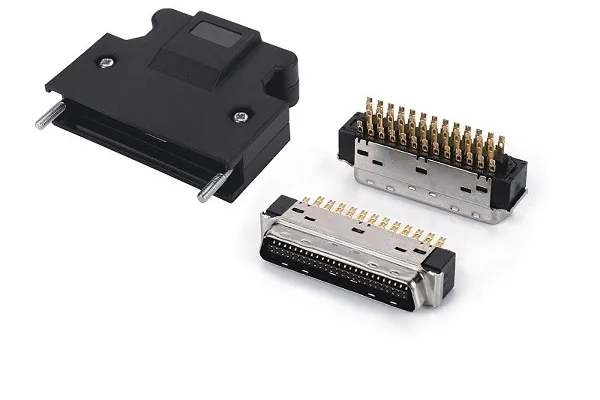
Servo Connector Mastery: How KinKuo’s Servo Connector Range Eliminates Downtime and Future-Proofs Motion Systems
Explore KinKuo Servo Connector solutions—IP67, 10 M flex, same-day ship. Cut downtime and future-proof motion systems today.

VHDCI Connector Deep Dive: How KinKuo’s VHDCI Connector Range Delivers 68-Pin Density with Zero Signal Loss
Explore KinKuo VHDCI Connector solutions—0.8 mm pitch, 500 V, RoHS. Cut space and boost speed with proven VHDCI Connector today.
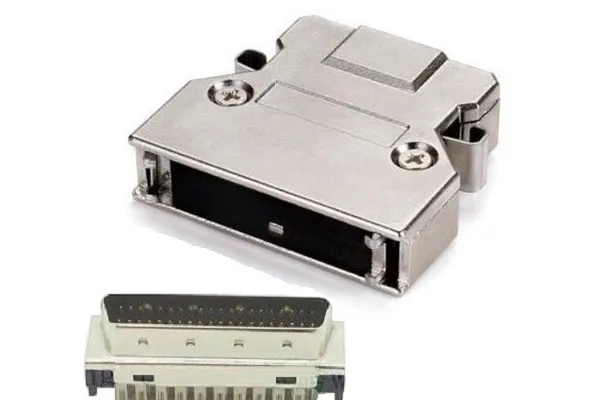
SCSl Connector Deep-Dive: How KinKuo’s SCSl Connector Portfolio Delivers 68-Pin Density with Industrial-Grade Reliability
Explore KinKuo VHDCI Connector solutions—0.8 mm pitch, 500 V, RoHS. Cut space and boost speed with proven VHDCI Connector today.
Our updates and blog posts
Servo Connector Mastery: How KinKuo’s Servo Connector Range Eliminates Downtime and Future-Proofs Motion Systems
Explore KinKuo Servo Connector solutions—IP67, 10 M flex, same-day ship. Cut downtime and future-proof motion systems today.
VHDCI Connector Deep Dive: How KinKuo’s VHDCI Connector Range Delivers 68-Pin Density with Zero Signal Loss
Explore KinKuo VHDCI Connector solutions—0.8 mm pitch, 500 V, RoHS. Cut space and boost speed with proven VHDCI Connector today.
SCSl Connector Deep-Dive: How KinKuo’s SCSl Connector Portfolio Delivers 68-Pin Density with Industrial-Grade Reliability
Explore KinKuo VHDCI Connector solutions—0.8 mm pitch, 500 V, RoHS. Cut space and boost speed with proven VHDCI Connector today.