
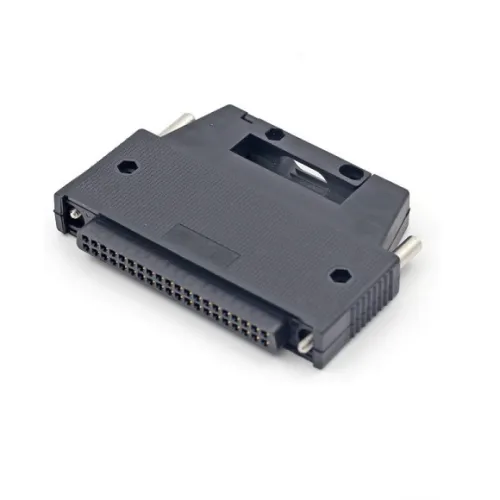
Features
Why Choose KinKuo?
10-Year R&D Excellence
Founded in 2010, Kinkuo has a decade-long track record of innovative connector and cable design for industrial automation and high-end applications.
Wide-Ranging Expertise
Core portfolio spans double-shielded signal cables, 10-million-cycle drag-chain cables, industrial camera & network harnesses, oil-resistant assemblies, and complete SCSI/VHDCI/D-SUB/USB 3.0 connector lines.
Global Brand Trust
Long-term preferred supplier to renowned customers across Japan, Taiwan, Europe, the Americas, and Mainland China, attesting to consistent quality and reliability.
Tier-1 Supply Chain Access
Authorized distributor of Amphenol’s latest high-speed interconnect portfolio (SFP, QSFP-DD, OSFP, SlimSAS, Gen-Z, etc.), enabling turnkey, future-proof solutions.

We Have The Best Solutions for Your Business
1. Cable Ass'y products: double shielded signal control Cables (SCSI, VHDCI, D-SUB, USB, LFH, SDR), Ten million times drag chain line, industrial camera wiring harness, industrial network cable, mechanical equipment oil resistant wiring harness, customized various specifications Cable research and development, assembly.
2. Connector products: SCSI, VHDCI, D-SUB, LFH, USB 3.0, servo motor peripheral series connectors.
3. Brand agent: Amphenol (SFP, SFP28, QSFP, QSFP28, QSFP-DD, OSFP, CFP2, CFP4, MiniSAS HD, SlimSAS, PCIeSAS, Oculink, MCIO, Gen-Z)
Attentive service, perfect quality!
In my 15 years in the high-speed interconnect industry, I’ve seen the primary design challenge evolve. It used to be simply, "How can we go faster?" Now, it's a far more complex question: "How can we go faster without melting the box?" This is the brutal reality of the 800G era, and it is the exact problem that the OSFP connector was brilliantly engineered to solve. Since we started our work in 2010, we've gone from shipping 10G connectors to these next-generation marvels, and I can tell you with certainty, the OSFP represents a fundamental shift in design philosophy.
The dirty secret of 800G and 1.6T optics is the immense power they consume, which is all converted directly into heat. A high-performance transceiver can generate 20 watts or more of heat in a tiny metal box. The challenge is getting that heat out. This is where the genius of the OSFP connector specification shines. Unlike other form factors that treated thermals as a secondary concern, the OSFP put it front and center. The design's masterstroke was integrating the primary heatsink directly into the pluggable module itself, allowing it to make direct contact with the cooling airflow. This seems like a simple idea, but it is a revolutionary improvement in thermal efficiency.
This focus on thermals allows system designers to do what was previously impossible: build 1U switches with a full front panel of 32 or more 800G ports, a density that is absolutely essential for building the massive network fabrics that power modern AI clusters. The OSFP connector is, therefore, more than just a component; it is an enabler of architectural innovation. It provides the performance headroom that allows for a clear and confident roadmap to 1.6 Terabits per second and beyond, ensuring that the investments made in this technology today will not be obsolete tomorrow.
As an authorized agent for a world leader like Amphenol, who is at the forefront of this technology, we see ourselves as partners in this innovation. We are providing the foundational building blocks that our clients need to build the world's most powerful computers and communication networks. Every time we ship a genuine, high-performance OSFP connector, we know we are providing a component that doesn't just promise speed, but also the thermal stability to reliably deliver that speed 24/7. It's the ultimate solution for the dual challenges of heat and bandwidth.
Featured Products
Collection about KinKuo
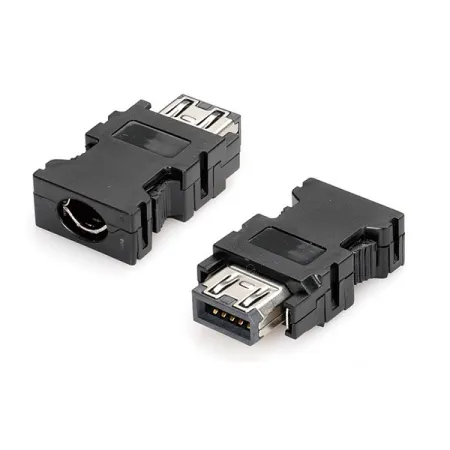
KinKuo Servo Connector – Mini D Ribbon MDR 1.27 mm Pitch
KinKuo Servo Connector MDR series offers 14–100 contacts, 500V, RoHS2.0 compliance—perfect for Servo Connector cable assemblies.
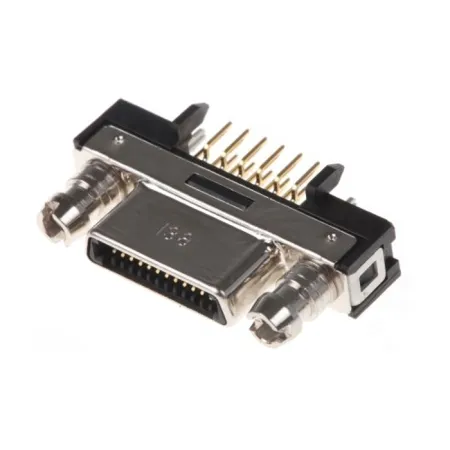
KinKuo VHDCI Connector SDR 0.8 mm 26-pin High-Speed Solution
KinKuo VHDCI Connector SDR offers 0.8 mm pitch, 26 contacts, 350 V isolation—ideal for VHDCI Connector cable assemblies in tight spaces.
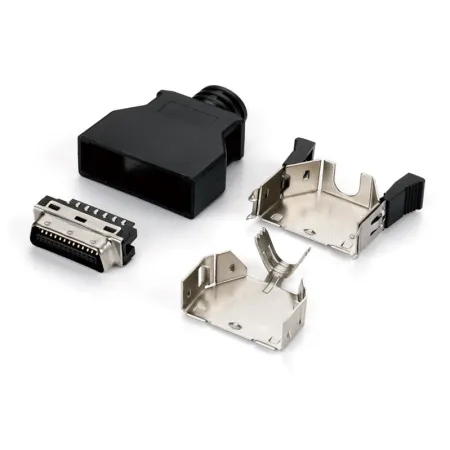
KinKuo SCSI Connector MDR 1.27 mm 14-100 Pin High-Density
KinKuo SCSI Connector MDR series delivers 1 A, 500 V, 500 MΩ, –55 °C~+105 °C—perfect SCSI Connector for high-density cable assemblies.
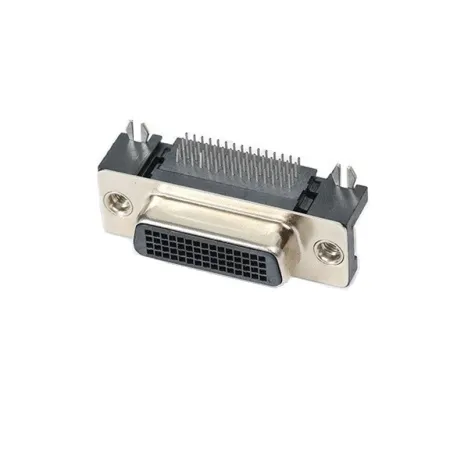
KinKuo LFH Connector 1.27 mm 59–200 Pin Low-Force Helix
KinKuo LFH Connector delivers 1 A, 500 V, <10 mΩ, low 60 g mating force—ideal LFH Connector for medical & industrial boards.
User Reviews
What users say about KinKuo
Frequently Asked Question
Do you have any question?
You must source an OSFP connector from an authorized agent like KinKuo to guarantee authenticity. These are extremely high-precision components, and a counterfeit part will not meet the critical signal integrity or thermal specifications, leading to network failure. An authorized agent provides a secure, factory-direct supply chain, ensuring you get a genuine, high-performance part that is fully warranted.
The cage assembly is the metal housing that is mounted to the host PCB. The OSFP connector cage provides the mechanical structure for guiding and latching the pluggable module, contains the electromagnetic interference (EMI), and, crucially, makes physical contact with the module's heatsink to help transfer heat away from the optics and into the system's airflow.
AI and ML workloads require massive data transfers between thousands of GPUs, creating a high-bandwidth, high-density network fabric. An OSFP connector is critical for these applications because it provides the 800G port speeds needed to prevent network bottlenecks and has the thermal capacity to cool the advanced optics required for these large-scale clusters, ensuring the entire system can run at peak performance.
The OSFP connector is slightly wider and deeper than the QSFP-DD. This larger size is a deliberate design choice that enables its superior thermal performance and provides a clear roadmap to higher speeds like 1.6T. While QSFP-DD offers backward compatibility with older QSFP modules, OSFP is often seen as the more forward-looking choice for new, high-power, high-performance designs.
The main advantage of the OSFP connector is its superior thermal management capability. The specification was designed from the ground up to handle higher-power optical modules, incorporating an integrated heatsink directly into the pluggable module itself. This allows it to cool modules exceeding 15 watts far more effectively than other form factors, which is critical for 800G optics and beyond.
An OSFP connector is a next-generation, high-speed pluggable I/O interface. Its primary application is in high-performance networking equipment like switches, routers, and servers for 400G, 800G, and future 1.6T data rates, especially within hyperscale data centers, AI clusters, and telecommunications infrastructure.
Our updates and blog posts
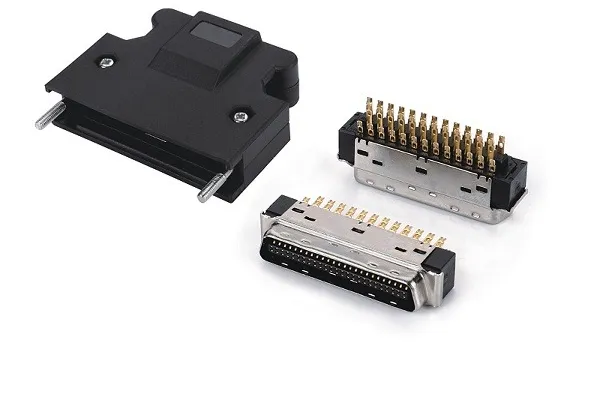
Servo Connector Mastery: How KinKuo’s Servo Connector Range Eliminates Downtime and Future-Proofs Motion Systems
Explore KinKuo Servo Connector solutions—IP67, 10 M flex, same-day ship. Cut downtime and future-proof motion systems today.
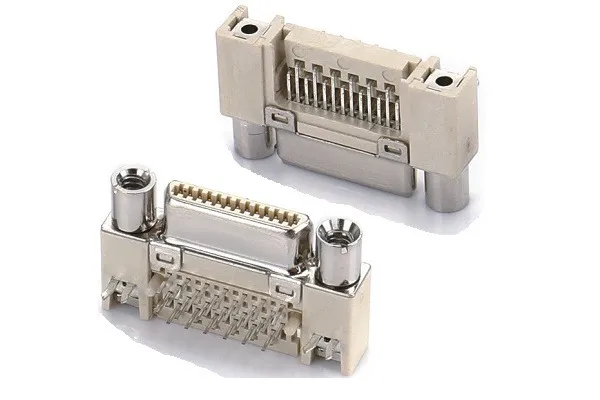
VHDCI Connector Deep Dive: How KinKuo’s VHDCI Connector Range Delivers 68-Pin Density with Zero Signal Loss
Explore KinKuo VHDCI Connector solutions—0.8 mm pitch, 500 V, RoHS. Cut space and boost speed with proven VHDCI Connector today.
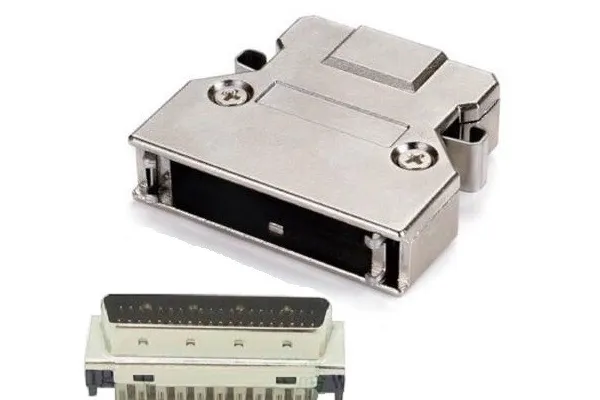
SCSl Connector Deep-Dive: How KinKuo’s SCSl Connector Portfolio Delivers 68-Pin Density with Industrial-Grade Reliability
Explore KinKuo VHDCI Connector solutions—0.8 mm pitch, 500 V, RoHS. Cut space and boost speed with proven VHDCI Connector today.