
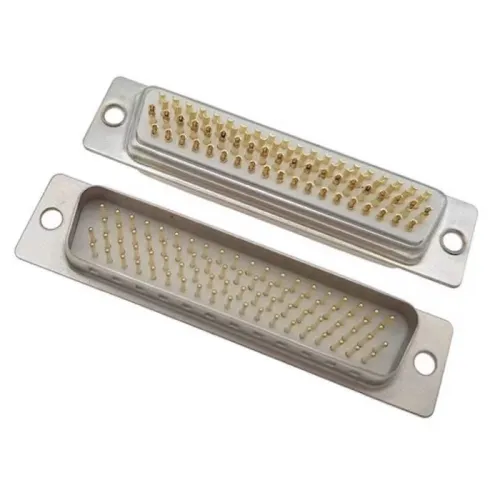
Features
Why Choose KinKuo?
10-Year R&D Excellence
Founded in 2010, Kinkuo has a decade-long track record of innovative connector and cable design for industrial automation and high-end applications.
Wide-Ranging Expertise
Core portfolio spans double-shielded signal cables, 10-million-cycle drag-chain cables, industrial camera & network harnesses, oil-resistant assemblies, and complete SCSI/VHDCI/D-SUB/USB 3.0 connector lines.
Global Brand Trust
Long-term preferred supplier to renowned customers across Japan, Taiwan, Europe, the Americas, and Mainland China, attesting to consistent quality and reliability.
Tier-1 Supply Chain Access
Authorized distributor of Amphenol’s latest high-speed interconnect portfolio (SFP, QSFP-DD, OSFP, SlimSAS, Gen-Z, etc.), enabling turnkey, future-proof solutions.
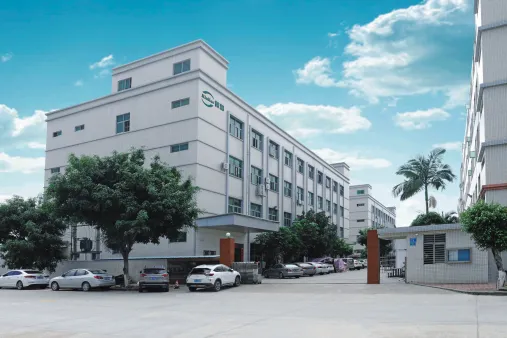
We Have The Best Solutions for Your Business
1. Cable Ass'y products: double shielded signal control Cables (SCSI, VHDCI, D-SUB, USB, LFH, SDR), Ten million times drag chain line, industrial camera wiring harness, industrial network cable, mechanical equipment oil resistant wiring harness, customized various specifications Cable research and development, assembly.
2. Connector products: SCSI, VHDCI, D-SUB, LFH, USB 3.0, servo motor peripheral series connectors.
3. Brand agent: Amphenol (SFP, SFP28, QSFP, QSFP28, QSFP-DD, OSFP, CFP2, CFP4, MiniSAS HD, SlimSAS, PCIeSAS, Oculink, MCIO, Gen-Z)
Attentive service, perfect quality!
For 15 years, I've watched the data center evolve at a breathtaking pace. We've seen CPUs and GPUs become exponentially more powerful, and with the advent of NVMe, storage has finally caught up. But for a long time, there was a hidden bottleneck, a traffic jam happening right inside the server chassis itself. The internal cables connecting these powerful components simply weren't designed for the firehose of data being unleashed. This is the entire reason the MCIO cable now exists. Since we began our work in 2010, we've focused on providing these critical links, because we understand that a supercomputer is only as fast as the roads that connect its cities.
The move to PCI Express 5.0 was a seismic shift. At 32 Giga-transfers per second, the signals we're sending down these tiny copper wires behave less like simple digital pulses and more like delicate, high-frequency radio waves. The old internal cabling standards just couldn't handle it; they were too noisy, with too much signal loss and crosstalk. The MCIO cable was engineered from the ground up to solve this physics problem. It is a masterpiece of high-frequency engineering, designed with an obsessive focus on signal integrity. Every aspect—the precise twist rate of the differential pairs, the dielectric constant of the insulation, the intricate design of the connector's internal wafer—is optimized to create a clean, quiet, impedance-controlled channel for the data to travel.
This level of precision is why the quality of manufacturing is so paramount. A generic assembler cannot build a reliable MCIO cable. It requires a factory with deep expertise in high-frequency testing and process control. It demands an understanding that even a microscopic imperfection in the cable's construction can cause reflections and data errors that will bring a half-million-dollar server to its knees. This is not a commodity part; it's a precision instrument.
As a manufacturer and as an agent for a leader like Amphenol, we are proud to be at the heart of this revolution. We are providing the essential internal superhighways that allow our partners to build the next generation of AI clusters, cloud servers, and enterprise storage. We are helping them finally unleash the full, unthrottled performance of their incredible processors and memory. Every MCIO cable we ship is a vital link in that chain, a component we build and supply with the understanding that the future of data depends on its flawless performance.
Featured Products
Collection about KinKuo
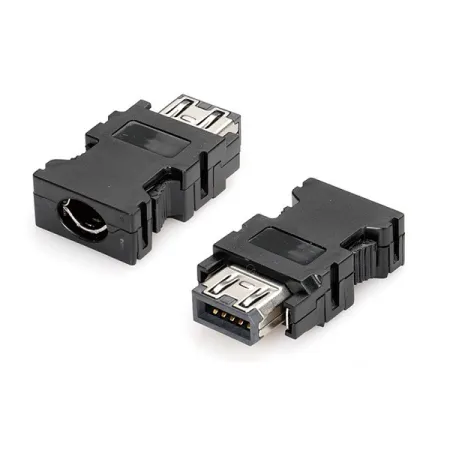
KinKuo Servo Connector – Mini D Ribbon MDR 1.27 mm Pitch
KinKuo Servo Connector MDR series offers 14–100 contacts, 500V, RoHS2.0 compliance—perfect for Servo Connector cable assemblies.
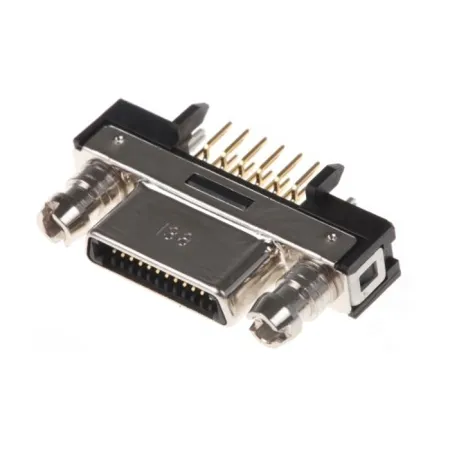
KinKuo VHDCI Connector SDR 0.8 mm 26-pin High-Speed Solution
KinKuo VHDCI Connector SDR offers 0.8 mm pitch, 26 contacts, 350 V isolation—ideal for VHDCI Connector cable assemblies in tight spaces.
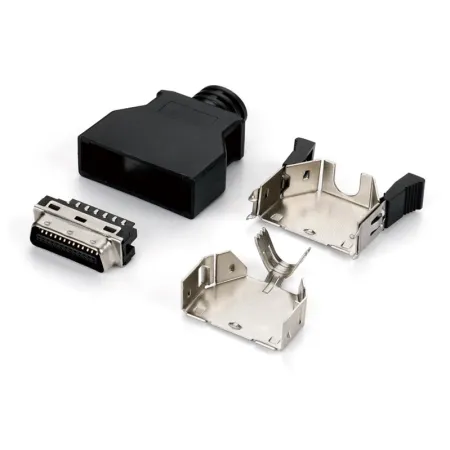
KinKuo SCSI Connector MDR 1.27 mm 14-100 Pin High-Density
KinKuo SCSI Connector MDR series delivers 1 A, 500 V, 500 MΩ, –55 °C~+105 °C—perfect SCSI Connector for high-density cable assemblies.
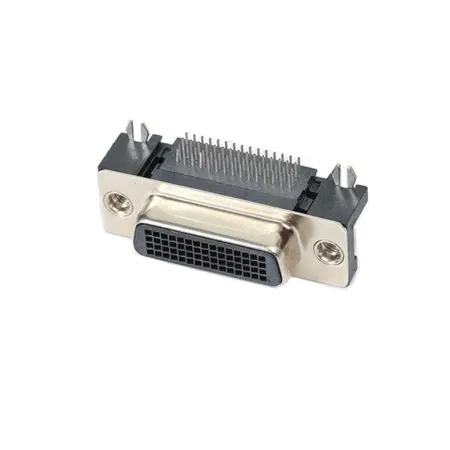
KinKuo LFH Connector 1.27 mm 59–200 Pin Low-Force Helix
KinKuo LFH Connector delivers 1 A, 500 V, <10 mΩ, low 60 g mating force—ideal LFH Connector for medical & industrial boards.
User Reviews
What users say about KinKuo
Frequently Asked Question
Do you have any question?
Yes. A specialized manufacturer like KinKuo can produce a custom-length MCIO cable to fit your specific server chassis layout. This is crucial for optimizing airflow, ensuring a clean and professional build, and preventing the signal degradation that can occur from coiling up excessively long standard cables inside an enclosure.
The quality of an MCIO cable is absolutely critical for NVMe storage arrays because these drives rely on the ultra-low latency and high bandwidth of the PCIe bus. A low-quality cable with poor signal integrity will cause data errors and retransmissions, creating a bottleneck that throttles the performance of the expensive NVMe SSDs and prevents the system from reaching its full I/O potential.
An MCIO cable uses a compact, high-density card-edge style connector system. It typically features a vertical or right-angle receptacle on the motherboard or add-in card, and the cable plug has a slim, robust design that securely mates with it, often with a latching mechanism for vibration resistance.
While both are internal high-speed cables, an MCIO cable is a more modern and higher-performance standard designed for PCIe 5.0 and beyond. OCuLink was designed for earlier PCIe generations. MCIO offers higher density, better signal integrity, and a more robust mechanical design prepared for future speed increases, making it the superior choice for new server designs.
The MCIO cable is the standard for PCIe 5.0 because its connector and cable technology are specifically engineered to maintain excellent signal integrity at the extremely high data rate of 32 GT/s. Its design minimizes crosstalk and insertion loss, which is essential for sending these sensitive, high-frequency signals over a cable without data corruption.
An MCIO cable, which stands for Mini Cool Edge IO, is a next-generation high-speed internal cable assembly. It is primarily used inside servers, storage systems, and data center hardware to connect the main system board to various peripherals, such as NVMe SSD backplanes, accelerator cards, or other PCIe devices, and is the standard for PCIe Gen 5.
Our updates and blog posts
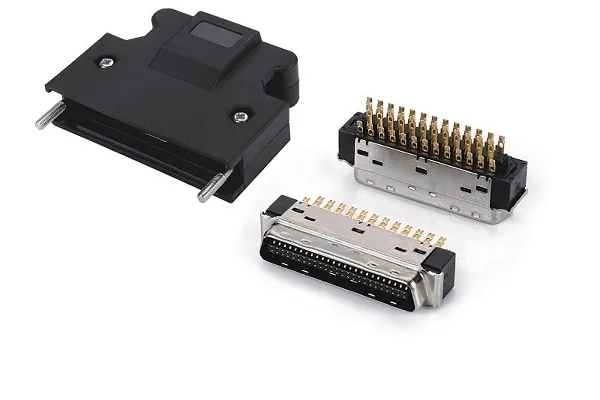
Servo Connector Mastery: How KinKuo’s Servo Connector Range Eliminates Downtime and Future-Proofs Motion Systems
Explore KinKuo Servo Connector solutions—IP67, 10 M flex, same-day ship. Cut downtime and future-proof motion systems today.
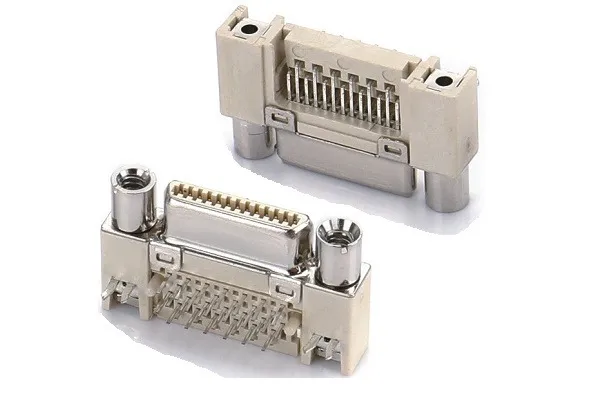
VHDCI Connector Deep Dive: How KinKuo’s VHDCI Connector Range Delivers 68-Pin Density with Zero Signal Loss
Explore KinKuo VHDCI Connector solutions—0.8 mm pitch, 500 V, RoHS. Cut space and boost speed with proven VHDCI Connector today.
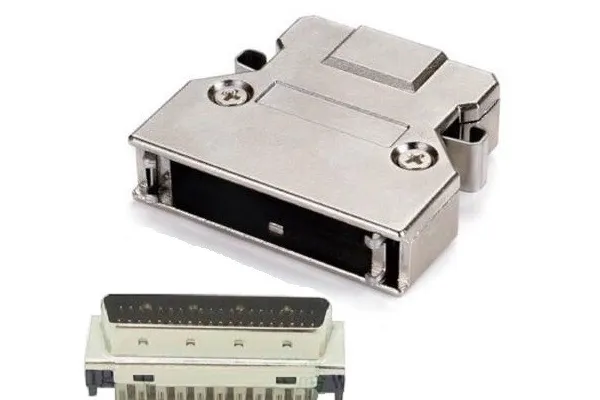
SCSl Connector Deep-Dive: How KinKuo’s SCSl Connector Portfolio Delivers 68-Pin Density with Industrial-Grade Reliability
Explore KinKuo VHDCI Connector solutions—0.8 mm pitch, 500 V, RoHS. Cut space and boost speed with proven VHDCI Connector today.