

10-Year R&D Excellence
Founded in 2010, Kinkuo has a decade-long track record of innovative connector and cable design for industrial automation and high-end applications.
Wide-Ranging Expertise
Core portfolio spans double-shielded signal cables, 10-million-cycle drag-chain cables, industrial camera & network harnesses, oil-resistant assemblies, and complete SCSI/VHDCI/D-SUB/USB 3.0 connector lines.
Global Brand Trust
Long-term preferred supplier to renowned customers across Japan, Taiwan, Europe, the Americas, and Mainland China, attesting to consistent quality and reliability.
Tier-1 Supply Chain Access
Authorized distributor of Amphenol’s latest high-speed interconnect portfolio (SFP, QSFP-DD, OSFP, SlimSAS, Gen-Z, etc.), enabling turnkey, future-proof solutions.
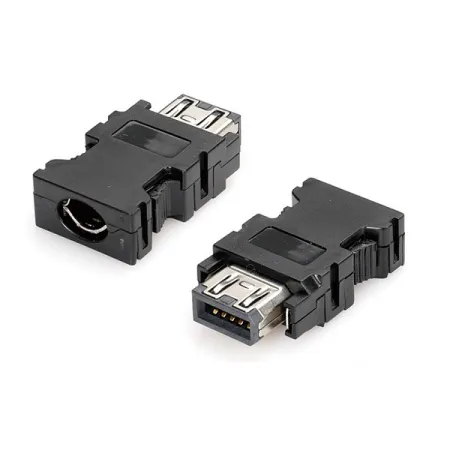
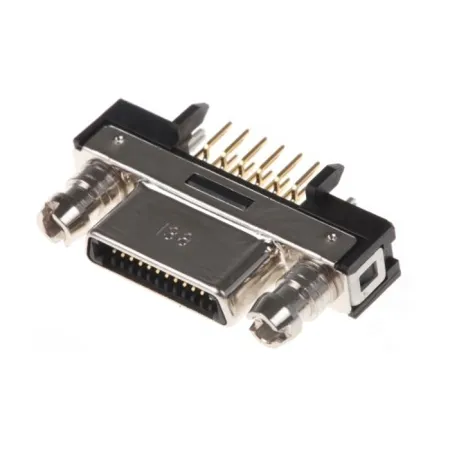

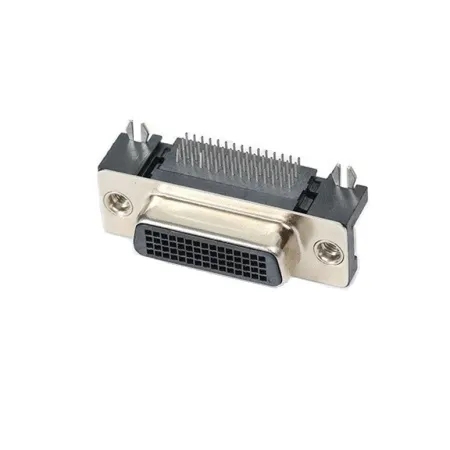

We Have The Best Solutions for Your Business
1. Cable Ass'y products: double shielded signal control Cables (SCSI, VHDCI, D-SUB, USB, LFH, SDR), Ten million times drag chain line, industrial camera wiring harness, industrial network cable, mechanical equipment oil resistant wiring harness, customized various specifications Cable research and development, assembly.
2. Connector products: SCSI, VHDCI, D-SUB, LFH, USB 3.0, servo motor peripheral series connectors.
3. Brand agent: Amphenol (SFP, SFP28, QSFP, QSFP28, QSFP-DD, OSFP, CFP2, CFP4, MiniSAS HD, SlimSAS, PCIeSAS, Oculink, MCIO, Gen-Z)
Attentive service, perfect quality!
My PCIe Gen 5 NVMe SSDs are underperforming. Could my cables be the problem?
Yes, it is highly likely that your internal cabling is the bottleneck. You can have the fastest NVMe SSDs in the world, but if they are connected with a low-quality cable that is not designed for PCIe 5.0 speeds, you will experience a high rate of data errors. The system's response is to constantly retransmit the data, which severely throttles the real-world throughput and increases latency. The solution is to use a verifiably high-performance MCIO cable from a trusted manufacturer like KinKuo. Our cables are specifically engineered and tested to maintain the pristine signal integrity that PCIe 5.0 demands, ensuring your storage devices can communicate with the CPU without errors or retransmissions. By upgrading to a proper MCIO cable, you can eliminate this hidden bottleneck and unlock the true performance you paid for.
How can I be certain the MCIO cable I buy will actually perform at PCIe 5.0 speeds?
This is a critical question, as many low-quality cables may look correct but will fail miserably at high speeds. The only way to be certain is to buy from a supplier who can prove the performance of their products with rigorous testing. A reputable supplier like KinKuo doesn't just assemble an MCIO cable; we validate it. We use high-frequency test equipment like vector network analyzers to ensure that every MCIO cable we produce meets the key signal integrity specifications for PCIe 5.0, such as insertion loss and crosstalk. This testing is our verifiable proof of performance. By partnering with KinKuo, you are not just buying a cable; you are buying the confidence that comes from a component that has been tested and proven to meet the extreme demands of the PCIe Gen 5 standard.
I need to connect a new PCIe 5.0 device. Where can I find the right cable?
Connecting a new PCI Express 5.0 device, whether it's a network card, a GPU accelerator, or a storage backplane, requires a specific, next-generation internal cable. The industry standard for this is the MCIO cable. You cannot use older cables like OCuLink or standard SATA/SAS cables, as they are not capable of handling the 32 GT/s speeds of PCIe 5.0. You need a supplier who specializes in these new high-speed standards. KinKuo is a leading manufacturer and supplier of the MCIO cable. We can provide the exact configuration you need to connect your new device, ensuring you have a reliable, high-performance link that is fully compliant with the PCIe Gen 5 specification. For any new server build or system upgrade, the MCIO cable from KinKuo is the essential component you need.
My custom server chassis needs a specific length MCIO cable. Where can I order it?
Using a standard-length cable in a custom chassis is a recipe for poor airflow, difficult assembly, and potential signal issues from coiled-up excess wire. The professional solution is to use a cable built to your exact length specification. KinKuo is an OEM-focused manufacturer that specializes in creating these custom solutions. We can build an MCIO cable to the precise length you need for your unique server layout. This not only results in a much cleaner, more professional build but also optimizes the performance and thermal characteristics of your system. Simply provide our engineering team with your required length and connector configuration, and we will manufacture a high-quality MCIO cable that fits your design perfectly. Don't compromise your custom build with off-the-shelf parts; let KinKuo provide the perfectly tailored solution.
User Reviews
What users say about KinKuo
Frequently Asked Question
Do you have any question?
Yes. A specialized manufacturer like KinKuo can produce a custom-length MCIO cable to fit your specific server chassis layout. This is crucial for optimizing airflow, ensuring a clean and professional build, and preventing the signal degradation that can occur from coiling up excessively long standard cables inside an enclosure.
The quality of an MCIO cable is absolutely critical for NVMe storage arrays because these drives rely on the ultra-low latency and high bandwidth of the PCIe bus. A low-quality cable with poor signal integrity will cause data errors and retransmissions, creating a bottleneck that throttles the performance of the expensive NVMe SSDs and prevents the system from reaching its full I/O potential.
An MCIO cable uses a compact, high-density card-edge style connector system. It typically features a vertical or right-angle receptacle on the motherboard or add-in card, and the cable plug has a slim, robust design that securely mates with it, often with a latching mechanism for vibration resistance.
While both are internal high-speed cables, an MCIO cable is a more modern and higher-performance standard designed for PCIe 5.0 and beyond. OCuLink was designed for earlier PCIe generations. MCIO offers higher density, better signal integrity, and a more robust mechanical design prepared for future speed increases, making it the superior choice for new server designs.
The MCIO cable is the standard for PCIe 5.0 because its connector and cable technology are specifically engineered to maintain excellent signal integrity at the extremely high data rate of 32 GT/s. Its design minimizes crosstalk and insertion loss, which is essential for sending these sensitive, high-frequency signals over a cable without data corruption.
An MCIO cable, which stands for Mini Cool Edge IO, is a next-generation high-speed internal cable assembly. It is primarily used inside servers, storage systems, and data center hardware to connect the main system board to various peripherals, such as NVMe SSD backplanes, accelerator cards, or other PCIe devices, and is the standard for PCIe Gen 5.
Our updates and blog posts

Servo Connector Mastery: How KinKuo’s Servo Connector Range Eliminates Downtime and Future-Proofs Motion Systems
Explore KinKuo Servo Connector solutions—IP67, 10 M flex, same-day ship. Cut downtime and future-proof motion systems today.
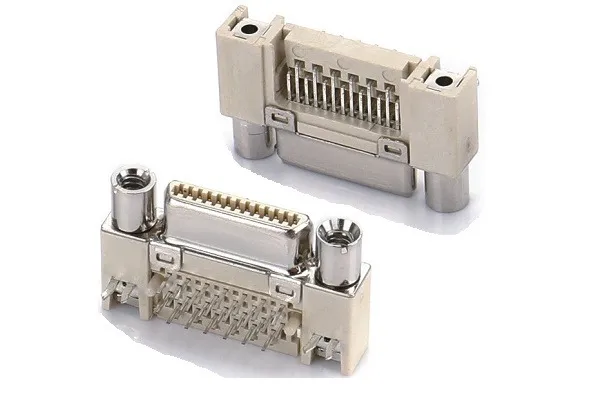
VHDCI Connector Deep Dive: How KinKuo’s VHDCI Connector Range Delivers 68-Pin Density with Zero Signal Loss
Explore KinKuo VHDCI Connector solutions—0.8 mm pitch, 500 V, RoHS. Cut space and boost speed with proven VHDCI Connector today.
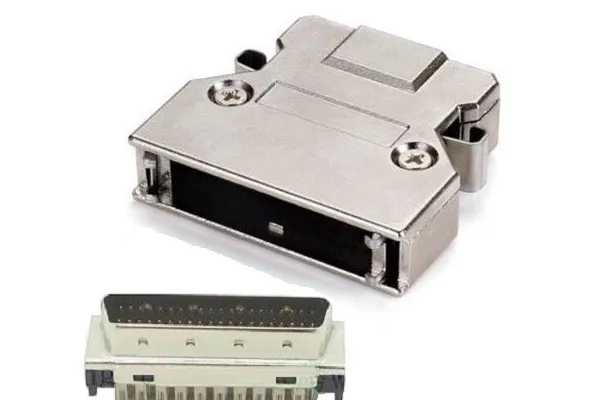
SCSl Connector Deep-Dive: How KinKuo’s SCSl Connector Portfolio Delivers 68-Pin Density with Industrial-Grade Reliability
Explore KinKuo VHDCI Connector solutions—0.8 mm pitch, 500 V, RoHS. Cut space and boost speed with proven VHDCI Connector today.
Our updates and blog posts
Servo Connector Mastery: How KinKuo’s Servo Connector Range Eliminates Downtime and Future-Proofs Motion Systems
Explore KinKuo Servo Connector solutions—IP67, 10 M flex, same-day ship. Cut downtime and future-proof motion systems today.
VHDCI Connector Deep Dive: How KinKuo’s VHDCI Connector Range Delivers 68-Pin Density with Zero Signal Loss
Explore KinKuo VHDCI Connector solutions—0.8 mm pitch, 500 V, RoHS. Cut space and boost speed with proven VHDCI Connector today.
SCSl Connector Deep-Dive: How KinKuo’s SCSl Connector Portfolio Delivers 68-Pin Density with Industrial-Grade Reliability
Explore KinKuo VHDCI Connector solutions—0.8 mm pitch, 500 V, RoHS. Cut space and boost speed with proven VHDCI Connector today.