
10-Year R&D Excellence
Founded in 2010, Kinkuo has a decade-long track record of innovative connector and cable design for industrial automation and high-end applications.
Wide-Ranging Expertise
Core portfolio spans double-shielded signal cables, 10-million-cycle drag-chain cables, industrial camera & network harnesses, oil-resistant assemblies, and complete SCSI/VHDCI/D-SUB/USB 3.0 connector lines.
Global Brand Trust
Long-term preferred supplier to renowned customers across Japan, Taiwan, Europe, the Americas, and Mainland China, attesting to consistent quality and reliability.
Tier-1 Supply Chain Access
Authorized distributor of Amphenol’s latest high-speed interconnect portfolio (SFP, QSFP-DD, OSFP, SlimSAS, Gen-Z, etc.), enabling turnkey, future-proof solutions.


We Have The Best Solutions for Your Business
1. Cable Ass'y products: double shielded signal control Cables (SCSI, VHDCI, D-SUB, USB, LFH, SDR), Ten million times drag chain line, industrial camera wiring harness, industrial network cable, mechanical equipment oil resistant wiring harness, customized various specifications Cable research and development, assembly.
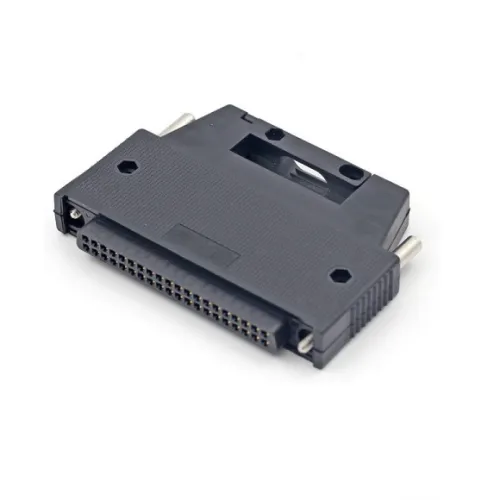
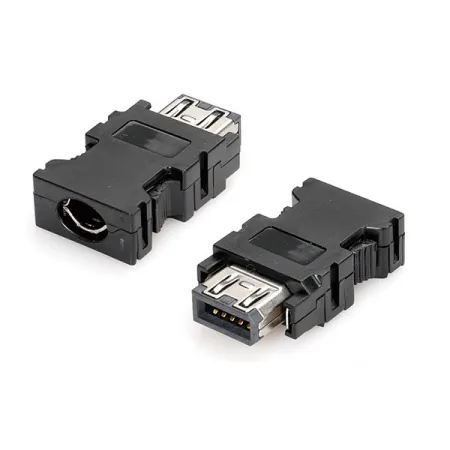
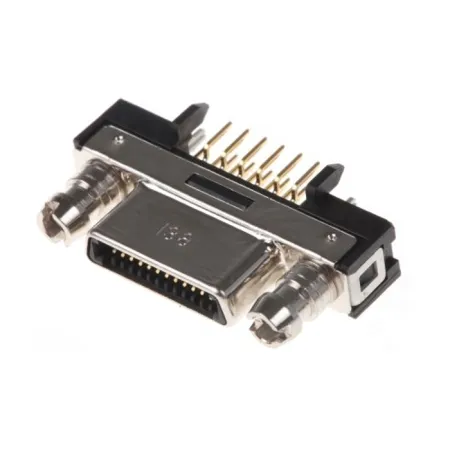
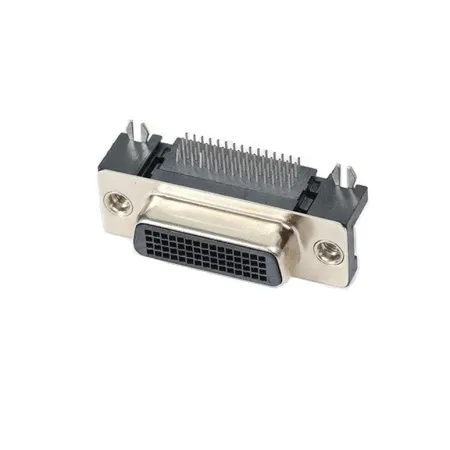
2. Connector products: SCSI, VHDCI, D-SUB, LFH, USB 3.0, servo motor peripheral series connectors.
3. Brand agent: Amphenol (SFP, SFP28, QSFP, QSFP28, QSFP-DD, OSFP, CFP2, CFP4, MiniSAS HD, SlimSAS, PCIeSAS, Oculink, MCIO, Gen-Z)
Attentive service, perfect quality!
My company needs a stable, long-term supply of OSFP connectors for production.
For OEMs, ensuring a stable, long-term supply of a critical component like the OSFP connector is a top priority. Market volatility and component shortages can disrupt production and threaten revenue. The best way to mitigate this risk is to partner with a stable, authorized supplier with deep factory relationships. KinKuo is that partner. With 15 years in the business and our status as an authorized Amphenol agent, we are perfectly positioned to support your long-term production needs. We work with our customers on forecasting and can develop strategic stocking programs to ensure a consistent and reliable supply of the OSFP connector. By establishing a long-term partnership with KinKuo, you can secure your supply chain and focus on manufacturing, confident in your access to this mission-critical technology.
How do I get the official PCB layout guidelines for the OSFP connector?
Using the correct PCB footprint and layout is absolutely critical for the success of a high-speed design. An incorrect layout for an OSFP connector will result in a failed board spin and poor performance. The only way to get this right is to use the official design guidelines from the manufacturer. As a fully authorized agent for Amphenol, KinKuo can provide you with the complete, official technical documentation package for the OSFP connector. This includes the detailed mechanical drawings with the exact PCB footprint, as well as the comprehensive "Design and Routing Guidelines" document. This document provides proven recommendations for via design, trace widths, and routing strategies in the critical breakout region to ensure your board achieves the highest possible signal integrity performance.
I'm comparing OSFP and QSFP-DD. Which has better signal integrity?
Both the OSFP connector and the QSFP-DD connector are extremely high-performance interconnects designed by world-class engineers, and both offer excellent signal integrity. However, they are optimized slightly differently. The OSFP connector was designed from the ground up for the next generation of speeds (800G/1.6T). Its slightly larger size allows for a contact design and internal wafer layout that can be highly optimized for extremely low crosstalk, giving it a performance edge and more margin for future speed increases. The QSFP-DD is an incredible engineering achievement that packs 8 lanes into the width of a 4-lane QSFP connector. While its performance is excellent, the OSFP connector is generally considered by industry experts to have a more robust signal integrity profile and a clearer path to the 224Gbps-per-lane signaling that future standards will require. For designs where every last bit of performance margin matters, the OSFP solutions supplied by KinKuo are often the preferred choice.
I need OSFP connectors for a prototype run immediately. What are my options?
Standard factory lead times for advanced components can be a major obstacle during rapid prototyping. We understand that you need hardware in your lab now, not in three months. To solve this problem, KinKuo has established a strategic stocking program for critical NPI components like the OSFP connector. We maintain a physical inventory of the most common OSFP connector and cage assembly configurations specifically to support engineers during their initial design and validation builds. This allows us to ship genuine, factory-direct Amphenol parts from our own warehouse, cutting lead times dramatically. When you have an urgent prototype requirement, don't wait for the factory. Contact KinKuo first to see how our in-stock inventory of the OSFP connector can help you accelerate your project timeline.
User Reviews
What users say about KinKuo
Frequently Asked Question
Do you have any question?
You must source an OSFP connector from an authorized agent like KinKuo to guarantee authenticity. These are extremely high-precision components, and a counterfeit part will not meet the critical signal integrity or thermal specifications, leading to network failure. An authorized agent provides a secure, factory-direct supply chain, ensuring you get a genuine, high-performance part that is fully warranted.
The cage assembly is the metal housing that is mounted to the host PCB. The OSFP connector cage provides the mechanical structure for guiding and latching the pluggable module, contains the electromagnetic interference (EMI), and, crucially, makes physical contact with the module's heatsink to help transfer heat away from the optics and into the system's airflow.
AI and ML workloads require massive data transfers between thousands of GPUs, creating a high-bandwidth, high-density network fabric. An OSFP connector is critical for these applications because it provides the 800G port speeds needed to prevent network bottlenecks and has the thermal capacity to cool the advanced optics required for these large-scale clusters, ensuring the entire system can run at peak performance.
The OSFP connector is slightly wider and deeper than the QSFP-DD. This larger size is a deliberate design choice that enables its superior thermal performance and provides a clear roadmap to higher speeds like 1.6T. While QSFP-DD offers backward compatibility with older QSFP modules, OSFP is often seen as the more forward-looking choice for new, high-power, high-performance designs.
The main advantage of the OSFP connector is its superior thermal management capability. The specification was designed from the ground up to handle higher-power optical modules, incorporating an integrated heatsink directly into the pluggable module itself. This allows it to cool modules exceeding 15 watts far more effectively than other form factors, which is critical for 800G optics and beyond.
An OSFP connector is a next-generation, high-speed pluggable I/O interface. Its primary application is in high-performance networking equipment like switches, routers, and servers for 400G, 800G, and future 1.6T data rates, especially within hyperscale data centers, AI clusters, and telecommunications infrastructure.
Our updates and blog posts
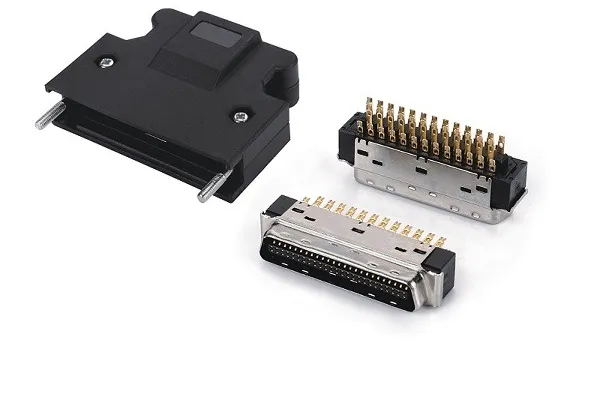
Servo Connector Mastery: How KinKuo’s Servo Connector Range Eliminates Downtime and Future-Proofs Motion Systems
Explore KinKuo Servo Connector solutions—IP67, 10 M flex, same-day ship. Cut downtime and future-proof motion systems today.
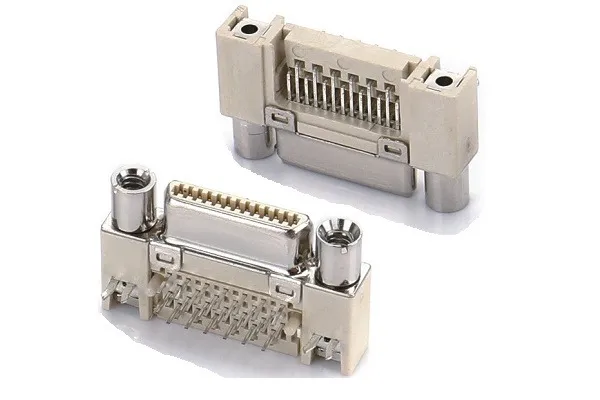
VHDCI Connector Deep Dive: How KinKuo’s VHDCI Connector Range Delivers 68-Pin Density with Zero Signal Loss
Explore KinKuo VHDCI Connector solutions—0.8 mm pitch, 500 V, RoHS. Cut space and boost speed with proven VHDCI Connector today.

SCSl Connector Deep-Dive: How KinKuo’s SCSl Connector Portfolio Delivers 68-Pin Density with Industrial-Grade Reliability
Explore KinKuo VHDCI Connector solutions—0.8 mm pitch, 500 V, RoHS. Cut space and boost speed with proven VHDCI Connector today.
Our updates and blog posts
Servo Connector Mastery: How KinKuo’s Servo Connector Range Eliminates Downtime and Future-Proofs Motion Systems
Explore KinKuo Servo Connector solutions—IP67, 10 M flex, same-day ship. Cut downtime and future-proof motion systems today.
VHDCI Connector Deep Dive: How KinKuo’s VHDCI Connector Range Delivers 68-Pin Density with Zero Signal Loss
Explore KinKuo VHDCI Connector solutions—0.8 mm pitch, 500 V, RoHS. Cut space and boost speed with proven VHDCI Connector today.
SCSl Connector Deep-Dive: How KinKuo’s SCSl Connector Portfolio Delivers 68-Pin Density with Industrial-Grade Reliability
Explore KinKuo VHDCI Connector solutions—0.8 mm pitch, 500 V, RoHS. Cut space and boost speed with proven VHDCI Connector today.