
10-Year R&D Excellence
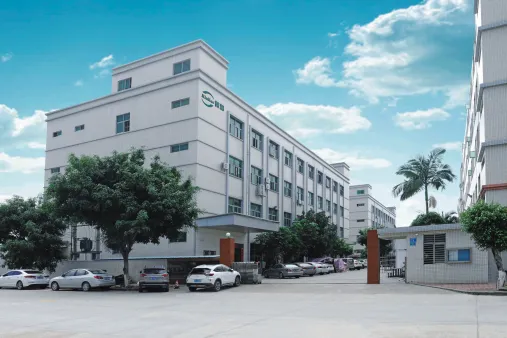
Founded in 2010, Kinkuo has a decade-long track record of innovative connector and cable design for industrial automation and high-end applications.
Wide-Ranging Expertise
Core portfolio spans double-shielded signal cables, 10-million-cycle drag-chain cables, industrial camera & network harnesses, oil-resistant assemblies, and complete SCSI/VHDCI/D-SUB/USB 3.0 connector lines.
Global Brand Trust
Long-term preferred supplier to renowned customers across Japan, Taiwan, Europe, the Americas, and Mainland China, attesting to consistent quality and reliability.
Tier-1 Supply Chain Access
Authorized distributor of Amphenol’s latest high-speed interconnect portfolio (SFP, QSFP-DD, OSFP, SlimSAS, Gen-Z, etc.), enabling turnkey, future-proof solutions.
We Have The Best Solutions for Your Business
1. Cable Ass'y products: double shielded signal control Cables (SCSI, VHDCI, D-SUB, USB, LFH, SDR), Ten million times drag chain line, industrial camera wiring harness, industrial network cable, mechanical equipment oil resistant wiring harness, customized various specifications Cable research and development, assembly.
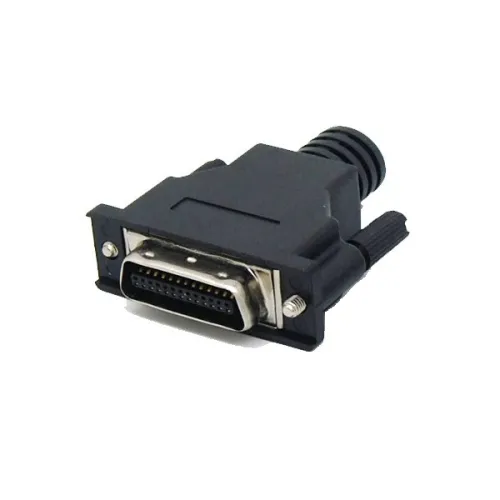
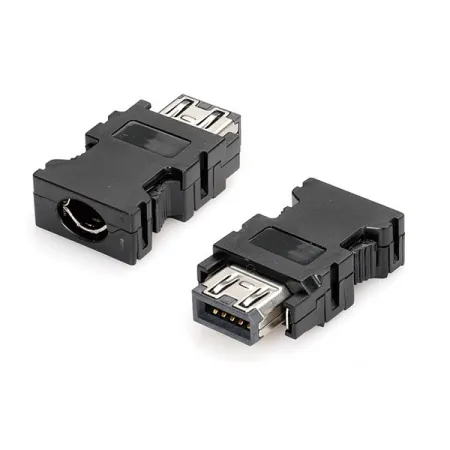
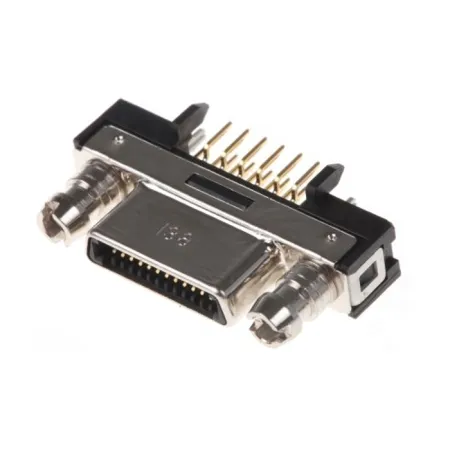
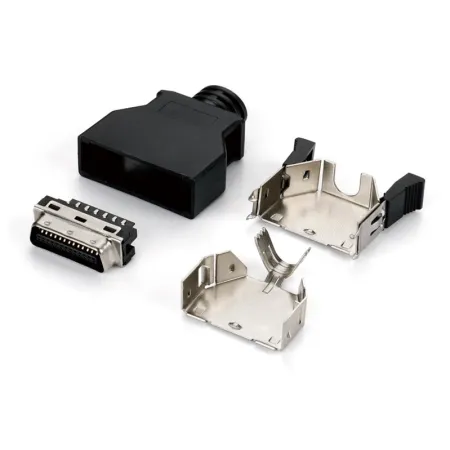
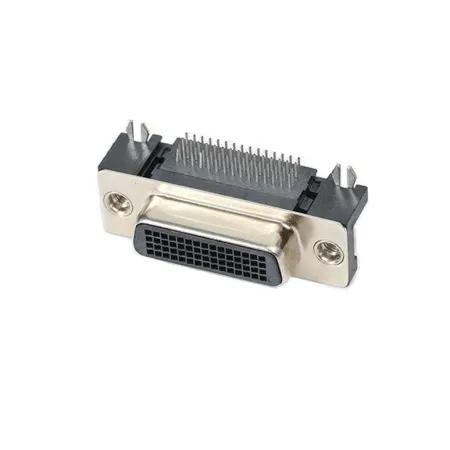
2. Connector products: SCSI, VHDCI, D-SUB, LFH, USB 3.0, servo motor peripheral series connectors.
3. Brand agent: Amphenol (SFP, SFP28, QSFP, QSFP28, QSFP-DD, OSFP, CFP2, CFP4, MiniSAS HD, SlimSAS, PCIeSAS, Oculink, MCIO, Gen-Z)
Attentive service, perfect quality!
Right-Angle vs. Straight Connectors: Which Camera Link Cable is Best?
The choice between a right-angle and a straight connector on your Camera Link cable is a critical decision for mechanical integration. A straight connector is standard, but in applications with limited clearance behind the camera or frame grabber, it can cause the cable to bend too sharply, stressing the connection point and eventually leading to failure. A right-angle connector, an option offered by KinKuo, allows the cable to exit up, down, left, or right, enabling a much cleaner and lower-profile installation. This is essential for cameras mounted in tight enclosures or on robotic arms. By choosing the correct connector orientation from KinKuo, you can prevent cable strain, improve system reliability, and create a more professional and serviceable machine design. Let us help you build the perfect Camera Link cable for your space constraints.
Finding a Reliable Camera Link Cable Supplier for Bulk Orders.
When you're sourcing components for a production run, you need a supplier who can deliver consistent quality on time, every time. Finding a reliable supplier for bulk orders of Camera Link cable assemblies can be a challenge. You need a partner with proven manufacturing capacity and stringent quality control to ensure that the thousandth cable is identical in performance to the first. KinKuo is an experienced OEM supplier with a 15-year track record of delivering for our partners. Our ISO 9001 certified facility is equipped to handle high-volume orders while maintaining our commitment to 100% testing on every single cable. For competitive pricing, consistent quality, and on-time delivery of your bulk Camera Link cable order, partner with KinKuo.
How to Choose a High-Flex Camera Link Cable That Won't Fail.
When selecting a Camera Link cable for a robotic arm or other continuous motion application, simply choosing one labeled "high-flex" is not enough. You need to understand what makes it durable. A truly reliable high-flex cable, like those engineered by KinKuo, will be built with specific materials designed for longevity. This includes finely stranded conductors that can bend repeatedly without work-hardening and breaking, along with a rugged yet flexible TPE or PUR jacket that resists abrasion and tearing. At KinKuo, we've spent years perfecting the construction of our high-flex cables to deliver a proven lifespan of millions of cycles. Don't risk production halts due to premature cable failure. Invest in a properly engineered high-flex Camera Link cable from KinKuo and get the long-term reliability your automated system demands.
The Hidden Dangers of Poor Shielding in a Camera Link Cable.
In a factory setting, your Camera Link cable is surrounded by sources of electromagnetic interference (EMI)—motors, VFDs, and power lines. Without proper shielding, this EMI can induce noise onto the delicate data signals within your cable, causing a cascade of problems from single-pixel errors to complete image loss. A high-quality Camera Link cable from KinKuo provides a robust defense against this threat. We use a multi-layered shielding design, typically a 100% foil shield combined with a 90% or greater coverage tinned copper braid. This combination reflects and absorbs EMI, protecting the signal integrity of the internal twisted pairs. The result is a clean, stable image, even in challenging electrical environments. Don't let EMI compromise your quality control. Protect your data stream with a properly shielded Camera Link cable from KinKuo.
User Reviews
What users say about KinKuo
Frequently Asked Question
Do you have any question?
A high-quality Camera Link cable will have features like robust, overmolded connectors with thumbscrews for secure locking, comprehensive shielding (often labeled as "double shielded"), and a UL rating. Most importantly, it should come from a reputable manufacturer that performs 100% electrical testing on every assembly to guarantee it meets or exceeds the Camera Link standard's stringent performance specifications.
SDR (Shrunk Delta Ribbon) and MDR (Mini D Ribbon) are the two common connector types for a Camera Link cable. The MDR is the original, larger 26-pin connector. The SDR is a more compact, modern version that also features 26 pins but in a smaller form factor, making it ideal for high-density applications. Both are available, and the choice depends entirely on the mating connectors on your camera and frame grabber.
Yes, a key service offered by a specialized manufacturer is the ability to provide a custom length Camera Link cable. This is crucial for optimizing cable routing, minimizing signal loss associated with excess length, and ensuring a clean, professional installation. Ordering the exact length you need prevents the performance issues that can arise from coiling long, off-the-shelf cables in a machine's control cabinet.
Proper shielding is critical to the performance of a Camera Link cable, especially in electrically noisy industrial environments. A well-constructed cable features multiple layers of shielding, typically aluminum foil and a braided copper shield, to protect the high-speed data signals from electromagnetic interference (EMI). This robust shielding prevents data corruption and ensures the error-free transmission required for high-resolution imaging and inspection.
A high-flex Camera Link cable is essential for robotics and other constant-motion applications because it is specifically designed to endure millions of bending and twisting cycles without internal conductor breakage or degradation of signal integrity. Standard cables would quickly fail under such mechanical stress, leading to system failure. High-flex versions use special fine-stranded conductors and highly durable jacketing materials to ensure a long operational life in dynamic environments.
The primary advantage of a Power over Camera Link (PoCL) cable is its ability to simplify system design and reduce clutter by transmitting power, data, and control signals through a single assembly. This eliminates the need for a separate power supply for the camera, which is especially beneficial in space-constrained applications or on moving robotic arms where minimizing the number of cables is crucial for reliability.
Our updates and blog posts
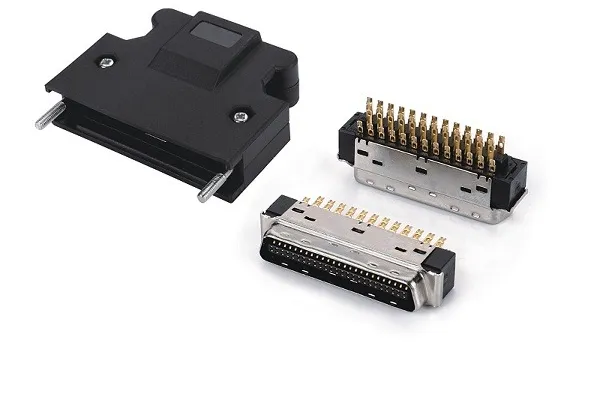
Servo Connector Mastery: How KinKuo’s Servo Connector Range Eliminates Downtime and Future-Proofs Motion Systems
Explore KinKuo Servo Connector solutions—IP67, 10 M flex, same-day ship. Cut downtime and future-proof motion systems today.
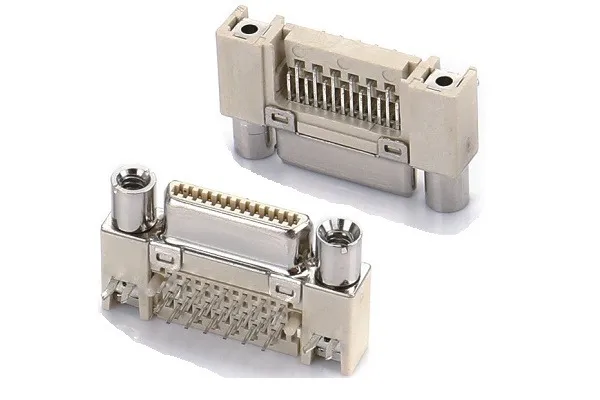
VHDCI Connector Deep Dive: How KinKuo’s VHDCI Connector Range Delivers 68-Pin Density with Zero Signal Loss
Explore KinKuo VHDCI Connector solutions—0.8 mm pitch, 500 V, RoHS. Cut space and boost speed with proven VHDCI Connector today.
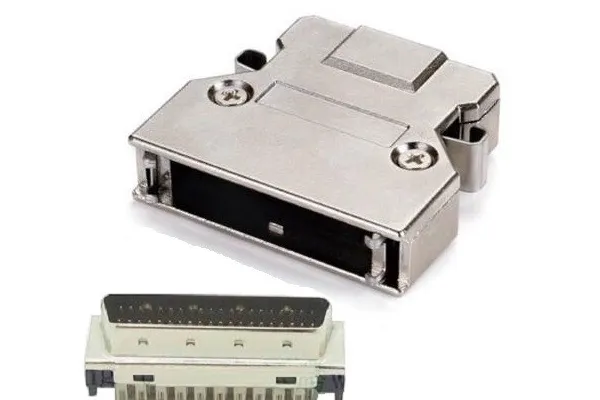
SCSl Connector Deep-Dive: How KinKuo’s SCSl Connector Portfolio Delivers 68-Pin Density with Industrial-Grade Reliability
Explore KinKuo VHDCI Connector solutions—0.8 mm pitch, 500 V, RoHS. Cut space and boost speed with proven VHDCI Connector today.
Our updates and blog posts
Servo Connector Mastery: How KinKuo’s Servo Connector Range Eliminates Downtime and Future-Proofs Motion Systems
Explore KinKuo Servo Connector solutions—IP67, 10 M flex, same-day ship. Cut downtime and future-proof motion systems today.
VHDCI Connector Deep Dive: How KinKuo’s VHDCI Connector Range Delivers 68-Pin Density with Zero Signal Loss
Explore KinKuo VHDCI Connector solutions—0.8 mm pitch, 500 V, RoHS. Cut space and boost speed with proven VHDCI Connector today.
SCSl Connector Deep-Dive: How KinKuo’s SCSl Connector Portfolio Delivers 68-Pin Density with Industrial-Grade Reliability
Explore KinKuo VHDCI Connector solutions—0.8 mm pitch, 500 V, RoHS. Cut space and boost speed with proven VHDCI Connector today.