
10-Year R&D Excellence
Founded in 2010, Kinkuo has a decade-long track record of innovative connector and cable design for industrial automation and high-end applications.
Wide-Ranging Expertise
Core portfolio spans double-shielded signal cables, 10-million-cycle drag-chain cables, industrial camera & network harnesses, oil-resistant assemblies, and complete SCSI/VHDCI/D-SUB/USB 3.0 connector lines.
Global Brand Trust
Long-term preferred supplier to renowned customers across Japan, Taiwan, Europe, the Americas, and Mainland China, attesting to consistent quality and reliability.
Tier-1 Supply Chain Access
Authorized distributor of Amphenol’s latest high-speed interconnect portfolio (SFP, QSFP-DD, OSFP, SlimSAS, Gen-Z, etc.), enabling turnkey, future-proof solutions.
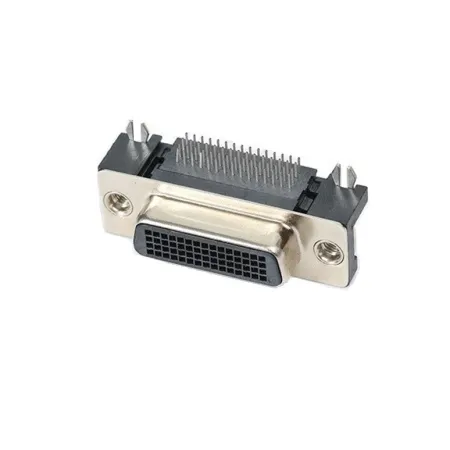
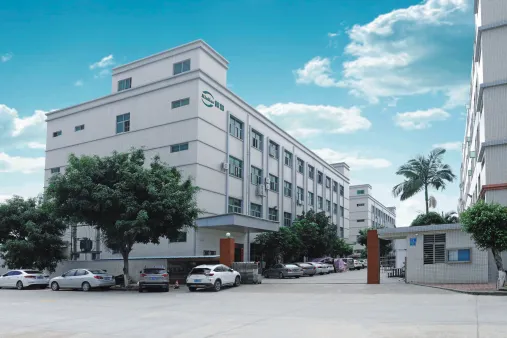
We Have The Best Solutions for Your Business
1. Cable Ass'y products: double shielded signal control Cables (SCSI, VHDCI, D-SUB, USB, LFH, SDR), Ten million times drag chain line, industrial camera wiring harness, industrial network cable, mechanical equipment oil resistant wiring harness, customized various specifications Cable research and development, assembly.
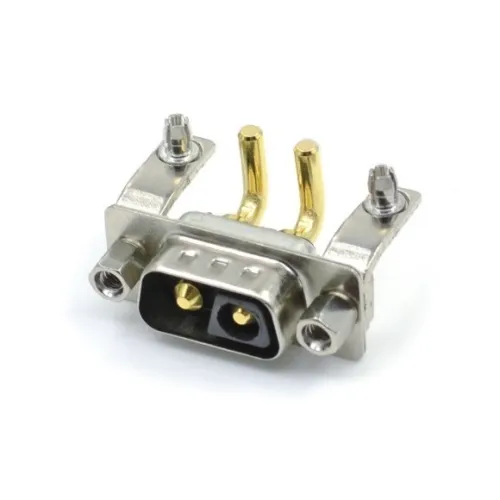
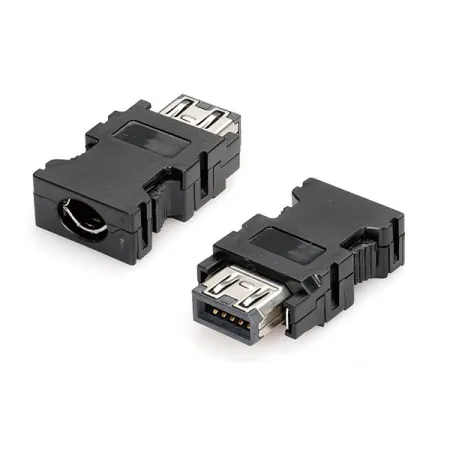
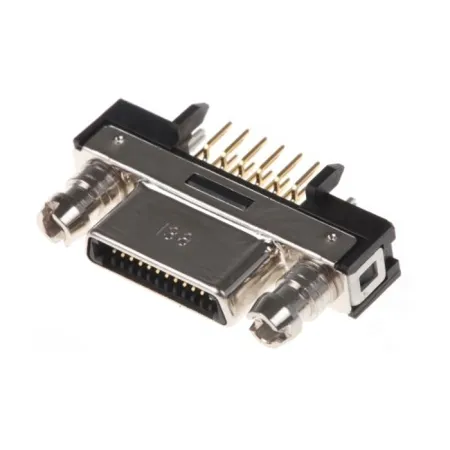
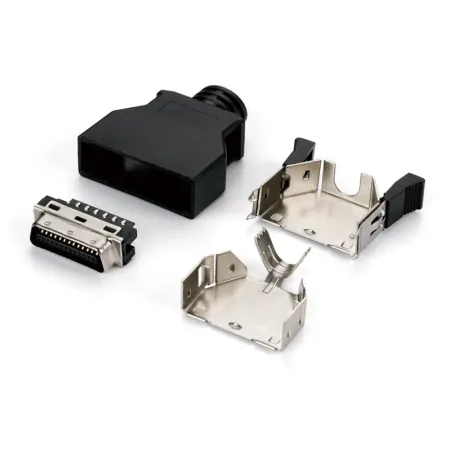
2. Connector products: SCSI, VHDCI, D-SUB, LFH, USB 3.0, servo motor peripheral series connectors.
3. Brand agent: Amphenol (SFP, SFP28, QSFP, QSFP28, QSFP-DD, OSFP, CFP2, CFP4, MiniSAS HD, SlimSAS, PCIeSAS, Oculink, MCIO, Gen-Z)
Attentive service, perfect quality!
My VGA Monitor's Image is Fuzzy or Has Ghosts
If your analog VGA monitor is displaying a fuzzy image, "ghosting" (shadows to the side of sharp lines), or has a color cast, the problem is very often a low-quality D-SUB cable. A VGA signal is actually five separate signals (Red, Green, Blue, Horizontal Sync, Vertical Sync) running through the cable, and the three color signals are high-frequency analog signals that are very sensitive to degradation. A cheap cable with poor shielding and no internal coaxial lines will allow these signals to interfere with each other and pick up external noise, causing poor image quality. KinKuo can build a high-quality VGA D-SUB cable that uses true miniature coaxial cables for the RGB signals and has a full foil and braid shield. This proper construction preserves the signal integrity and delivers the sharp, clear image your monitor is capable of.
My D-SUB Connector Keeps Coming Unplugged from My Machine.
In any environment with vibration—from a vehicle to a piece of manufacturing equipment—a standard friction-fit connector is bound to fail. If your D-SUB cable is constantly coming loose or unplugged, it's not only frustrating, but it's also a major reliability risk for your system. This is precisely why the D-SUB interface was designed with locking screws. A high-quality D-SUB cable from KinKuo features robust, easy-to-grip thumbscrews that allow you to securely fasten the connector to the port on your machine. This creates a rock-solid mechanical connection that is highly resistant to shock and vibration, ensuring that your connection remains stable and secure, no matter the conditions. Stop dealing with intermittent disconnects and upgrade to a properly constructed D-SUB cable from KinKuo for a connection you can truly depend on.
Where Can I Find a High-Quality Replacement Cable for My Old CNC Machine?
You have a valuable, older piece of industrial equipment, like a CNC machine or PLC, that is still performing perfectly, but its original D-SUB cable has become damaged or worn out. Finding an exact replacement from the original manufacturer can be impossible. This is where a custom cable manufacturer is essential. KinKuo specializes in creating high-quality replacements for these legacy applications. We can analyze your existing cable (even if it's damaged) to determine its exact, often proprietary, pinout. We can then manufacture a new D-SUB cable that is a perfect functional replacement, often improving on the original by using more durable, modern materials and a more robust overmolded construction. Don't let a failed cable sideline your valuable equipment. Let KinKuo build you a superior replacement that will keep it running for years to come.
My Serial Communication Has Errors, What's the Cause?
If you're experiencing data errors, timeouts, or intermittent failures in your RS-232 or RS-485 serial communication system, the problem is very often the D-SUB cable itself, especially in an industrial setting. These issues are classic symptoms of electromagnetic interference (EMI) corrupting the data signals. A cheap, unshielded, or poorly shielded cable offers no protection against the electrical noise generated by motors and other equipment. The solution is to upgrade to a robust, industrial-grade shielded D-SUB cable from KinKuo. Our cables are built with a combination of foil and braided shielding that is properly terminated to the connector shell, creating a complete barrier against EMI. By replacing your existing cable with a properly constructed one from KinKuo, you can eliminate noise-related data errors and restore the reliability of your serial communication link.
User Reviews
What users say about KinKuo
Frequently Asked Question
Do you have any question?
The thumbscrews on a D-SUB cable are a crucial feature for ensuring a secure, reliable mechanical connection. In industrial or high-vibration environments, an unsecured connector could easily work itself loose, causing a catastrophic loss of data or control. By tightening these screws, you lock the connector firmly in place, guaranteeing a stable connection that won't be compromised by shock or vibration.
The difference is the spacing of the pins. A high-density D-SUB cable fits more pins into the same size shell as a standard-density version. For example, a standard DA-15 connector shell can accommodate 26 pins in a high-density configuration (HD-26). This is used to save panel space on equipment that requires a large number of connections.
Yes, a key service offered by a specialized manufacturer is the ability to create a D-SUB cable with a completely custom pinout. This is essential for applications like null modem adapters (for connecting two computers directly), crossover cables, or proprietary interfaces where the wiring does not follow a standard configuration. This service allows you to get the exact connection you need without clumsy adapters.
The pin count for your D-SUB cable is determined by the equipment you are connecting. The DE-9 (often called DB-9) is the most common for RS-232 serial ports. The DB-25 was used for older parallel printer ports and larger serial connections. The DA-15 is used for legacy game ports and some video, while higher counts are used for more complex interfaces. You must match the connector on your cable to the port on your device.
Shielding is critical for an industrial D-SUB cable because factory environments are filled with electromagnetic interference (EMI) from motors, VFDs, and power lines. A proper shield, typically consisting of both aluminum foil and a copper braid, creates a protective barrier around the signal wires, grounding out this electrical noise and preventing it from corrupting the data, which is essential for reliable process control.
A D-SUB cable is incredibly versatile and is most commonly used for serial data communication like RS-232 and RS-485 in industrial automation to connect to PLCs and control devices. It is also widely used for legacy computer video (VGA), custom data acquisition systems, and communication ports on a vast range of industrial, medical, and aerospace equipment.
Our updates and blog posts
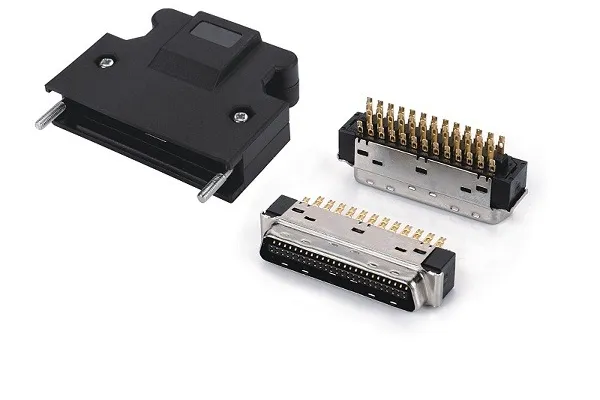
Servo Connector Mastery: How KinKuo’s Servo Connector Range Eliminates Downtime and Future-Proofs Motion Systems
Explore KinKuo Servo Connector solutions—IP67, 10 M flex, same-day ship. Cut downtime and future-proof motion systems today.
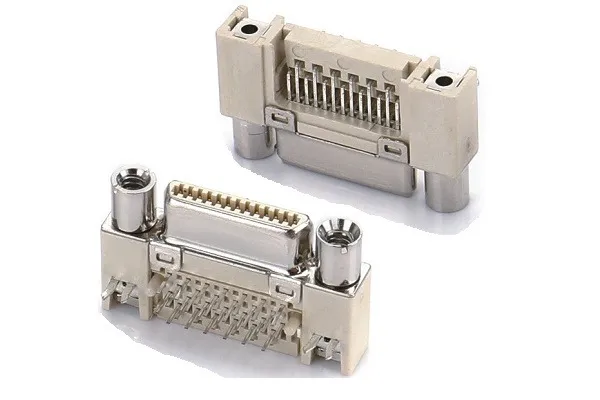
VHDCI Connector Deep Dive: How KinKuo’s VHDCI Connector Range Delivers 68-Pin Density with Zero Signal Loss
Explore KinKuo VHDCI Connector solutions—0.8 mm pitch, 500 V, RoHS. Cut space and boost speed with proven VHDCI Connector today.
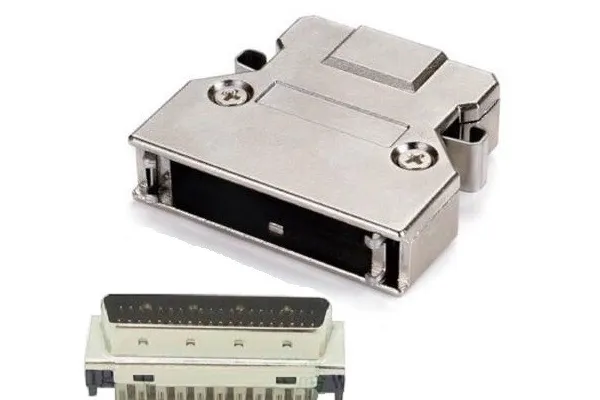
SCSl Connector Deep-Dive: How KinKuo’s SCSl Connector Portfolio Delivers 68-Pin Density with Industrial-Grade Reliability
Explore KinKuo VHDCI Connector solutions—0.8 mm pitch, 500 V, RoHS. Cut space and boost speed with proven VHDCI Connector today.
Our updates and blog posts
Servo Connector Mastery: How KinKuo’s Servo Connector Range Eliminates Downtime and Future-Proofs Motion Systems
Explore KinKuo Servo Connector solutions—IP67, 10 M flex, same-day ship. Cut downtime and future-proof motion systems today.
VHDCI Connector Deep Dive: How KinKuo’s VHDCI Connector Range Delivers 68-Pin Density with Zero Signal Loss
Explore KinKuo VHDCI Connector solutions—0.8 mm pitch, 500 V, RoHS. Cut space and boost speed with proven VHDCI Connector today.
SCSl Connector Deep-Dive: How KinKuo’s SCSl Connector Portfolio Delivers 68-Pin Density with Industrial-Grade Reliability
Explore KinKuo VHDCI Connector solutions—0.8 mm pitch, 500 V, RoHS. Cut space and boost speed with proven VHDCI Connector today.