
10-Year R&D Excellence
Founded in 2010, Kinkuo has a decade-long track record of innovative connector and cable design for industrial automation and high-end applications.
Wide-Ranging Expertise
Core portfolio spans double-shielded signal cables, 10-million-cycle drag-chain cables, industrial camera & network harnesses, oil-resistant assemblies, and complete SCSI/VHDCI/D-SUB/USB 3.0 connector lines.
Global Brand Trust
Long-term preferred supplier to renowned customers across Japan, Taiwan, Europe, the Americas, and Mainland China, attesting to consistent quality and reliability.
Tier-1 Supply Chain Access
Authorized distributor of Amphenol’s latest high-speed interconnect portfolio (SFP, QSFP-DD, OSFP, SlimSAS, Gen-Z, etc.), enabling turnkey, future-proof solutions.
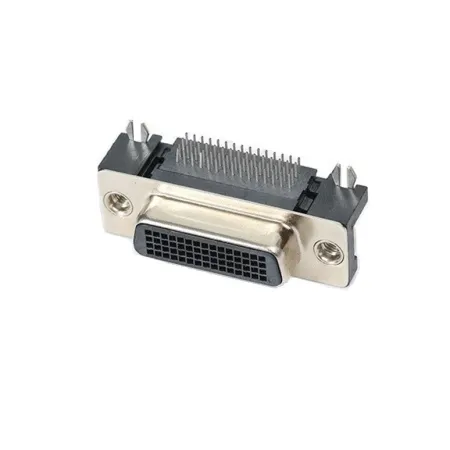
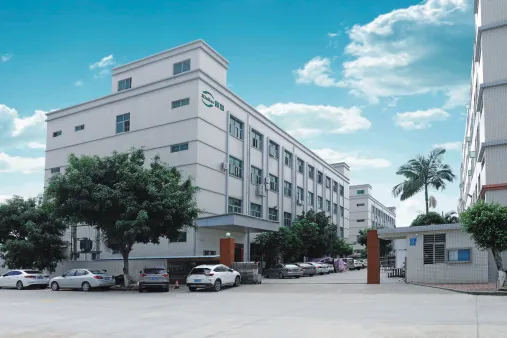
We Have The Best Solutions for Your Business
1. Cable Ass'y products: double shielded signal control Cables (SCSI, VHDCI, D-SUB, USB, LFH, SDR), Ten million times drag chain line, industrial camera wiring harness, industrial network cable, mechanical equipment oil resistant wiring harness, customized various specifications Cable research and development, assembly.
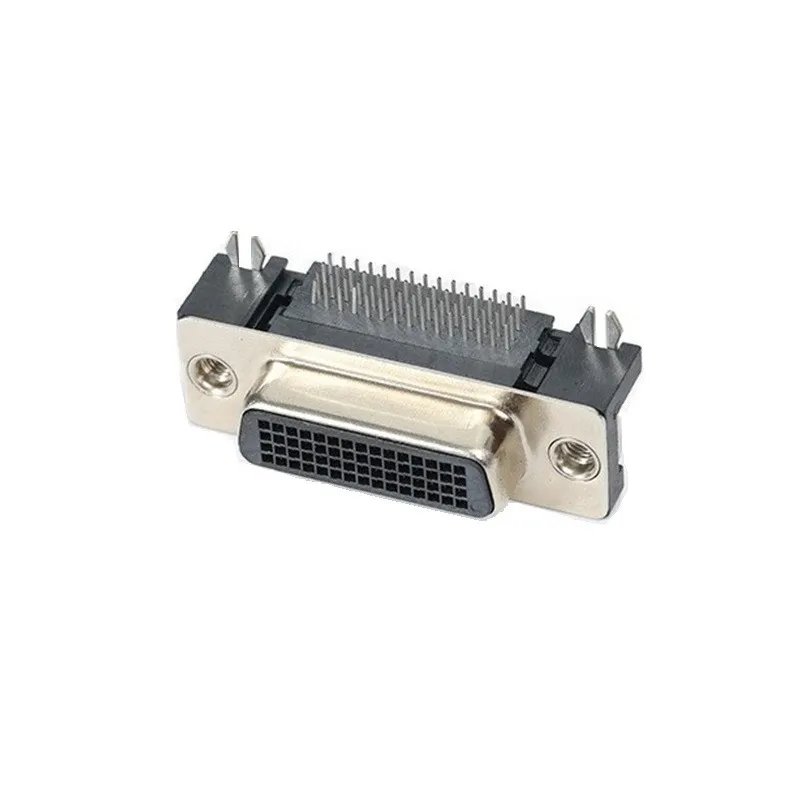
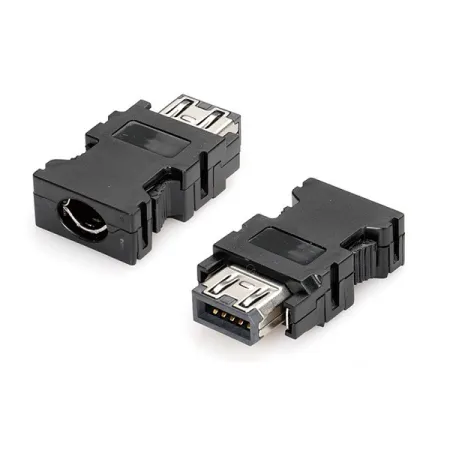
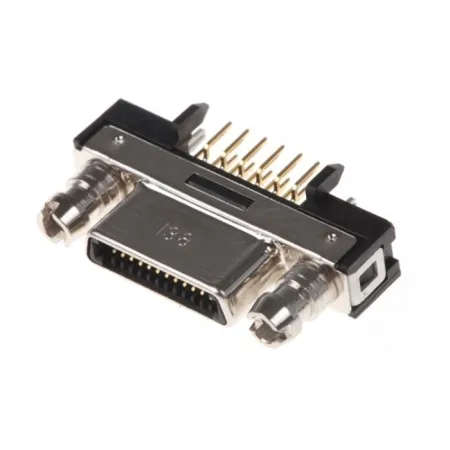
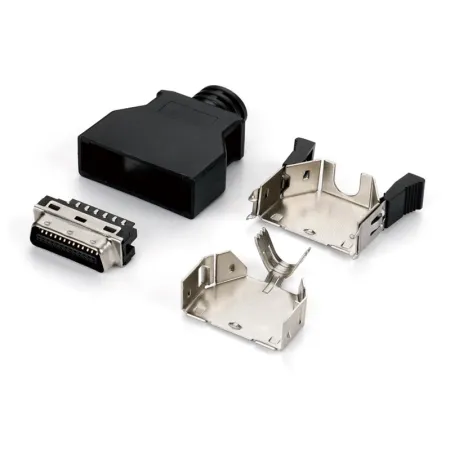
2. Connector products: SCSI, VHDCI, D-SUB, LFH, USB 3.0, servo motor peripheral series connectors.
3. Brand agent: Amphenol (SFP, SFP28, QSFP, QSFP28, QSFP-DD, OSFP, CFP2, CFP4, MiniSAS HD, SlimSAS, PCIeSAS, Oculink, MCIO, Gen-Z)
Attentive service, perfect quality!
How can I ensure the signal quality when using a high-pin-count LFH connector?
Ensuring signal quality in any high-density connector requires a focus on good design principles. The LFH connector itself helps by incorporating a ground plane in many designs, which provides a low-inductance reference for the signals. When you partner with KinKuo to create a cable assembly, we can take this a step further. To maximize signal quality, we can build your breakout cable using individually shielded twisted pairs for your sensitive or high-speed signals. This ensures that each signal is protected from interference from its neighbors (crosstalk) and from external noise (EMI). By combining the well-designed LFH connector with a high-quality, properly shielded cable construction from KinKuo, you can be confident in the integrity of every one of your data channels.
My current high-density connector is too hard to plug in and out. Is there a better option?
If your technicians or customers are struggling with the high mating force of a traditional high-pin-count connector, you are risking damage to your equipment and creating a poor user experience. There is a much better option: the LFH connector. Its name—Low-Force Helix—says it all. The unique design of its contacts allows it to be mated and unmated with a fraction of the force of a comparable pin-and-socket connector. At KinKuo, we manufacture LFH connector solutions that are a perfect upgrade for these situations. By redesigning your I/O to use an LFH, you can provide a connection that is not only dense and reliable but also easy and safe to use, improving serviceability and overall product quality.
How do I find a supplier who can provide a reliable, tested LFH cable?
Reliability in a complex assembly like an LFH cable comes from the supplier's process and commitment to quality. The most critical thing to look for is a supplier who performs 100% electrical testing on every cable. A supplier who only does "batch" testing can easily ship a defective product. At KinKuo, our "perfect quality" promise is backed by our 100% testing guarantee. Every single LFH cable assembly is plugged into a test fixture that verifies the continuity of every pin. You should also look for a supplier with extensive experience with this specific connector, as it requires special handling. With 15 years of experience manufacturing the LFH connector and a steadfast commitment to 100% testing, KinKuo is the proven, reliable supplier you can trust to deliver a flawless cable, every time.
What is the difference in application between an LFH connector and a Micro D connector?
While both are high-density connectors, an LFH connector and a Micro-D connector are typically used in different applications due to their design philosophies. The Micro-D, with its rugged metal shell and robust contact system, is a military-grade connector designed for extreme shock, vibration, and harsh environments. The LFH connector, on the other hand, is a commercial/industrial connector optimized for high pin density and low mating force in less extreme environments like data acquisition systems, networking equipment, or medical devices. If your primary need is the absolute highest pin count in a compact, easy-to-mate package for an indoor or lab environment, the LFH is the superior choice. If your application involves extreme environmental or mechanical stress, the Micro-D would be more appropriate. KinKuo, as an expert in industrial connectivity, specializes in providing the ideal LFH connector solutions for its intended applications.
User Reviews
What users say about KinKuo
Frequently Asked Question
Do you have any question?
A reliable manufacturer is critical when sourcing an LFH connector due to its complexity and fine pitch. A high-quality manufacturer ensures that the delicate helical contacts are formed with precision, that the insulator body is made from high-performance materials, and that the entire assembly is tested to guarantee that all pins are correctly terminated. This prevents frustrating intermittent connection issues that can be caused by a poorly made connector.
An LFH-60 connector is a specific variant of the Low-Force Helix family that features 60 pins. It is commonly used on professional data acquisition cards and some networking equipment. A breakout cable with an LFH-60 on one end is often used to provide multiple standard serial or digital I/O ports for the device.
Yes, absolutely. A key service from a specialist manufacturer like KinKuo is the ability to create a custom cable assembly built around an LFH connector. This can involve creating a breakout cable that transitions the high pin count of the LFH into multiple other connector types (like D-SUBs or discrete wires), using specific cable types for flexibility or shielding, and building it to your exact required length.
An LFH connector is distinct from VHDCI or SCSI connectors primarily in its contact design and purpose. While all can be used for data, the LFH is specifically optimized for high-density, low-force board-to-cable connections with a ground plane for signal integrity. VHDCI and SCSI are typically used for high-speed peripheral bus connections and have a different contact arrangement and mechanical design.
A LFH connector is typically used in applications that require dense I/O, such as networking hardware like switches and routers (especially for C-modules), data acquisition (DAQ) devices, test and measurement equipment, and medical imaging systems. Its compact size makes it ideal for devices where multiple signal lines need to be brought in and out through a small panel space.
The main advantage of an LFH connector is its ability to provide a very high number of connections (often 60, 160, or even 200 pins) in a compact physical footprint. Its low-force helix contact design also means it requires significantly less force to mate and unmate compared to other high-pin-count connectors, which reduces mechanical stress on the board and ensures a long service life.
Our updates and blog posts
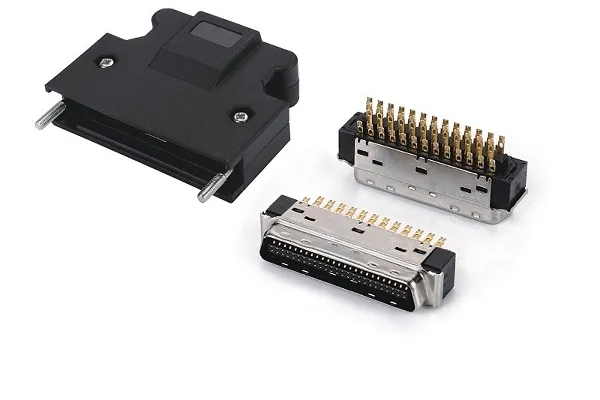
Servo Connector Mastery: How KinKuo’s Servo Connector Range Eliminates Downtime and Future-Proofs Motion Systems
Explore KinKuo Servo Connector solutions—IP67, 10 M flex, same-day ship. Cut downtime and future-proof motion systems today.
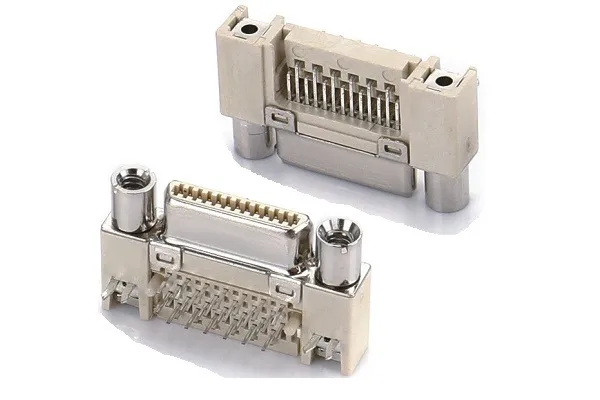
VHDCI Connector Deep Dive: How KinKuo’s VHDCI Connector Range Delivers 68-Pin Density with Zero Signal Loss
Explore KinKuo VHDCI Connector solutions—0.8 mm pitch, 500 V, RoHS. Cut space and boost speed with proven VHDCI Connector today.
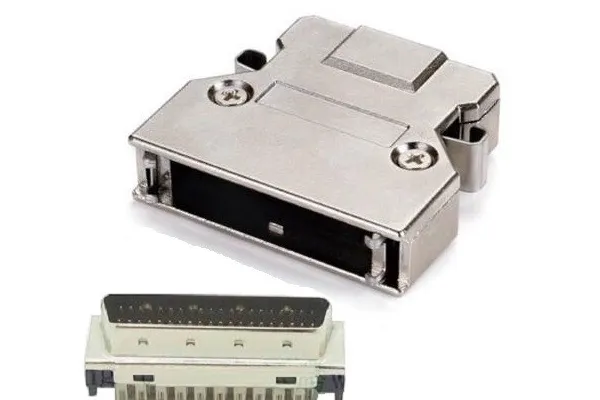
SCSl Connector Deep-Dive: How KinKuo’s SCSl Connector Portfolio Delivers 68-Pin Density with Industrial-Grade Reliability
Explore KinKuo VHDCI Connector solutions—0.8 mm pitch, 500 V, RoHS. Cut space and boost speed with proven VHDCI Connector today.
Our updates and blog posts
Servo Connector Mastery: How KinKuo’s Servo Connector Range Eliminates Downtime and Future-Proofs Motion Systems
Explore KinKuo Servo Connector solutions—IP67, 10 M flex, same-day ship. Cut downtime and future-proof motion systems today.
VHDCI Connector Deep Dive: How KinKuo’s VHDCI Connector Range Delivers 68-Pin Density with Zero Signal Loss
Explore KinKuo VHDCI Connector solutions—0.8 mm pitch, 500 V, RoHS. Cut space and boost speed with proven VHDCI Connector today.
SCSl Connector Deep-Dive: How KinKuo’s SCSl Connector Portfolio Delivers 68-Pin Density with Industrial-Grade Reliability
Explore KinKuo VHDCI Connector solutions—0.8 mm pitch, 500 V, RoHS. Cut space and boost speed with proven VHDCI Connector today.