
10-Year R&D Excellence
Founded in 2010, Kinkuo has a decade-long track record of innovative connector and cable design for industrial automation and high-end applications.
Wide-Ranging Expertise
Core portfolio spans double-shielded signal cables, 10-million-cycle drag-chain cables, industrial camera & network harnesses, oil-resistant assemblies, and complete SCSI/VHDCI/D-SUB/USB 3.0 connector lines.
Global Brand Trust
Long-term preferred supplier to renowned customers across Japan, Taiwan, Europe, the Americas, and Mainland China, attesting to consistent quality and reliability.
Tier-1 Supply Chain Access
Authorized distributor of Amphenol’s latest high-speed interconnect portfolio (SFP, QSFP-DD, OSFP, SlimSAS, Gen-Z, etc.), enabling turnkey, future-proof solutions.
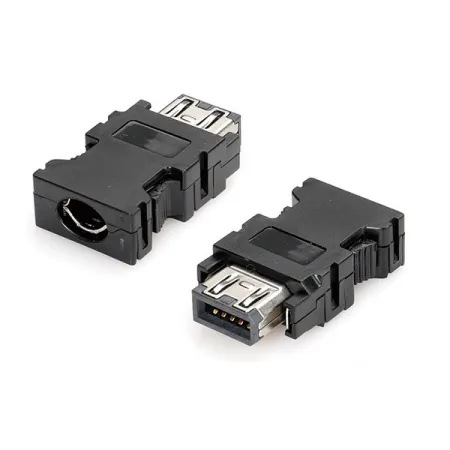
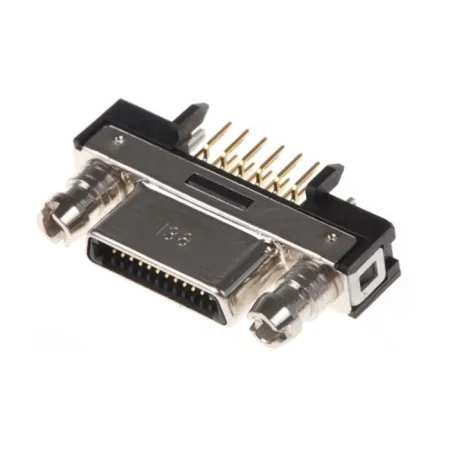
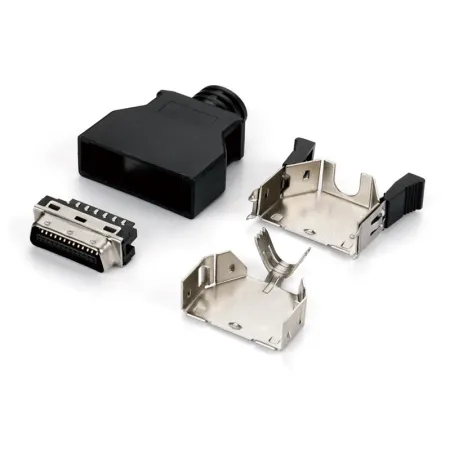
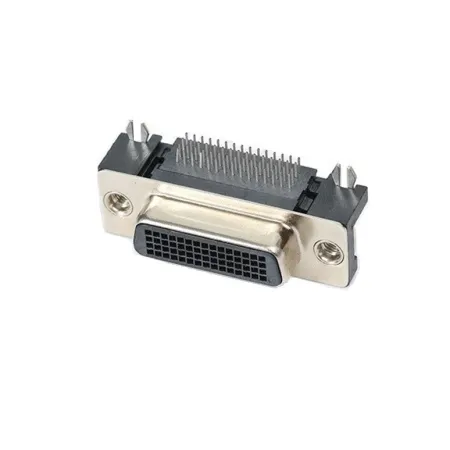

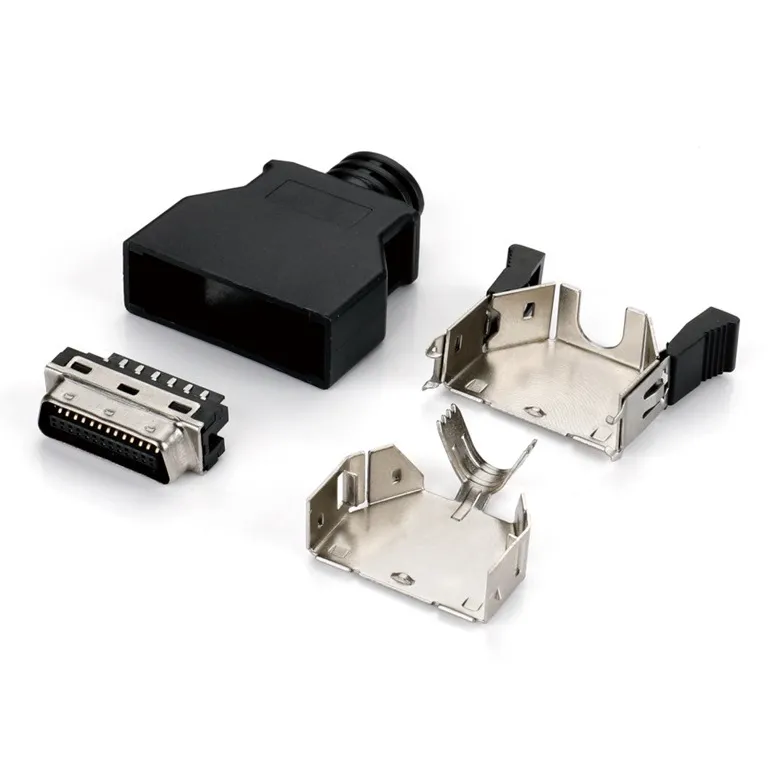
We Have The Best Solutions for Your Business
1. Cable Ass'y products: double shielded signal control Cables (SCSI, VHDCI, D-SUB, USB, LFH, SDR), Ten million times drag chain line, industrial camera wiring harness, industrial network cable, mechanical equipment oil resistant wiring harness, customized various specifications Cable research and development, assembly.
2. Connector products: SCSI, VHDCI, D-SUB, LFH, USB 3.0, servo motor peripheral series connectors.
3. Brand agent: Amphenol (SFP, SFP28, QSFP, QSFP28, QSFP-DD, OSFP, CFP2, CFP4, MiniSAS HD, SlimSAS, PCIeSAS, Oculink, MCIO, Gen-Z)
Attentive service, perfect quality!
What is the difference between a cable-end MCIO connector and a board-mounted one?
The MCIO connector is a two-part system. The "board-mounted connector," or receptacle, is the part that is soldered directly onto a printed circuit board, such as a motherboard or an add-in card. This receptacle is what the cable plugs into. The "cable-end connector," or plug, is the part that is terminated onto the end of the high-speed twinaxial cable. These two parts are designed as a matched pair to ensure a perfect mechanical fit and a continuous, impedance-controlled electrical path. KinKuo can provide both parts of this system. We are an authorized agent for the Amphenol board-mounted receptacles and an expert manufacturer of the cable assemblies that use the mating cable-end plug, allowing us to be your single source for the complete MCIO connector solution.
I need to connect an NVMe backplane in my new server. What connector should I use?
For any new server design using an NVMe backplane with the PCIe 5.0 interface, the industry-standard and technically superior choice is the MCIO connector. This connector system was specifically designed to provide the high density and exceptional signal integrity needed to route multiple PCIe Gen 5 lanes to a storage backplane. It provides a robust, reliable, and high-bandwidth connection that will allow your NVMe SSDs to perform at their maximum potential. KinKuo is a leading supplier of the MCIO connector systems used in these exact applications. We can provide the specific board receptacles and custom-length cable assemblies you need to create a clean and highly-performant connection for your next-generation storage solution.
My PCIe 5.0 link is unstable and has high error rates. What's the cause?
An unstable PCIe 5.0 link with a high error rate is a classic signal integrity problem, and the most likely culprit is a low-quality or non-compliant internal interconnect. At 32 GT/s, the signals are extremely sensitive, and a poorly designed connector or cable will introduce too much loss and crosstalk, corrupting the data. You must use a MCIO connector system that is specifically engineered and validated for PCIe Gen 5. By switching to a genuine, high-performance MCIO connector and cable assembly from a trusted supplier like KinKuo, you are using a component that is proven to meet the stringent signal integrity requirements of the standard. This will provide a clean, stable channel, eliminate the root cause of the data errors, and restore the reliability of your PCIe link.
How can I ensure my design is ready for future technologies like CXL?
Future-proofing your server design is a smart strategic move. The next major evolution in server architecture is the widespread adoption of Compute Express Link (CXL), which uses the PCIe physical layer to create coherent memory interconnects. The good news is that the MCIO connector is the designated interconnect for this future. The standard was developed with the roadmap for CXL and PCIe 6.0 in mind. By designing your current PCIe 5.0 systems with a high-quality MCIO connector from KinKuo, you are already using the correct physical infrastructure that these future protocols will require. This makes your design more robust, protects your R&D investment, and ensures a smoother transition to the next generation of server technology.
User Reviews
What users say about KinKuo
Frequently Asked Question
Do you have any question?
The MCIO connector plays a foundational role for Compute Express Link™ (CXL™) because CXL runs over the PCIe physical layer. As servers adopt CXL for memory expansion and disaggregated architectures, the MCIO connector will provide the essential high-bandwidth, low-latency physical connection needed to link processors to CXL memory modules and other CXL-enabled devices, making it a key enabler of next-generation server architecture.
Using a genuine Amphenol MCIO connector is critical because Amphenol is a world leader who has invested heavily in the R&D to perfect the connector's performance. A counterfeit or "clone" connector will not have the same precision, materials, or signal integrity and will cause high data error rates and system instability. Sourcing a genuine part from an authorized agent like KinKuo is the only way to guarantee performance.
The board-mounted receptacle of an MCIO connector typically comes in two main orientations: vertical (perpendicular to the PCB) and right-angle (parallel to the PCB). This gives system architects the flexibility to route cables in the most efficient way possible within a server chassis, either coming straight up off the board or running low across its surface to avoid impeding airflow.
The MCIO connector is superior to OCuLink for new designs because it is a next-generation solution built for a higher performance tier. It offers a clearer roadmap to future speeds like PCIe 6.0, provides better signal integrity performance, and has a more robust and dense mechanical design. While OCuLink was suitable for earlier PCIe generations, MCIO is the forward-looking standard.
The MCIO connector is the standard for PCIe 5.0 because its electrical and mechanical design is optimized for the 32 GT/s signal speeds. It features superior signal integrity with extremely low crosstalk, a controlled impedance profile, and a density that allows for many high-speed lanes in a small space, all of which are mandatory requirements for a stable PCIe Gen 5 channel.
MCIO stands for Mini Cool Edge IO. An MCIO connector is a high-density, high-performance internal interconnect system designed to handle the extreme data rates of next-generation protocols like PCI Express® (PCIe) 5.0 and 6.0. It is used to link a server's mainboard to peripherals like NVMe drives and accelerator cards.
Our updates and blog posts
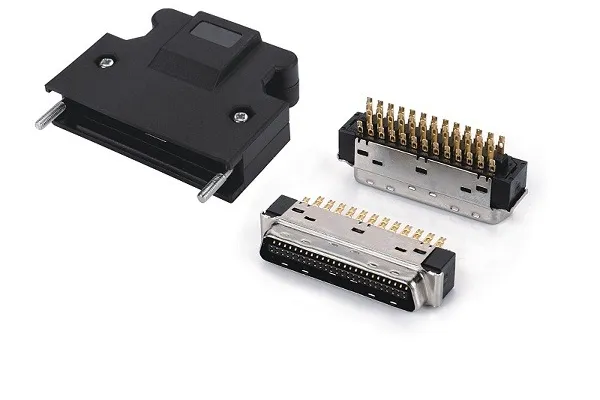
Servo Connector Mastery: How KinKuo’s Servo Connector Range Eliminates Downtime and Future-Proofs Motion Systems
Explore KinKuo Servo Connector solutions—IP67, 10 M flex, same-day ship. Cut downtime and future-proof motion systems today.
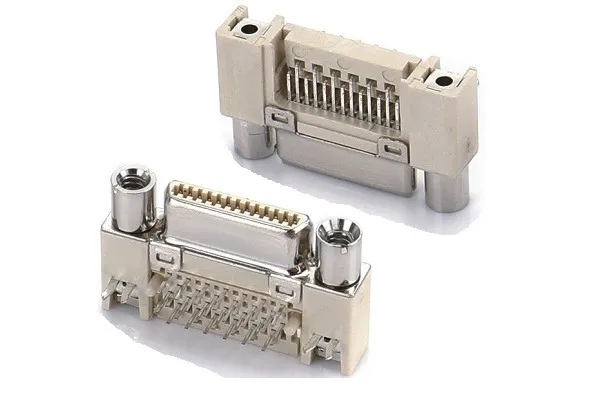
VHDCI Connector Deep Dive: How KinKuo’s VHDCI Connector Range Delivers 68-Pin Density with Zero Signal Loss
Explore KinKuo VHDCI Connector solutions—0.8 mm pitch, 500 V, RoHS. Cut space and boost speed with proven VHDCI Connector today.
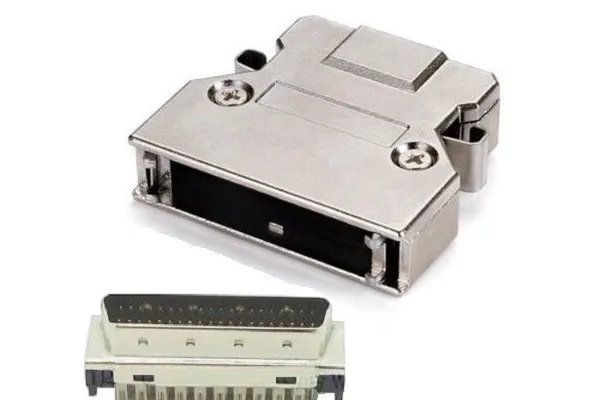
SCSl Connector Deep-Dive: How KinKuo’s SCSl Connector Portfolio Delivers 68-Pin Density with Industrial-Grade Reliability
Explore KinKuo VHDCI Connector solutions—0.8 mm pitch, 500 V, RoHS. Cut space and boost speed with proven VHDCI Connector today.
Our updates and blog posts
Servo Connector Mastery: How KinKuo’s Servo Connector Range Eliminates Downtime and Future-Proofs Motion Systems
Explore KinKuo Servo Connector solutions—IP67, 10 M flex, same-day ship. Cut downtime and future-proof motion systems today.
VHDCI Connector Deep Dive: How KinKuo’s VHDCI Connector Range Delivers 68-Pin Density with Zero Signal Loss
Explore KinKuo VHDCI Connector solutions—0.8 mm pitch, 500 V, RoHS. Cut space and boost speed with proven VHDCI Connector today.
SCSl Connector Deep-Dive: How KinKuo’s SCSl Connector Portfolio Delivers 68-Pin Density with Industrial-Grade Reliability
Explore KinKuo VHDCI Connector solutions—0.8 mm pitch, 500 V, RoHS. Cut space and boost speed with proven VHDCI Connector today.