
10-Year R&D Excellence
Founded in 2010, Kinkuo has a decade-long track record of innovative connector and cable design for industrial automation and high-end applications.
Wide-Ranging Expertise
Core portfolio spans double-shielded signal cables, 10-million-cycle drag-chain cables, industrial camera & network harnesses, oil-resistant assemblies, and complete SCSI/VHDCI/D-SUB/USB 3.0 connector lines.
Global Brand Trust
Long-term preferred supplier to renowned customers across Japan, Taiwan, Europe, the Americas, and Mainland China, attesting to consistent quality and reliability.
Tier-1 Supply Chain Access
Authorized distributor of Amphenol’s latest high-speed interconnect portfolio (SFP, QSFP-DD, OSFP, SlimSAS, Gen-Z, etc.), enabling turnkey, future-proof solutions.
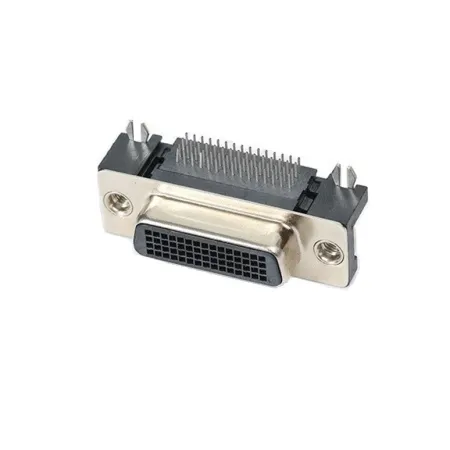
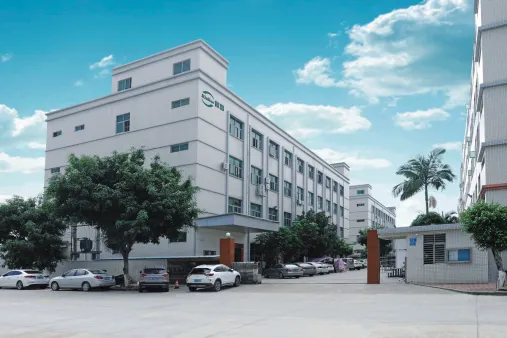
We Have The Best Solutions for Your Business
1. Cable Ass'y products: double shielded signal control Cables (SCSI, VHDCI, D-SUB, USB, LFH, SDR), Ten million times drag chain line, industrial camera wiring harness, industrial network cable, mechanical equipment oil resistant wiring harness, customized various specifications Cable research and development, assembly.
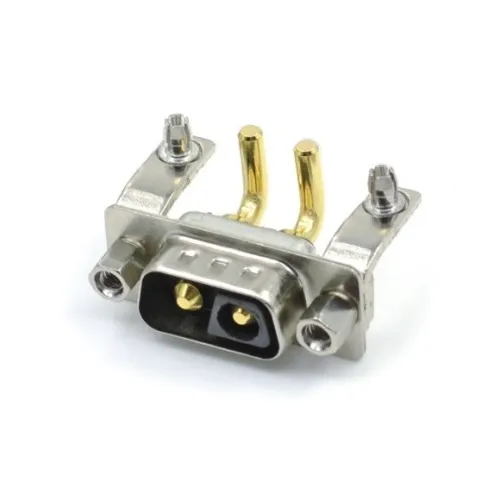
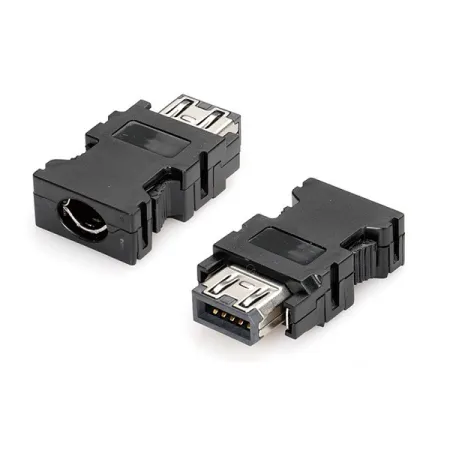
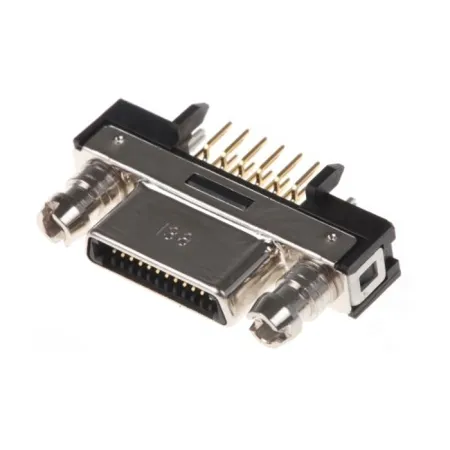
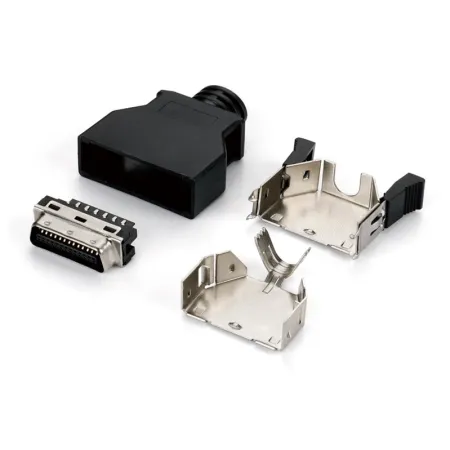
2. Connector products: SCSI, VHDCI, D-SUB, LFH, USB 3.0, servo motor peripheral series connectors.
3. Brand agent: Amphenol (SFP, SFP28, QSFP, QSFP28, QSFP-DD, OSFP, CFP2, CFP4, MiniSAS HD, SlimSAS, PCIeSAS, Oculink, MCIO, Gen-Z)
Attentive service, perfect quality!
I Need a Very Long RS-232 Cable Run. Will It Work?
The official RS-232 standard specifies a maximum cable length of about 50 feet (15 meters) for reliable communication at standard baud rates. However, in many industrial settings, a longer run is required. Whether a longer D-SUB cable will work depends entirely on the quality of the cable itself. A low-quality cable with thin conductors and poor capacitance characteristics will quickly degrade the signal over distance. KinKuo can build a long-run D-SUB cable using high-quality, low-capacitance bulk cable with a proper shield. This type of high-grade cable minimizes signal degradation, allowing you to successfully achieve communication over distances significantly longer than the official standard, often up to 100 feet or more depending on the baud rate and electrical environment. For reliable long-distance serial communication, the quality of the D-SUB cable is the single most important factor.
The Plastic on My D-SUB Cable Broke. How Can I Get a Stronger One?
The most common point of failure on a cheap, consumer-grade D-SUB cable is the backshell or strain relief, which is often made of flimsy, snapped-together plastic. This provides very little protection for the delicate solder joints inside. For any serious industrial or commercial application, you need a cable with superior mechanical strength. The solution is a D-SUB cable from KinKuo that features a fully overmolded backshell. In our process, the connector and the cable are placed in a mold, which is then injected with a high-temperature polymer. This creates a solid, single piece that permanently bonds the cable to the connector, providing exceptional strain relief and protecting the internal connections from stress, moisture, and physical impact. This overmolded construction is infinitely more durable and is the hallmark of a true industrial-grade D-SUB cable.
Where Can I Find a High-Quality Replacement Cable for My Old CNC Machine?
You have a valuable, older piece of industrial equipment, like a CNC machine or PLC, that is still performing perfectly, but its original D-SUB cable has become damaged or worn out. Finding an exact replacement from the original manufacturer can be impossible. This is where a custom cable manufacturer is essential. KinKuo specializes in creating high-quality replacements for these legacy applications. We can analyze your existing cable (even if it's damaged) to determine its exact, often proprietary, pinout. We can then manufacture a new D-SUB cable that is a perfect functional replacement, often improving on the original by using more durable, modern materials and a more robust overmolded construction. Don't let a failed cable sideline your valuable equipment. Let KinKuo build you a superior replacement that will keep it running for years to come.
How Do I Source a D-SUB Cable for My New Product in High Volume?
When you are launching a new product, selecting the right manufacturing partner for a component like a D-SUB cable is critical for scaling up successfully. You need a partner who can guarantee quality, consistency, and on-time delivery. The best choice is to work directly with an experienced factory. KinKuo is an OEM-focused manufacturer with a proven track record of handling high-volume production runs. Our ISO 9001 certified facility, automated processes, and stringent 100% testing protocol ensure that every D-SUB cable in a large order is identical and meets your specifications. By partnering with KinKuo, you get the benefits of factory-direct pricing and a dedicated team focused on making your product launch a success. We are built to be a reliable, long-term partner for your high-volume D-SUB cable needs.
User Reviews
What users say about KinKuo
Frequently Asked Question
Do you have any question?
The thumbscrews on a D-SUB cable are a crucial feature for ensuring a secure, reliable mechanical connection. In industrial or high-vibration environments, an unsecured connector could easily work itself loose, causing a catastrophic loss of data or control. By tightening these screws, you lock the connector firmly in place, guaranteeing a stable connection that won't be compromised by shock or vibration.
The difference is the spacing of the pins. A high-density D-SUB cable fits more pins into the same size shell as a standard-density version. For example, a standard DA-15 connector shell can accommodate 26 pins in a high-density configuration (HD-26). This is used to save panel space on equipment that requires a large number of connections.
Yes, a key service offered by a specialized manufacturer is the ability to create a D-SUB cable with a completely custom pinout. This is essential for applications like null modem adapters (for connecting two computers directly), crossover cables, or proprietary interfaces where the wiring does not follow a standard configuration. This service allows you to get the exact connection you need without clumsy adapters.
The pin count for your D-SUB cable is determined by the equipment you are connecting. The DE-9 (often called DB-9) is the most common for RS-232 serial ports. The DB-25 was used for older parallel printer ports and larger serial connections. The DA-15 is used for legacy game ports and some video, while higher counts are used for more complex interfaces. You must match the connector on your cable to the port on your device.
Shielding is critical for an industrial D-SUB cable because factory environments are filled with electromagnetic interference (EMI) from motors, VFDs, and power lines. A proper shield, typically consisting of both aluminum foil and a copper braid, creates a protective barrier around the signal wires, grounding out this electrical noise and preventing it from corrupting the data, which is essential for reliable process control.
A D-SUB cable is incredibly versatile and is most commonly used for serial data communication like RS-232 and RS-485 in industrial automation to connect to PLCs and control devices. It is also widely used for legacy computer video (VGA), custom data acquisition systems, and communication ports on a vast range of industrial, medical, and aerospace equipment.
Our updates and blog posts
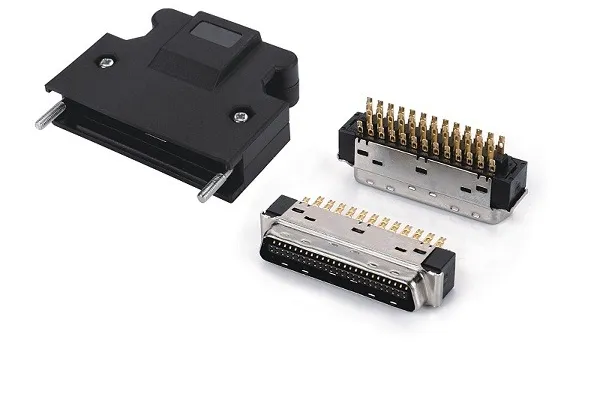
Servo Connector Mastery: How KinKuo’s Servo Connector Range Eliminates Downtime and Future-Proofs Motion Systems
Explore KinKuo Servo Connector solutions—IP67, 10 M flex, same-day ship. Cut downtime and future-proof motion systems today.
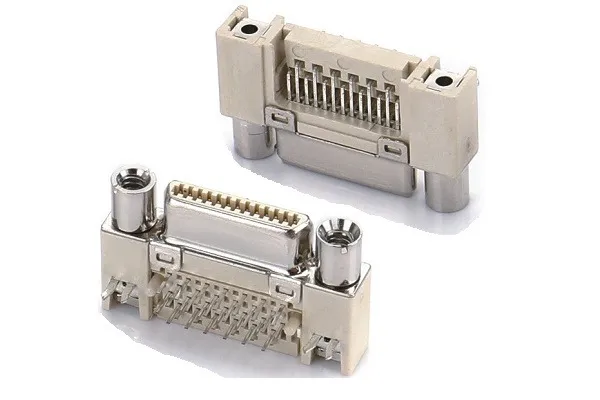
VHDCI Connector Deep Dive: How KinKuo’s VHDCI Connector Range Delivers 68-Pin Density with Zero Signal Loss
Explore KinKuo VHDCI Connector solutions—0.8 mm pitch, 500 V, RoHS. Cut space and boost speed with proven VHDCI Connector today.
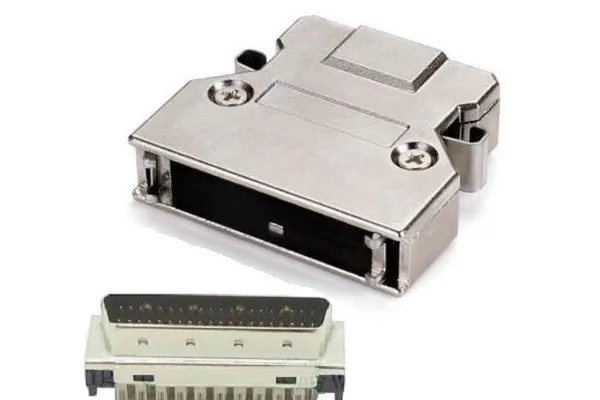
SCSl Connector Deep-Dive: How KinKuo’s SCSl Connector Portfolio Delivers 68-Pin Density with Industrial-Grade Reliability
Explore KinKuo VHDCI Connector solutions—0.8 mm pitch, 500 V, RoHS. Cut space and boost speed with proven VHDCI Connector today.
Our updates and blog posts
Servo Connector Mastery: How KinKuo’s Servo Connector Range Eliminates Downtime and Future-Proofs Motion Systems
Explore KinKuo Servo Connector solutions—IP67, 10 M flex, same-day ship. Cut downtime and future-proof motion systems today.
VHDCI Connector Deep Dive: How KinKuo’s VHDCI Connector Range Delivers 68-Pin Density with Zero Signal Loss
Explore KinKuo VHDCI Connector solutions—0.8 mm pitch, 500 V, RoHS. Cut space and boost speed with proven VHDCI Connector today.
SCSl Connector Deep-Dive: How KinKuo’s SCSl Connector Portfolio Delivers 68-Pin Density with Industrial-Grade Reliability
Explore KinKuo VHDCI Connector solutions—0.8 mm pitch, 500 V, RoHS. Cut space and boost speed with proven VHDCI Connector today.